
The Siege of Hormuz: How the US Blockade Will Be Enforced and What Happens Next

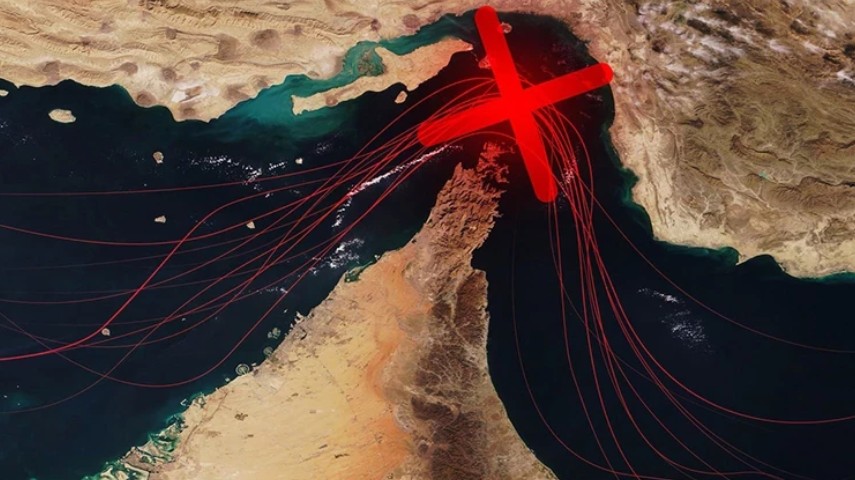

WASHINGTON / PERSIAN GULF – Following the collapse of peace negotiations in Islamabad, President Donald Trump has ordered the U.S. Navy to initiate a total blockade of the Strait of Hormuz, effective Monday at 17:00 (GMT+3). The move, designed to sever the Iranian government’s primary financial lifeline, shifts the six-week-old conflict into a dangerous phase of maritime attrition.
How the Blockade Will Be Implemented: Tactics and Assets
The Pentagon’s strategy is not just a physical barrier but a “stop-and-search” regime targeting any vessel paying transit fees to Tehran. According to White House and naval sources, the blockade will follow a three-step operational doctrine:
-
Interdiction and Boarding: The USS Abraham Lincoln (CVN-72), currently stationed in the Arabian Sea, will serve as the primary mobile base for boarding operations. U.S. Coast Guard units and Special Operations Forces (SOF) will likely be utilized to intercept tankers.
-
The “Scare Factor”: Retired Rear Admiral Mark Montgomery notes the goal is to “spook” the market. By stopping enough vessels to make the “ghost fleet” operations financially non-viable, the U.S. aims to force a total halt in Iranian exports, which recently peaked at 1.85 million barrels per day.
-
Mine Clearing Operations: Once the initial perimeter is established, the Navy will begin systematic mine-clearing to ensure a “secured channel” for compliant commercial traffic, though this remains the most vulnerable stage of the operation.
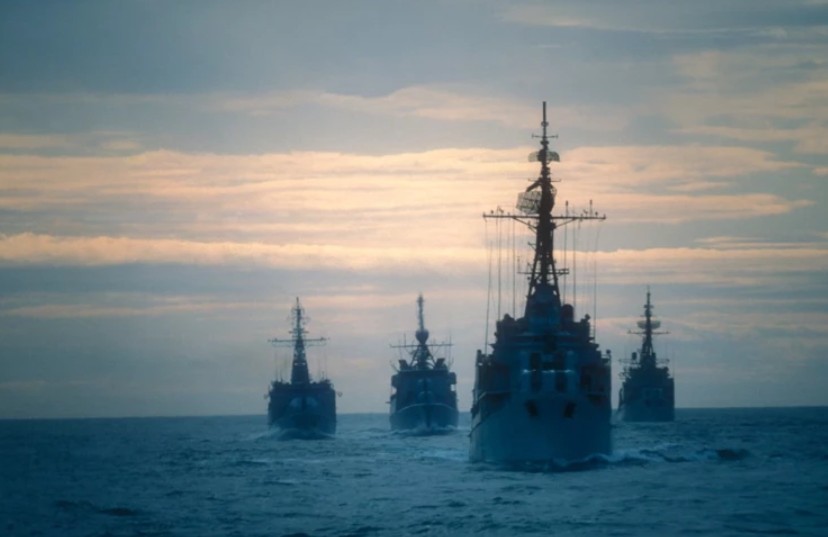
Strategic Assets on Station: The U.S. has deployed eight guided-missile destroyers in the region. These vessels, which proved their capabilities against Houthi drones in the Red Sea, will provide the “Aegis” shield against Iranian anti-ship missiles and drone swarms.
Analysis: The “Managed Freeze” vs. Total Attrition
The decision to blockade Hormuz is what strategic analysts call “High-Stakes Leverage.” However, current and former officials warn that while the U.S. has the resources to start a blockade, maintaining it against an asymmetric adversary like Iran is a different calculus.
1. The Iranian Counter-Strike: “Weakness Engineering”
Despite U.S. claims of degrading the Iranian Navy, intelligence suggests that over 60% of the IRGC’s fast attack boats remain intact. Unlike the open waters of the Red Sea, the geography of the Gulf is narrow. If Iran begins firing from its controlled islands or utilizes its swarm of suicide drones, U.S. destroyers will have significantly less time to react.
Furthermore, if Iran feels truly cornered, it may move to “paralyze” the alternatives. This includes targeting Saudi and UAE bypass pipelines or utilizing proxies to close the Bab el-Mandeb in Yemen, creating a dual-chokepoint crisis.
2. Economic Devastation: Beyond the Pandemic
The “attrition reality” is already hitting global markets. Projections from Capital Economics suggest GDP shrinkage in the Gulf could exceed 13% for Qatar and 8% for the UAE—surpassing the damage seen during the 2020 pandemic.
-
Asia: Factories are already rationing power as jet fuel stocks deplete at major hubs.
-
Global Supply: If successful, the blockade will remove an additional 2 million barrels per day from a market that has already lost 12% of its trade volume due to the conflict.
Potential Scenarios: What Happens Next?
Scenario A: The “Negotiated Surrender” The economic pain becomes so acute for Tehran that the “unexpected profits” from recent oil sales run dry, forcing them back to the table on U.S. terms regarding their nuclear program. This is the Trump administration’s desired outcome.
Scenario B: The Long Attrition War Iran believes it can outlast the global economy’s tolerance for high oil prices. They engage in a low-intensity, high-impact “guerrilla war” at sea—using mines and drones to ensure that even if the U.S. is “present,” the Strait remains “uninsurable” for commercial shipping.
Scenario C: Regional Leapfrog Effect The conflict jumps geographic boundaries. To break the blockade, Iran strikes regional energy infrastructure in neighboring countries, forcing a wider coalition of Arab states and potentially China to intervene to protect their energy security.
Strategic Verdict
The window for de-escalation has officially closed. The U.S. is betting that its naval dominance can “out-muscle” Iranian asymmetric persistence. However, as the global economy begins to fracture under the weight of $150+ oil prices, the real question is: Who will blink first—the administration in Washington or the leadership in Tehran?
Editor’s Note: This is a developing intelligence report. Defense & Tech will provide live updates as the USS Abraham Lincoln begins the first interdiction operations at 17:00 Monday.