
Successive Attacks in Russia: Strategic Targets Hit… Emergency Declared
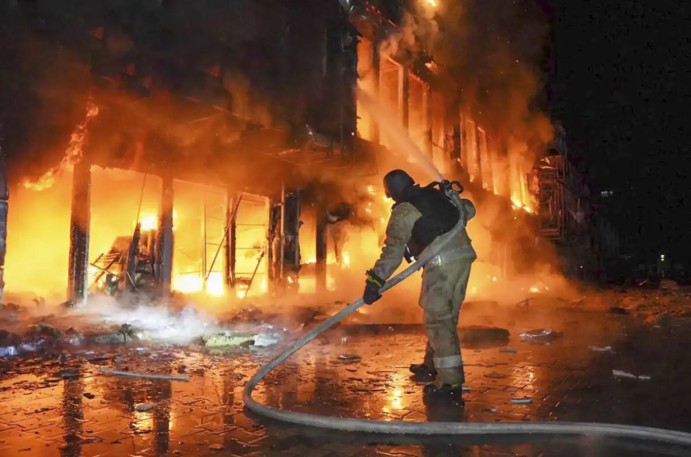
MOSCOW / PERM — The deep-strike campaign against Russia’s military-industrial complex has reached an unprecedented level of intensity. Overnight on April 30, a massive, coordinated swarm of Ukrainian unmanned aerial vehicles (UAVs) bypassed multiple layers of air defense to strike highly classified strategic facilities deep inside Russian territory, triggering immense structural damage and localized environmental crises.
Following the crippling attacks on the Tuapse and Orsk oil refineries earlier this week, Kyiv has shifted its crosshairs directly onto Russia’s munitions manufacturing and military fuel supply chains.
The Sverdlov Plant: Striking the Heart of Munitions Production
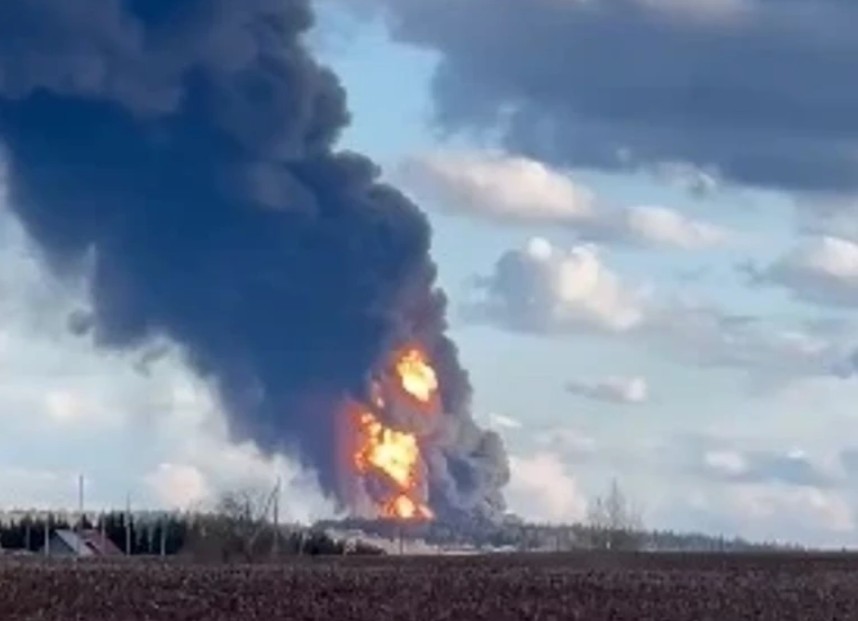
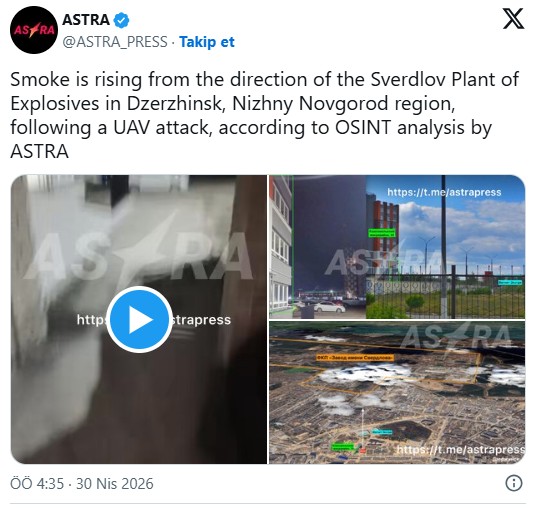
In the Nizhny Novgorod region, the city of Dzerzhinsk was rocked by a series of approximately 10 massive explosions. Visual intelligence and local reports confirm that the primary target was the highly strategic Y.M. Sverdlov Plant.
With a history spanning over a century, the Sverdlov facility is one of the largest and most vital explosives and munitions manufacturers in the Russian Federation. Operating as a cornerstone of Moscow’s military-industrial complex, the plant produces a vast array of the high explosives used in artillery shells, aerial bombs, and missile warheads currently being deployed on the Ukrainian front lines.
Following the nighttime strikes, thick plumes of black smoke were visible rising from the facility. The Sverdlov Plant was already categorized as a high-value target and has been subjected to strict international sanctions by the United States, the European Union, the UK, Japan, and Switzerland.
“Chemical Emergency” Declared in Perm
Simultaneously, a second crisis unfolded further east in the strategic Ural region. For the second consecutive day, the city of Perm came under sustained UAV attack, resulting in a terrifying localized disaster.
Following a morning strike on a critical fuel and chemical processing facility that supplies the Russian military, local authorities were forced to declare a “chemical emergency.” Warning sirens and public loudspeakers broadcasted urgent messages across the city, stating: “An accident involving the release of a hazardous substance has occurred.”
Verified footage shared by residents depicts a massive, white, mushroom-shaped cloud of toxic smoke towering over the city’s skyline, indicating a catastrophic chemical combustion. The full extent of the environmental hazard and the disruption to military fuel logistics remains highly classified by local authorities.
The 189-Drone Swarm: Air Defense Saturation
The sheer scale of this operation highlights a critical evolution in Ukrainian asymmetric warfare. The Russian Ministry of Defense released a statement claiming that its on-duty air defense systems “intercepted and destroyed” a staggering 189 Ukrainian drones overnight.
According to Moscow, the UAVs were tracked across 14 different regions: Astrakhan, Belgorod, Bryansk, Volgograd, Voronezh, Kursk, Lipetsk, Nizhny Novgorod, Rostov, Ryazan, Samara, Saratov, Tula, and Ulyanovsk.
From a defense analysis perspective, launching nearly 200 long-range strike drones in a single night is a deliberate tactic known as “air defense saturation.” By overwhelming Russian radar tracking capabilities and depleting interceptor missiles, Ukraine is ensuring that a high percentage of its “kamikaze” drones successfully reach their multi-billion-dollar strategic targets.
As the deep-strike campaign accelerates, the Kremlin faces a rapidly deteriorating security architecture within its own borders, struggling to protect the very industrial base required to sustain its war effort.