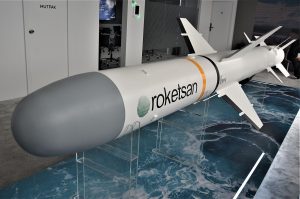

Defense News : Smart Munitions & Precision Strikes

Anyone following international defense news today will notice a definitive shift in modern warfare terminology. The era of carpet bombing and massive, indiscriminate artillery barrages is rapidly closing. In its place is a new strategic reality defined by surgical accuracy: the era of smart munitions and precision strikes.
From the frontlines of Eastern Europe to the maritime chokepoints of the Middle East, precision-guided weapons are reshaping combat doctrines. But what exactly makes a bomb “smart,” and how do these systems actually work? In this comprehensive guide, we unpack the foundational technologies driving the headlines in today’s defense news.

Beyond Conventional Weapons: A Staple of Modern Defense News
To understand the revolution of smart munitions, we must look at the concept of CEP (Circular Error Probable). In military science, CEP is the measure of a weapon system’s precision. If a missile has a CEP of 10 meters, it means 50% of the fired munitions will land within a 10-meter radius of the exact target.
In World War II, the CEP of unguided gravity bombs was measured in hundreds of meters, requiring dozens of aircraft to destroy a single factory. Today, thanks to advanced guidance kits, a single fighter jet can drop a smart munition with a CEP of less than one meter.
This hyper-accuracy provides three critical tactical advantages dominating the daily cycle of defense news:
Force Multiplication: Fewer sorties are required to neutralize a target.
Cost Efficiency: While a smart bomb is more expensive than a “dumb” bomb, destroying a target on the first attempt is vastly cheaper than a prolonged campaign.
Reduced Collateral Damage: Surgical strikes allow militaries to target specific buildings or even specific rooms in dense urban environments, minimizing civilian casualties.
How Laser and GPS Guidance Systems Actually Work
The transformation of a conventional warhead into a smart munition usually relies on one of two primary guidance systems, or increasingly, a combination of both.
1. Laser Guidance Systems
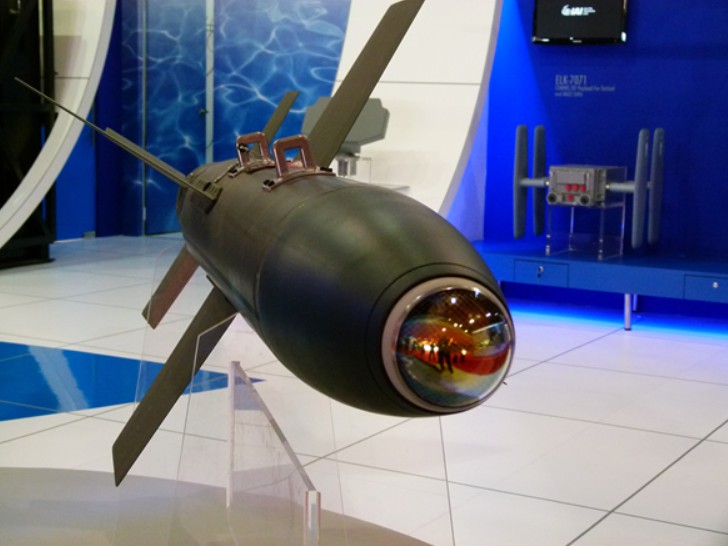
First popularized during the Gulf War, laser-guided bombs (LGBs) rely on a relatively simple but highly effective premise. A target is “painted” or illuminated by a laser designator. This designator can be operated by an infantry unit on the ground (like Special Operations Forces) or an overhead targeting pod attached to a drone or fighter jet.
The munition is equipped with a seeker head that detects the specific frequency of the reflected laser energy. Once dropped, the weapon’s internal computer adjusts its aerodynamic fins to “ride” the laser beam directly to the point of illumination.
2. GPS and INS Guidance
While laser guidance is highly accurate, it has a major vulnerability: weather. Heavy rain, smoke, or cloud cover can scatter the laser beam. To solve this, defense contractors developed GPS (Global Positioning System) and INS (Inertial Navigation System) guided weapons, most notably the JDAM (Joint Direct Attack Munition) tail kits.
Before launch, exact coordinates are programmed into the weapon. As it falls, it uses GPS satellites to adjust its trajectory. If the GPS signal is jammed by enemy Electronic Warfare (EW) systems—a frequent topic in recent defense news—the onboard INS takes over. The INS uses advanced gyroscopes and accelerometers to calculate the weapon’s exact position based on its speed and direction since launch, ensuring it still hits the target even in digitally contested environments.
The Rise of Loitering Munitions (Kamikaze Drones)
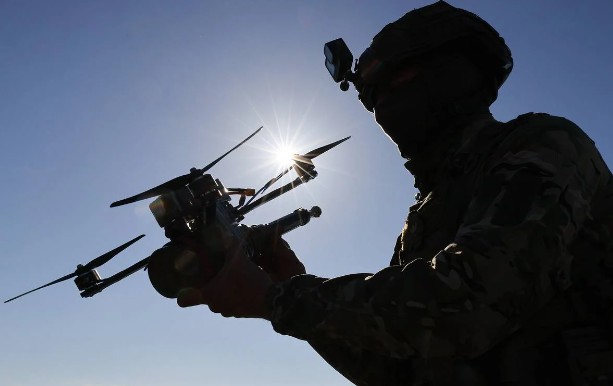
Perhaps the most disruptive technology to enter the modern battlefield is the loitering munition. Often referred to by the media as “kamikaze drones,” these systems blur the line between an unmanned aerial vehicle (UAV) and a cruise missile.
Unlike a traditional missile that travels directly to a known coordinate, a loitering munition is launched into a general target area. It can stay airborne (loiter) for hours, using high-definition optical and thermal cameras to hunt for targets of opportunity, such as hidden air defense radars or mobile artillery. Once the human operator—or the onboard computer—identifies a high-value target, the drone folds its wings and dives, detonating its integrated warhead upon impact.
These systems offer unprecedented flexibility, allowing ground commanders to establish temporary air superiority and conduct precision strikes without risking expensive fighter jets or helicopter gunships.
The Intersection of AI and Target Acquisition
As we look toward the future, the next evolution of smart munitions is already being written. The integration of Artificial Intelligence (AI) and ATR (Automatic Target Recognition) is pushing the boundaries of what these weapons can achieve.
Future munitions will not just follow a GPS coordinate or a laser; they will be capable of identifying a specific enemy tank model from a database of thousands of images, distinguishing it from civilian vehicles or decoys, and striking it autonomously. Furthermore, “swarming” technologies will allow dozens of smart munitions to communicate with each other in mid-air, coordinating their strikes to overwhelm enemy air defense systems simultaneously.
As militaries worldwide race to develop and deploy these next-generation capabilities, precision strike technology will undoubtedly remain the absolute core of global defense news for decades to come.