
Defense News Pakistan: From FC-31 Stealth Acquisitions to Hangor-Class Submarines – The Weekly Briefing


 React
React
RAWALPINDI / ISLAMABAD – In the highly volatile geopolitical theater of South Asia, the strategic balance is constantly shifting. As neighboring India accelerates its indigenous defense programs and the conflict in neighboring Iran threatens regional stability, Pakistan’s military establishment is rapidly executing its own modernization roadmap. Relying heavily on deep-rooted defense ties with China and a growing domestic industrial base, Islamabad is moving aggressively to secure its deterrent capabilities.
For defense analysts and industry professionals, here is your executive summary of the five most critical developments in Pakistani defense news for the week of April 16, 2026.
1. The 5th-Gen Pursuit: PAF Advances FC-31 Stealth Talks
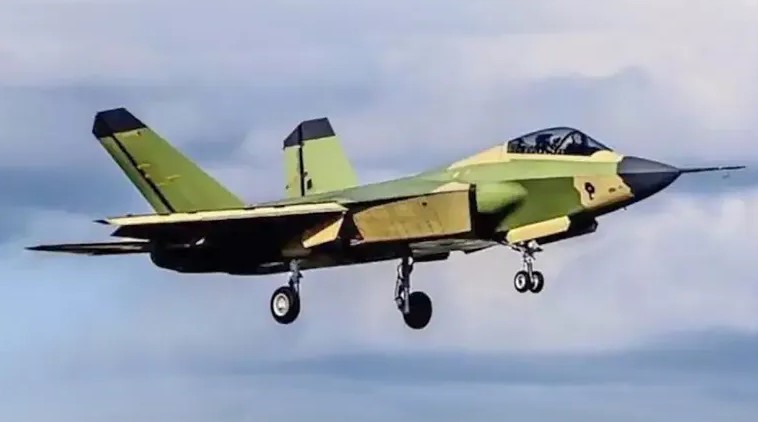
To counter India’s acquisition of advanced Western fighters and its indigenous AMCA program, the Pakistan Air Force (PAF) is accelerating its transition to 5th-generation warfare. This week, high-level delegations in Beijing reportedly finalized the technical frameworks for the acquisition of the Shenyang FC-31 (J-31) stealth fighter. The integration of these twin-engine, radar-evading aircraft will significantly upgrade the PAF’s deep-strike and air superiority capabilities, creating a formidable high-low mix alongside their existing JF-17 Block III fleets.
2. Naval Deterrence: Hangor-Class Submarine Progress
To prevent a maritime power imbalance in the Arabian Sea, the Pakistan Navy achieved a major milestone at the Karachi Shipyard and Engineering Works (KSEW). Critical pressure-hull integration was completed on the first locally assembled Hangor-class (Type 039B) submarine. Equipped with advanced Air-Independent Propulsion (AIP) systems, these stealthy diesel-electric submarines will grant the Pakistan Navy extended underwater endurance, enabling silent monitoring of critical sea lanes and choke points.
3. Penetrating the Shield: Ababeel MIRV Deployment Updates
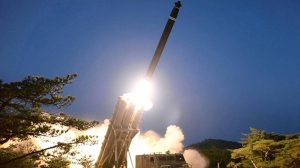
Following India’s recent hypersonic vehicle tests, Pakistan’s Strategic Plans Division has prioritized the operational readiness of the Ababeel medium-range ballistic missile. Designed specifically to defeat regional anti-ballistic missile (ABM) shields, the Ababeel utilizes Multiple Independently targetable Reentry Vehicle (MIRV) technology. Military sources indicated this week that new telemetry upgrades have been successfully integrated into the system, ensuring Pakistan’s nuclear deterrent remains credible and capable of saturating adversarial air defenses.
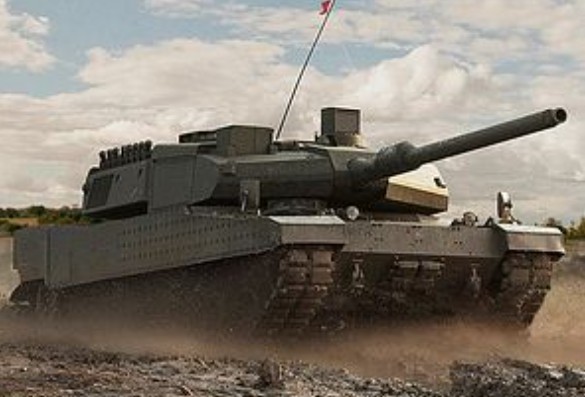
4. Land Warfare: Haider MBT Enters Mass Production
On the ground force modernization front, Heavy Industries Taxila (HIT) has officially transitioned the Haider Main Battle Tank (MBT) into full-scale mass production. Developed with Chinese technology transfers (based on the VT-4 platform), the Haider MBT features advanced composite armor, a 125mm smoothbore gun, and a state-of-the-art computerized fire control system. The rollout of the first armored regiment marks a significant upgrade over legacy platforms, directly addressing the evolving armored threats along the eastern border.
5. Western Border Security: UCAVs Deployed Amid Iran Crisis
The escalating kinetic warfare and U.S. blockade in neighboring Iran have prompted the Pakistan Armed Forces to drastically reinforce the porous western border in Balochistan. To prevent militant spillover and monitor cross-border smuggling, the military has deployed an extended fleet of indigenous Shahpar-II and Shahpar-III Unmanned Combat Aerial Vehicles (UCAVs). These drones are providing 24/7 persistent Intelligence, Surveillance, and Reconnaissance (ISR), ensuring that the geopolitical fallout from the Iran War does not destabilize Pakistan’s internal security.
Editor’s Note: This weekly briefing captures the complex action-reaction dynamics of South Asian geopolitics. As Pakistan integrates its new 5th-generation assets, Defense & Tech will provide a detailed technical comparison between the FC-31 and regional alternatives in an upcoming feature.
React