
What is a Ballistic Missile? The Physics of Ultimate Destruction

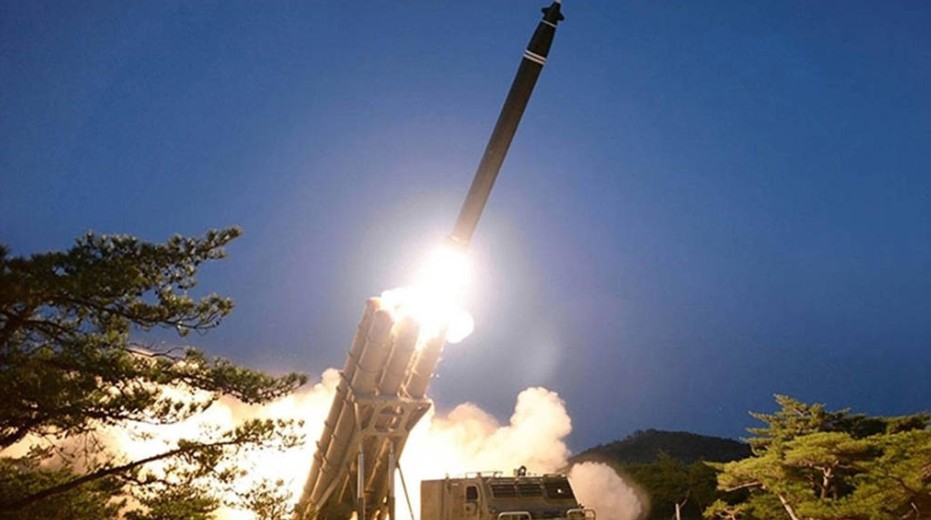

When discussing strategic warfare, the term “ballistic” carries a weight unmatched by almost any other word in the military lexicon. It evokes images of underground silos, roaring rocket engines, and the terrifying reality of intercontinental conflict. But stripping away the geopolitical dread, what exactly defines a Ballistic Missile from an engineering perspective?
The answer does not lie in the explosive payload it carries, but entirely in the physics of how it reaches its target.
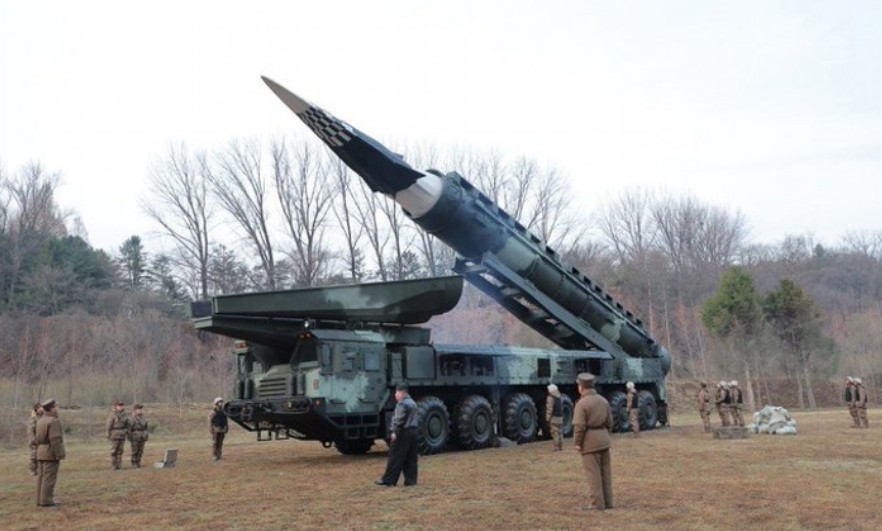
The Core Concept: An Artillery Shell on a Planetary Scale
To understand a ballistic missile, one must understand a ballistic trajectory. If you throw a rock into the air, your arm provides the initial power. Once the rock leaves your hand, it is unpowered; its path forms an arc dictated solely by its initial speed, gravity, and air resistance until it hits the ground.
A ballistic missile operates on this exact same principle, just on a planetary scale. Unlike a Cruise Missile—which acts like a robotic airplane, keeping its jet engines running and flying horizontally through the atmosphere for its entire journey—a ballistic missile is only powered for the very first few minutes of its flight.
The journey of a ballistic missile is rigidly divided into three distinct phases:
1. The Boost Phase (Powered Ascent) The launch. During this phase, the missile’s massive solid or liquid-fueled rocket boosters ignite. The primary objective is to break through the dense layers of the Earth’s atmosphere and achieve massive velocity as quickly as possible. The missile’s internal guidance system actively steers the rocket during this phase to establish the perfect angle. Depending on the missile’s size, this phase lasts anywhere from 60 seconds to 5 minutes.
2. The Mid-Course Phase (Exo-Atmospheric Coasting) Once the rocket fuel is exhausted, the engines shut down, and the booster stages fall away. The missile (or just its payload section, known as the “bus”) is now in the mid-course phase. It has exited the Earth’s atmosphere and is traveling through the vacuum of space. Because there is no air resistance in space, the weapon coasts along its parabolic arc at staggering speeds—often exceeding 24,000 km/h (15,000 mph). This is the longest phase of the flight, where intercontinental missiles can spend up to 20 or 30 minutes silently traversing the globe.
3. The Terminal Phase (Re-entry and Impact) As gravity pulls the weapon back down from the apex of its arc, it re-enters the Earth’s atmosphere. This is the terminal phase. The warhead (the Re-entry Vehicle) plunges toward its target at hypersonic velocities. The friction of slamming into the dense atmosphere generates extreme heat, encasing the warhead in a fiery plasma sheath. Because it is falling at such immense speed, intercepting a ballistic missile in its terminal phase is often compared to “hitting a bullet with another bullet.”
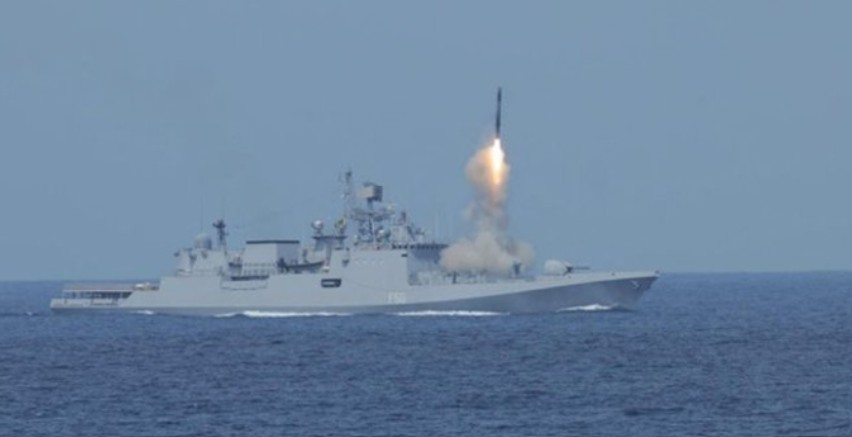
Categorization by Range
Ballistic missiles are classified strictly by the maximum distance their parabolic arc can cover:
-
SRBM (Short-Range Ballistic Missile): Range of less than 1,000 km. (e.g., the Russian Iskander or the ATACMS). Used for tactical battlefield strikes.
-
MRBM (Medium-Range) & IRBM (Intermediate-Range): Ranges spanning from 1,000 km to 5,500 km. Designed for theater-level strategic targeting.
-
ICBM (Intercontinental Ballistic Missile): Range exceeding 5,500 km. The ultimate strategic deterrent, capable of crossing oceans and striking targets on the other side of the planet (e.g., the US Minuteman III or Russian RS-28 Sarmat).
Ultimately, the ballistic missile remains the apex predator of the defense world because of its reliance on simple, undeniable physics. Once the engines burn out and the trajectory is set, gravity and momentum do the rest, leaving the adversary with only minutes to react.