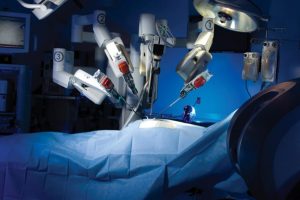

Military Bionics and Battlefield Robotics: The Future of Combat Medicine

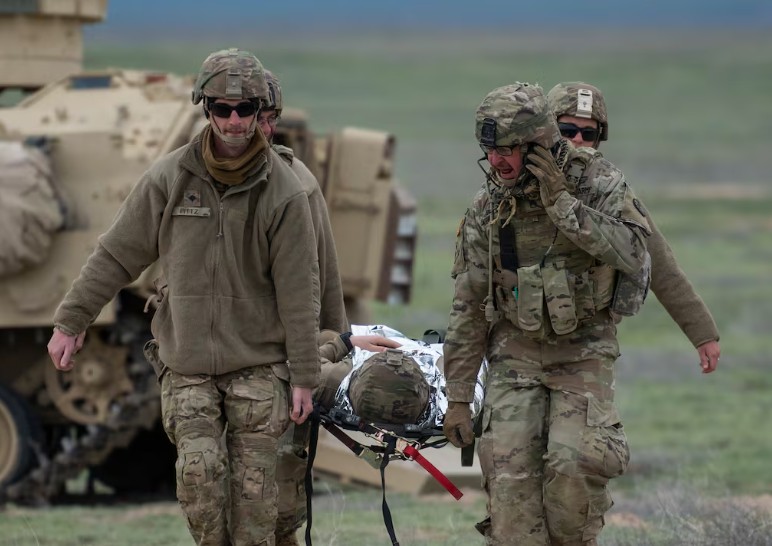

 React
React
What are battlefield robotic medical devices?
Battlefield robotic medical devices are “smart” machines engineered to perform critical medical and logistical actions in high-threat environments. These systems merge principles from combat engineering, artificial intelligence, biomechanics, and trauma medicine.
In a tactical setting, some of these robots operate autonomously to navigate contested terrain, while others function under the direct tele-operational control of military surgeons located thousands of miles away from the frontline. The primary objective of these systems is to provide life-saving interventions during the critical “Golden Hour” of trauma care without exposing additional medical personnel to enemy fire.
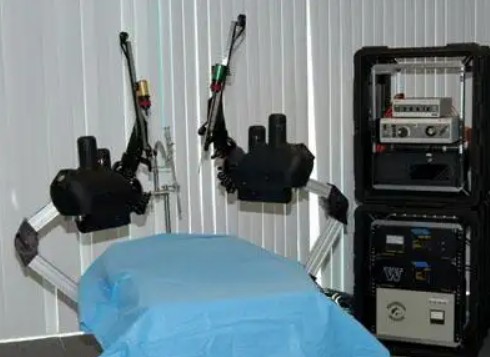
What are the tactical benefits of robotic medical devices and how are they being used? They dramatically increase survival rates in contested zones. Operators benefit from autonomous extraction vehicles (Unmanned Ground Vehicles – UGVs) acting as robotic stretchers. These armored, low-profile robots can navigate through heavy suppressing fire to retrieve wounded soldiers, minimizing the risk to human MEDEVAC teams.
Military surgeons benefit from tele-robotic surgical systems deployed in Forward Operating Bases (FOBs). These allow a top-tier trauma surgeon sitting at Walter Reed National Military Medical Center to operate on a critically wounded soldier in a remote Middle Eastern outpost in real-time. This eliminates the delay of airlifting the patient, preventing massive blood loss and stabilizing them immediately. Furthermore, robotic surgical arms equipped with micro-stabilizers filter out the vibrations of mobile medical tents, ensuring absolute precision when repairing shrapnel damage to delicate vascular networks.
What are DARPA-funded researchers developing in the area of robotic medical systems to improve combat casualty care? Autonomous Trauma Care Pods: The modern battlefield often denies air superiority, meaning traditional helicopter MEDEVACs are increasingly impossible. To solve this, DARPA and DoD researchers are developing autonomous, life-support-integrated pods. Once a wounded soldier is placed inside, the robotic pod acts as an automated intensive care unit. Using AI-driven sensors, the system can automatically administer tourniquet pressure, inject coagulants, monitor vital signs, and deliver oxygen while a drone or UGV transports the pod back to friendly lines.
What are military bionic devices? Unlike robots that act independently or assist a surgeon, military bionic devices are highly advanced prosthetic and orthotic systems physically integrated with a wounded operator. These high-tech devices are designed to seamlessly mimic, restore, or even augment physical abilities that were lost due to blast injuries, amputations, or severe nerve damage sustained in combat.
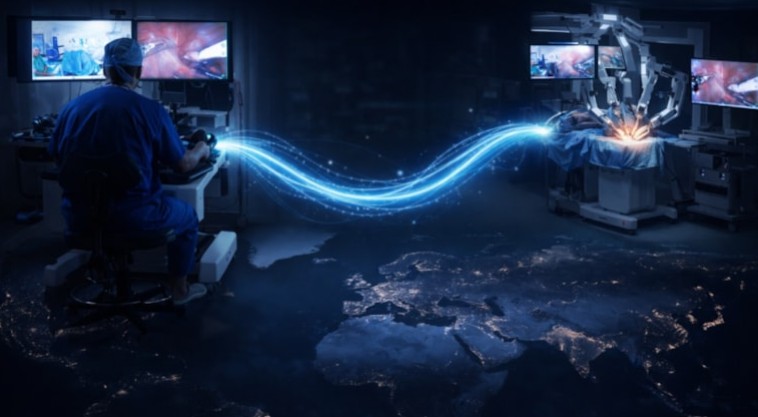
What are the benefits of bionic medical devices for wounded warriors and how are they used? They redefine life post-injury, allowing many wounded operators to return to active duty. Standard prosthetics of the past simply filled space; modern bionics interact directly with the human nervous system.
Through a surgical procedure known as Targeted Muscle Reinnervation (TMR), severed nerves from an amputated limb are re-routed to healthy muscle tissue. Advanced bionic limbs feature sophisticated microprocessors and myoelectric sensors that read these re-routed nerve signals. This allows a veteran to control a bionic arm intuitively—simply by thinking about moving their fingers—restoring the ability to hold a weapon, type on a tactical terminal, or grasp a loved one’s hand.
Additionally, military exoskeletons (wearable bionics) are being used in rehabilitation centers to help operators with spinal cord injuries stand and walk, preventing severe musculoskeletal deterioration and drastically improving mental health and quality of life.
What are defense researchers developing in the area of bionic devices to restore combat readiness? Bi-directional Neural Interfaces for “Feeling” Bionics: Standard bionics allow for movement, but they do not provide sensory feedback, making delicate tasks difficult. Defense researchers are currently pioneering bi-directional neural interfaces. These systems not only receive commands from the brain to move the robotic limb but also send electrical signals back to the brain. This groundbreaking technology allows the user to actually “feel” pressure, texture, and temperature through the bionic fingertips, creating a truly unified human-machine interface.
Osseointegrated Prostheses: To eliminate the discomfort and physical limitations of traditional socket prosthetics (which often chafe and degrade tissue), military researchers are advancing osseointegration. This involves surgically implanting a titanium anchor directly into the patient’s living bone, allowing the bionic limb to attach directly to the skeleton. This provides unprecedented stability, range of motion, and load-bearing capacity, moving us closer to the era of the true bionic soldier.
React