What Missiles Does the UK Have? Trident, Storm Shadow, Brimstone
Britain’s longest-range missile is the Trident II D5, a nuclear weapon carried by four submarines. Below it the list is short and specialised: two cruise missiles, a family of small precision weapons for aircraft, and the air defence missiles of the fleet and the army. The United Kingdom has no land-based ballistic missiles and no hypersonic weapon. It has decided to change that, and in July 2026 it took the lead of a European programme to build missiles with ranges of up to 2,000 km.
This guide lists what is in service today, service by service, and then sets out the weapons on order.
What missiles does the UK have?
The table lists the main types in service or on order in October 2026.
| Missile | Role | Launched from | Range |
|---|---|---|---|
| Trident II D5 | Nuclear ballistic missile | Vanguard-class submarines | Over 7,000 km |
| Tomahawk | Land-attack cruise missile | Astute-class submarines | About 1,600 km |
| Storm Shadow | Air-launched cruise missile | Typhoon | Over 250 km |
| Brimstone | Air-to-ground missile | Typhoon, Protector drone | Up to 60 km from a fast jet |
| SPEAR 3 | Small cruise missile, in development | F-35B | About 140 km |
| Meteor | Long-range air-to-air missile | Typhoon; F-35B later | Over 100 km |
| ASRAAM | Short-range air-to-air missile | Typhoon, F-35B | Over 25 km |
| Naval Strike Missile | Anti-ship and land-attack missile | Type 23 frigates, Type 45 destroyers | Over 185 km |
| Sea Viper (Aster 15 and 30) | Naval air defence | Type 45 destroyers | 30 km and 120 km |
| Sea Ceptor and Sky Sabre (CAMM) | Air defence | Type 23 frigates; army launchers | Over 25 km |
| Sea Venom and Martlet | Light anti-ship missiles | Wildcat helicopter | About 20 km and 6 km |
| Starstreak | Short-range air defence | Stormer vehicle, shoulder launcher | About 7 km |
| GMLRS | Guided artillery rocket | M270 launcher | Over 70 km; 150 km version on order |
| Javelin and NLAW | Anti-tank missiles | Infantry | Up to 4 km and 800 m |
Trident: the nuclear missile
Trident II D5 is an American missile that Britain leases from a shared pool kept at Kings Bay in Georgia. It is 13 metres long, weighs 59 tonnes and can carry several warheads to targets more than 7,000 km away. The warheads are British, designed and built at Aldermaston. Each of the four Vanguard-class submarines has 16 launch tubes, and one boat is at sea at all times. Britain has no other nuclear delivery system in service, although it announced in 2025 that it would buy 12 F-35A aircraft able to carry American nuclear bombs.
Storm Shadow and Tomahawk: the cruise missiles
Storm Shadow is the Royal Air Force’s long-range strike weapon. It is a stealthy, 1,300 kg cruise missile with a two-stage warhead designed to break into hardened buildings, and it flies low for more than 250 km by the official figure. Britain began supplying it to Ukraine in May 2023, and Ukrainian aircraft have used it against headquarters, bridges and ships. That drew down British stocks, and in July 2025 London and Paris agreed to restart production. The missile is described in detail in our profile of Storm Shadow.
The Royal Navy’s cruise missile is the American Tomahawk, fired from the torpedo tubes of Astute-class submarines. It reaches about 1,600 km. The stock is small, thought to be around 65 missiles, and is being upgraded to the Block V standard. Britain plans to fit Tomahawk to its Type 26 frigates as well, which would give surface ships a land-attack role for the first time.
Brimstone, SPEAR 3 and Meteor: the air weapons
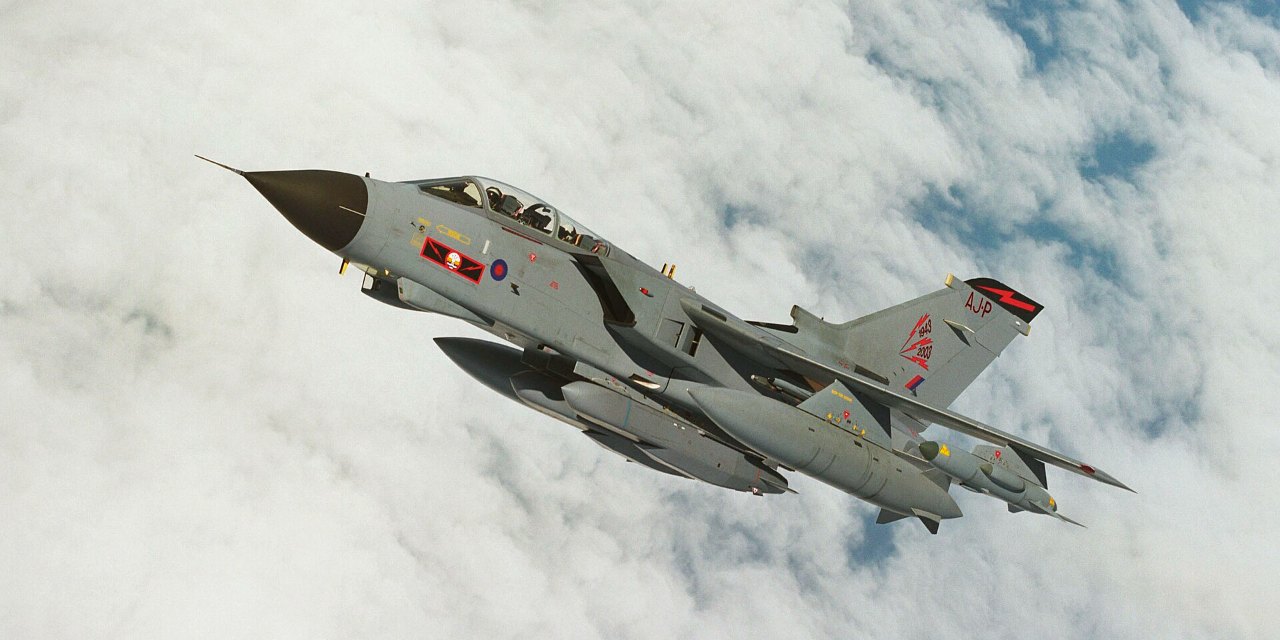
Most British air-launched missiles come from one company, MBDA, which has factories at Stevenage and Bolton. Brimstone is a 50 kg missile with a radar and laser seeker, built to hit moving vehicles and small boats. Typhoons carry it in racks of three, and it has been supplied to Ukraine in a ground-launched form. SPEAR 3 is a larger weapon with a small jet engine and a range of about 140 km, designed to fit eight at a time inside the F-35B; its entry into service has been delayed by several years.
For air combat the Typhoon carries Meteor, whose ramjet keeps it under power all the way to the target and gives it a reach of well over 100 km, and the short-range ASRAAM. Until Meteor is cleared on the F-35B, British F-35s rely on the American AMRAAM.
Royal Navy missiles
The fleet’s air defence rests on two systems. Sea Viper, on the six Type 45 destroyers, fires the Aster 15 to about 30 km and the Aster 30 to about 120 km. In April 2024 HMS Diamond used it to shoot down a Houthi ballistic missile in the Red Sea, the first such interception by a British warship. The missiles are being upgraded to engage ballistic targets more reliably. Sea Ceptor, on the Type 23 frigates, uses the smaller CAMM, which the army also fires from trucks under the name Sky Sabre.
Against ships, the navy retired Harpoon in 2023 and bought the Norwegian Naval Strike Missile as a stopgap for eleven frigates and destroyers. It skims the sea for more than 185 km and can also attack targets on land. Wildcat helicopters carry the lighter Sea Venom and Martlet for use against fast boats.
British Army missiles
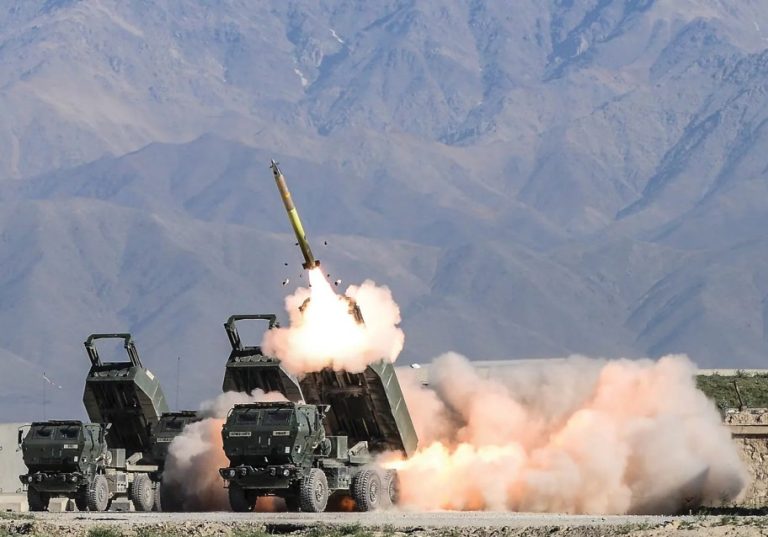
The army’s long reach is the M270 rocket launcher firing GMLRS, a satellite-guided rocket with a range of more than 70 km. An extended-range version that doubles that has been ordered, and in July 2026 Britain moved to join the American Precision Strike Missile programme, whose missile reaches about 500 km. For air defence the army has Sky Sabre and the Starstreak, a Mach 3 missile that releases three guided darts. Its infantry anti-tank weapons, Javelin and NLAW, became familiar in Ukraine, where Britain sent 2,000 NLAWs in the weeks before the invasion of February 2022 and thousands more afterwards.
What missiles is the UK developing?
The Strategic Defence Review of June 2025 promised up to 7,000 long-range weapons built in Britain and at least six new munitions factories. The Defence Investment Plan of 30 June 2026 put money behind several programmes.
| Programme | What it is | Partners | Status |
|---|---|---|---|
| Stratus | Stealthy and high-speed successors to Storm Shadow and Harpoon | France, Italy | £1.4bn of UK funding over four years |
| Deep Precision Strike | Ground-launched missile with a range of 2,000 km or more | Germany | Study phase; service in the 2030s |
| Precision Strike Missile | 500 km ballistic missile for M270 launchers | United States, Australia | UK joining, with about £190m |
| Hypersonic weapon | Technology demonstrators under a £1bn framework | United States, Australia | No service date set |
| Nightfall | Low-cost 500 km ballistic missile for Ukraine | Ukraine | Test launches expected; no UK purchase planned |
| Brakestop | 600 km one-way attack drone for Ukraine | Ukraine | Flight testing |
At the NATO summit in Ankara on 8 July 2026 Britain said it would lead a European effort to develop strike missiles with ranges from 300 to 2,000 km. The lesson it draws from Ukraine is that range and numbers decide who can hit the other side’s depots and airfields, and that it has too little of both.
Frequently asked questions
Does the UK have intercontinental ballistic missiles?
Not on land. Its only long-range ballistic missile is the submarine-launched Trident II D5, which has a range of more than 7,000 km and carries nuclear warheads.
What is the range of Storm Shadow?
The official figure is more than 250 km. It is carried by RAF Typhoons and has been supplied to Ukraine.
Does the UK have Tomahawk missiles?
Yes. Royal Navy Astute-class submarines fire the Tomahawk, which has a range of about 1,600 km. There are plans to fit it to Type 26 frigates.
Does the UK have hypersonic missiles?
No. Britain funds hypersonic research under a £1bn framework and is studying a 2,000 km missile with Germany, but no weapon has a service date.
Who makes British missiles?
Mainly MBDA UK, at Stevenage and Bolton, and Thales in Belfast. Trident, Tomahawk, GMLRS and Javelin are American.
What is the Stratus missile?
A programme with France and Italy to replace Storm Shadow and Harpoon with two new missiles, one stealthy and subsonic and one high-speed.
- The Aviationist – UK to lead European deep precision strike effort (July 2026): theaviationist.com
- Fw-Mag – UK missile and deep strike plans and investment: a roundup (February 2026): fw-mag.com
- UK Government – New munitions factories and long-range weapons under the Strategic Defence Review: gov.uk
- UK Government – UK and Germany advance deep precision strike missile programme: gov.uk
- Army Technology – No plan for UK to procure its own Nightfall missiles: army-technology.com