Parsons Corporation Company Profile, Products, Employees and Revenue
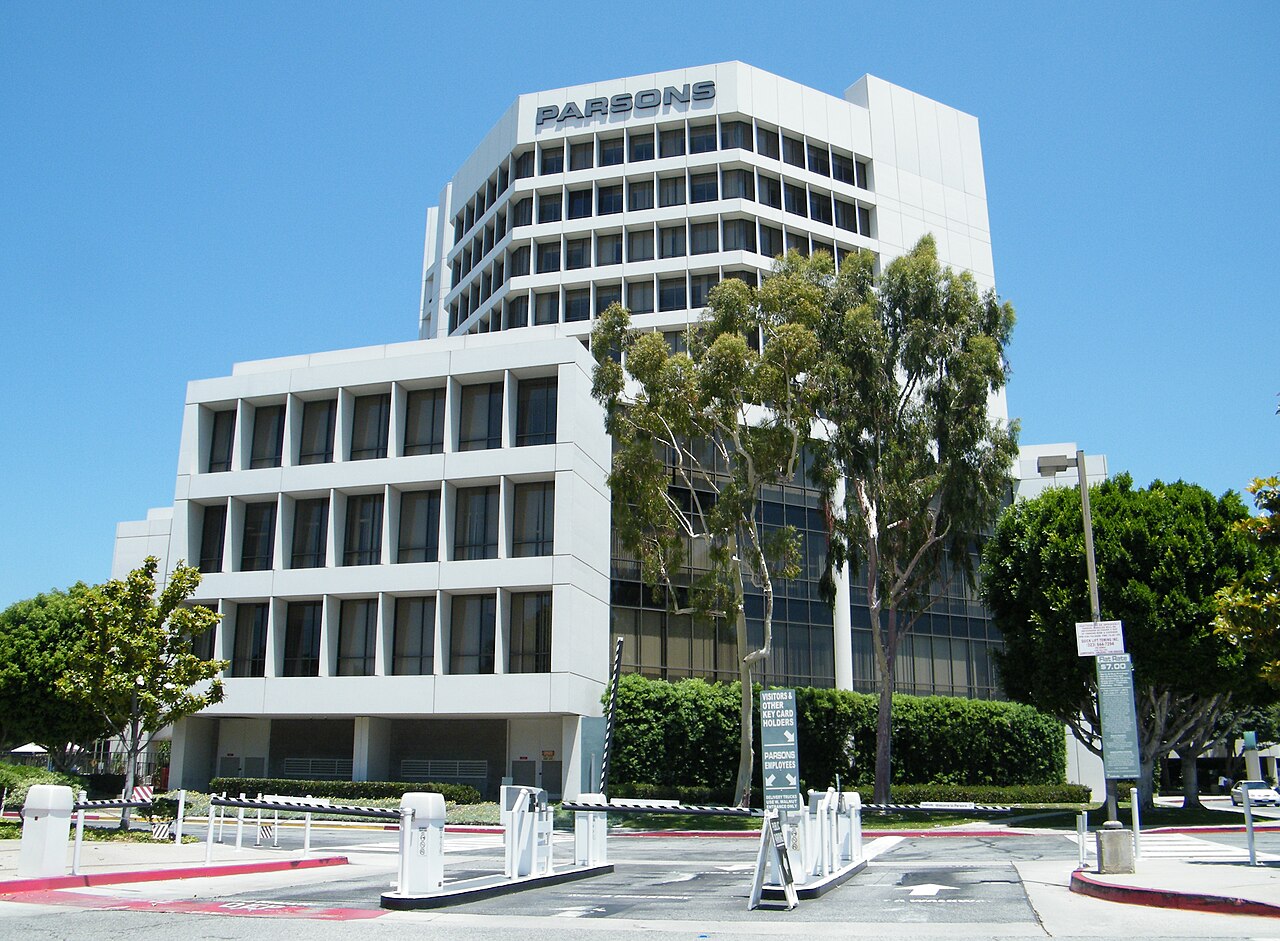
Parsons Corporation is the 80-year-old American engineering firm that turned itself into a defense technology company, closing 2024 with roughly $6.8 billion in revenue split between federal missions and giant infrastructure projects. From missile defense support and offensive cyber to Riyadh’s metro, the Chantilly, Virginia company occupies a niche few rivals match: it builds both physical and digital infrastructure for governments.
Parsons Corporation at a glance
| Item | Detail |
|---|---|
| Full name | Parsons Corporation |
| Headquarters | Chantilly, Virginia, United States |
| Founded | 1944, in Los Angeles, by Ralph M. Parsons |
| Employees | Roughly 20,000 |
| Revenue | About $6.8 billion (2024) |
| Ownership | NYSE-listed (PSN) since 2019; an employee stock ownership trust remains the largest shareholder |
| Segments | Federal Solutions; Critical Infrastructure |
Ralph Parsons built the firm on postwar petrochemical plants, airfields and public works, and for decades Parsons was known mainly for megaprojects, refineries in Alaska, new towns in Saudi Arabia, transit systems across the US. The defense identity came later, assembled deliberately through acquisitions over the past decade and cemented when the company moved its headquarters into the Washington orbit.
What does Parsons Corporation do
Parsons reports in two halves. Federal Solutions sells engineering and technology to US defense, intelligence and security customers. Critical Infrastructure delivers program management and design for roads, rail, airports, water and urban development, increasingly overseas. The mix is unusual: most federal-services rivals shed their construction-adjacent businesses long ago, while Parsons treats the pairing as a hedge across budget cycles.
| Domain | What Parsons delivers |
|---|---|
| Cyber and electronic warfare | Offensive and defensive cyber tools and signals work for defense and intelligence customers |
| Missile defense | Engineering support to the Missile Defense Agency and hypersonic test infrastructure |
| Counter-drone | Integration of counter-UAS sensors and effectors for US forces and agencies |
| Space | Ground systems, space domain awareness and launch range modernization |
| Critical infrastructure protection | Security engineering for borders, bases and government facilities |
Parsons defense, space and cyber programs
The headline win of recent years came in January 2025, when Parsons took the roughly $1.45 billion MACH-TB 2.0 contract to expand the Pentagon’s hypersonic flight-test capacity, the kind of test-infrastructure work that sits upstream of systems like THAAD and the interceptors meant to counter hypersonic threats. The company also holds long-running Missile Defense Agency engineering support work.
In cyber, the 2024 purchase of BlackSignal Technologies for a reported $560 million deepened offensive cyber and electronic warfare capabilities aimed at national security customers. Counter-drone integration is a growing line as well, feeding a market that specialist firms like DroneShield approach from the product side while Parsons plays integrator.
Parsons in the Middle East
Parsons has worked in the Gulf since the 1950s, when it helped master-plan Saudi industrial cities such as Yanbu, and the region remains its largest market outside the United States. Current work includes program management on Riyadh’s metro and roles across Saudi giga-projects and UAE infrastructure. For investors, the infrastructure arm converts Gulf capital spending into a counterweight to any US budget softness, though it exposes the firm to regional project risk in return.
The regional presence also feeds the security business. Governments that hire Parsons to build airports and rail lines increasingly ask the same firm to protect them, from perimeter security engineering to counter-drone coverage for critical sites, and the company has positioned its infrastructure protection line to capture exactly that crossover demand.
Parsons revenue, acquisitions and outlook
Revenue reached about $6.8 billion in 2024, up roughly 24 percent, with both segments growing. The balance sheet story is acquisitions: Polaris Alpha (2018) brought mission software, Braxton (2020) space ground systems, Xator (2022) critical infrastructure protection, Sealing Technologies (2023) defensive cyber kits and BlackSignal (2024) offensive cyber. Compared with services giants like Leidos, Parsons stays mid-sized on purpose, buying capabilities rather than headcount.
The outlook hinges on two currents moving in Parsons’ favor, hypersonic testing and counter-drone demand, and one moving against every federal contractor, pressure on civilian agency budgets. Management has guided toward continued growth led by national security work.
Parsons Corporation frequently asked questions
What does Parsons Corporation do?
It provides defense, intelligence and security technology, cyber, missile defense support, counter-drone and space work, plus engineering for major infrastructure projects worldwide.
Is Parsons a defense contractor?
Yes. Its Federal Solutions segment serves the Pentagon, the Missile Defense Agency and intelligence customers, and generates over half of revenue.
Who owns Parsons Corporation?
It trades on the NYSE as PSN, and the company’s employee stock ownership trust remains the largest single shareholder.
How big is Parsons?
Roughly 20,000 employees and about $6.8 billion in 2024 revenue.
Where is Parsons headquartered?
Chantilly, Virginia, near Washington, DC; the firm was founded in Los Angeles in 1944.
- Parsons Corporation annual disclosures for 2024
- Wikipedia – Parsons Corporation (accessed October 2026)
- Publicly announced US government contract awards
- Defence & Tech reporting on the federal services market