M270 MLRS Specs, Rockets, Range, Cost and Operators
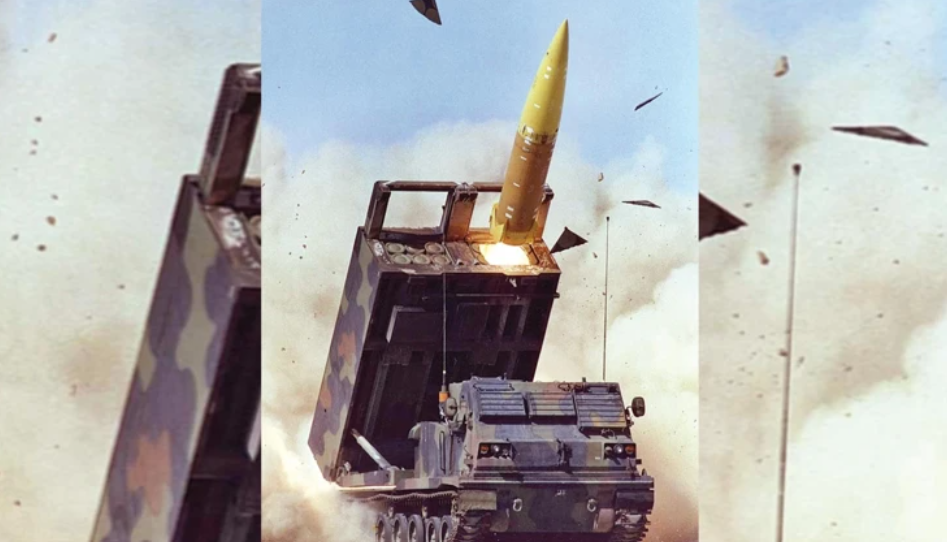
The M270 MLRS is the tracked launcher that carries twice the firepower of a HIMARS, loading 12 guided rockets or up to four ballistic missiles on an armored chassis that entered US Army service in 1983. Built today by Lockheed Martin and fielded by more than a dozen countries, it has fought in every major US ground campaign since Desert Storm and is now firing precision rockets in Ukraine.
What is the M270 MLRS
The Multiple Launch Rocket System was born from a Cold War problem: NATO artillery was badly outnumbered, and the alliance needed a way to mass fires quickly against Soviet armored formations. Vought, whose missile business later passed to Lockheed Martin, won the program in the late 1970s, and the first launchers reached the US Army in 1983. Several NATO countries co-produced the system, which is why it spread across European armies early.
The design pairs a stretched, automated launcher module with a tracked chassis derived from the Bradley fighting vehicle. A crew of three can fire from inside the armored cab, and the launcher reloads its own pods with an onboard boom in a few minutes, without exposing the crew to handle individual rockets.
M270 MLRS specifications
| Item | Value |
|---|---|
| Role | Armored, tracked multiple rocket launcher |
| Crew | 3 (driver, gunner, section chief) |
| Combat weight | About 25 tonnes |
| Chassis | M993 carrier, derived from the Bradley IFV |
| Engine | Cummins VTA-903 diesel, 500 hp |
| Road speed | About 64 km/h |
| Road range | About 480 km |
| Armament | Two pods: 12 rockets, or 2 ATACMS, or 4 PrSM on M270A2 |
| Reload | Self-loading boom, a few minutes per pod |
What rockets can the M270 fire
| Munition | Type | Range |
|---|---|---|
| M26 | Unguided rocket with 644 DPICM submunitions | About 32 km, retired by the US |
| M30/M31 GMLRS | GPS-guided rocket, alternative warheads | 70+ km |
| GMLRS-ER | Extended-range guided rocket | About 150 km, entering service |
| M39 ATACMS | Short-range ballistic missile, one per pod | Up to 300 km |
| PrSM | Precision Strike Missile, two per pod | 400+ km, per US Army statements |
That menu is the system’s real strength. The same launcher that saturated grid squares with cluster rockets in 1991 now fires single GPS-guided rounds through specific buildings, and the M142 HIMARS shares the identical munitions family on a lighter wheeled truck, carrying one pod to the M270’s two.
M270 variants, from M270 to M270A2
The original M270 gave way to the M270A1 in the 2000s, with a modernized fire control system and faster launch drives. The current M270A2 rebuild adds an uprated powertrain, a new armored cab and the common fire control system shared with HIMARS, and it is the configuration required to fire GMLRS-ER and PrSM. Lockheed Martin is recapitalizing US and allied fleets to this standard through the early 2030s.
Germany operates a localized version called MARS II and France fielded the LRU, both upgraded from co-produced Cold War launchers. The UK is upgrading its fleet to the A2 standard and has ordered additional launchers to expand it.
Who operates the M270 and its combat record
Operators include the United States, the United Kingdom, Germany, France, Italy, Greece, Finland, Japan, South Korea, Bahrain, Egypt and Ukraine, with Ukraine’s launchers donated from British, German, French, Italian and Norwegian stocks. In Desert Storm the system fired thousands of M26 rockets, and Iraqi soldiers reportedly called the DPICM barrages steel rain. It fired again in Iraq in 2003, and British and other coalition launchers supported later operations.
Since 2022, Ukrainian M270s have worked alongside HIMARS in operator-reported strikes on command posts, ammunition depots and bridges deep behind Russian lines. The type’s role in delivering ATACMS-class effects is a big reason Western allies now compare it against threats like Russia’s Iskander when sizing their own deep-strike forces.
M270 MLRS frequently asked questions
What is the range of the M270 MLRS?
About 70 km with standard GMLRS rockets, around 150 km with GMLRS-ER, up to 300 km with ATACMS and 400+ km with PrSM on the M270A2.
How many rockets does the M270 carry?
Twelve rockets in two six-round pods, or two ATACMS missiles, or four PrSM on the upgraded M270A2.
What is the difference between the M270 and HIMARS?
HIMARS is a lighter wheeled launcher carrying one munitions pod; the tracked, armored M270 carries two pods and suits heavy formations.
Does Ukraine use the M270?
Yes. The UK, Germany, France, Italy and Norway supplied launchers, and Ukraine reports using them for precision deep strikes alongside HIMARS.
Who makes the M270?
Lockheed Martin builds and upgrades the system, which originated with Vought in the late 1970s.
- US Army and Lockheed Martin public program data
- Wikipedia – M270 Multiple Launch Rocket System (accessed October 2026)
- Reporting on MLRS donations and employment in Ukraine (operator-reported)
- Defence & Tech reporting on rocket artillery programs