
Electro Optic Systems, the Australian Firm Arming the West Against Drones
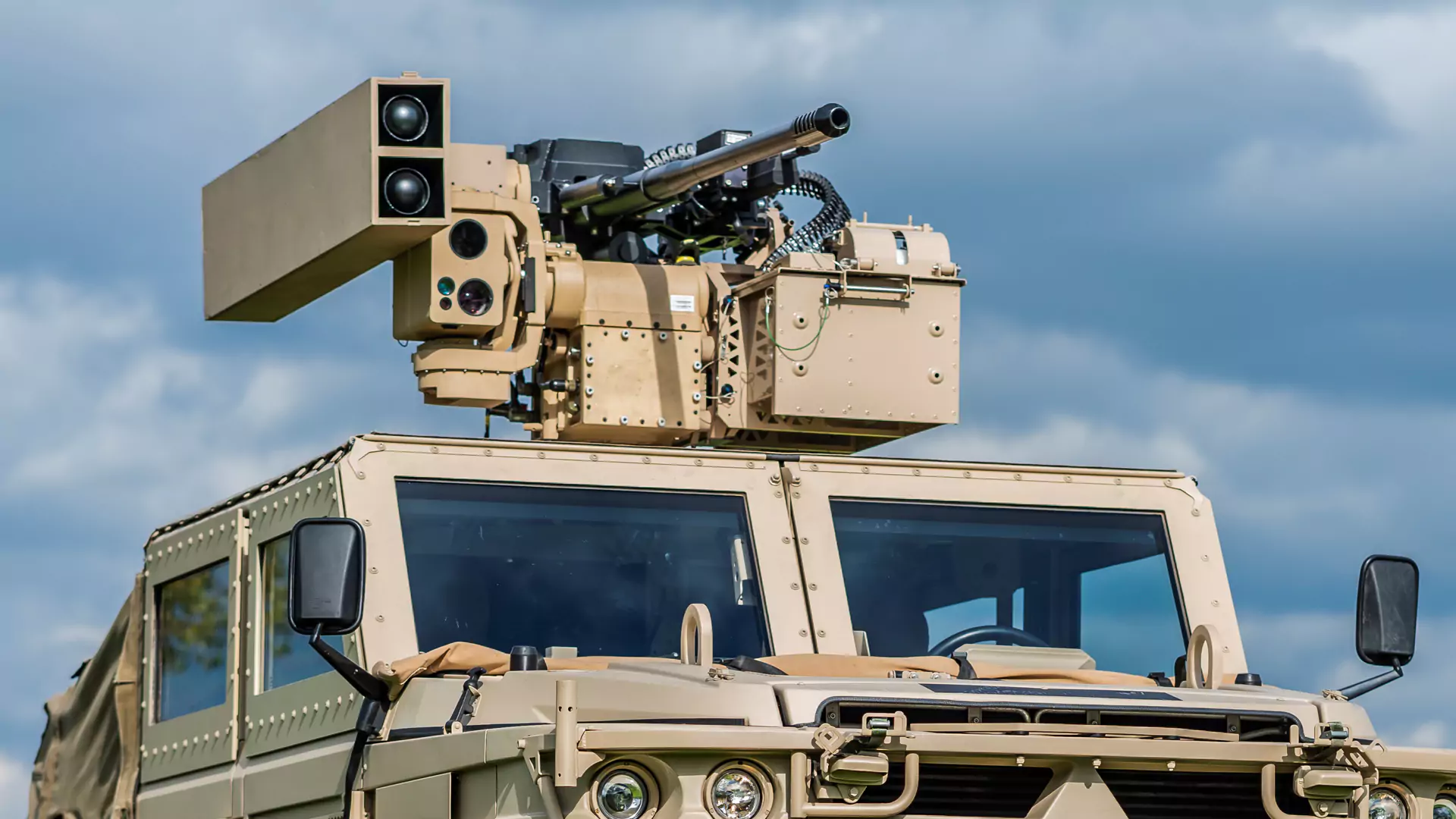
Electro Optic Systems (EOS) is Australia’s most specialized defense exporter, a Canberra company founded in 1983 that reports more than 3,000 remote weapon stations delivered worldwide and now sells counter-drone guns and 100 kW-class lasers to NATO customers. Born as a space-tracking instruments firm, EOS has ridden the drone wars into the middle of Western rearmament while keeping one foot in orbit.
What does Electro Optic Systems do
| Item | Detail |
|---|---|
| Full name | Electro Optic Systems Holdings Limited |
| Headquarters | Canberra, Australia |
| Founded | 1983, by physicist Ben Greene |
| Listed | Australian Securities Exchange, ticker EOS |
| Employees | Roughly 600 across Australia, the US, UAE and Singapore |
| Revenue | On the order of A$250 million annually in recent years |
| Main fields | Remote weapon stations, counter-drone systems, high-energy lasers, space domain awareness |
EOS runs two businesses that share one core skill, pointing things very precisely. Its Defence Systems division builds stabilized remote weapon stations and the fire control that lets them hit small, fast targets, while its Space Systems division tracks satellites and debris with telescopes and lasers from observatories such as Mount Stromlo and Learmonth. In late 2024 the company agreed to sell its EM Solutions satellite communications unit to Britain’s Cohort for about A$144 million, sharpening the focus on weapons and space.
That precision heritage is the company’s quiet advantage. The same tracking algorithms that follow a tumbling rocket body in low orbit also keep a 30mm cannon locked on a quadcopter crossing at 100 km/h, which is why a firm of roughly 600 people competes credibly against primes many times its size. It sits in the same wave of Australian counter-drone success as DroneShield, though the two attack the problem from opposite ends, software and jammers there, guns and lasers here.
EOS remote weapon stations
| System | Weapon fit | Role |
|---|---|---|
| R150 | 5.56mm to 12.7mm machine guns | Light vehicles, logistics trucks |
| R400 | 12.7mm, 30mm cannon or 40mm AGL | Armored vehicles, flagship export product |
| R600 | 30mm cannon plus anti-tank missiles | Heavier turret applications |
| T2000 | 25–35mm cannon, missile options | Medium turret co-developed with Hanwha for Redback |
| Slinger | 30mm cannon with airburst ammunition | Dedicated counter-drone weapon |
The R400 is the workhorse. EOS reports more than 3,000 stations sold across customers including the US Army, Australia and several Middle Eastern militaries, and in 2024 it announced its largest single weapon station order, a European contract reported at roughly A$277 million. The T2000 turret, developed with South Korea’s Hanwha, rides on the AS21 Redback fighting vehicle Australia selected, tying EOS into one of the decade’s biggest armored vehicle programs.
EOS Slinger counter-drone system
Slinger pairs the R400 station with a 30mm cannon firing proximity-fuzed airburst rounds, a radar and EO tracking, and it exists because Ukraine created the market. A reported order of more than 100 Slinger systems, placed through a US prime contractor, sent the weapon to Ukraine from 2023, where gun-based defenses have proven the cheapest reliable answer to Shahed-type drones. Operator-reported results from gun systems in Ukraine pushed several NATO armies toward the same conclusion, and EOS now markets Slinger on trucks, armored vehicles and fixed mounts.
Apollo high-energy laser
Apollo is EOS’s 100 kW-class high-energy laser weapon, aimed squarely at the drone swarm problem, and the company claims it can defeat small drones at ranges out to several kilometers at a cost per shot measured in dollars. In September 2026 the Netherlands signed a letter of intent for Apollo, the program’s most significant European endorsement yet. Manufacturer claims about laser performance still await sustained field service, but Apollo is among the few Western laser weapons offered at this power level as a product rather than a demonstrator.
Who owns EOS and how much does it earn
EOS is a publicly listed company on the ASX with a broad institutional and retail register, not a founder- or state-controlled firm. Revenue has run on the order of A$250 million annually, with defense delivering the bulk, and the balance sheet was reset by the EM Solutions sale, which retired debt and funded the laser and counter-drone push. The company has been candid that its fortunes track the drone war economy, orders follow wherever cheap unmanned aircraft threaten expensive things.
Exports lean on three anchors, the United States, the Gulf, and increasingly Europe. Earlier UAE weapon station contracts, reported at several hundred million dollars in the late 2010s, built the production base that newer European and Ukrainian orders now fill.
EOS frequently asked questions
What does EOS stand for?
Electro Optic Systems, an Australian defense and space company founded in Canberra in 1983.
What is the EOS Slinger?
A counter-drone weapon pairing a stabilized 30mm cannon with airburst ammunition and precision tracking; more than 100 are reported delivered for Ukraine.
How powerful is the EOS Apollo laser?
Apollo is marketed in the 100 kW class, enough by manufacturer claims to destroy small drones at multi-kilometer range.
Who are EOS’s main customers?
The US Army, Australia, Gulf states including the UAE, Ukraine through intermediary contracts, and a growing list of European buyers.
Is EOS profitable?
The company returned to healthier finances after selling EM Solutions for about A$144 million and has reported improving margins on a roughly A$250 million revenue base.
- Public company data and ASX disclosures (accessed October 2026)
- Wikipedia – Electro Optic Systems (accessed October 2026)
- Manufacturer product literature on R400, Slinger and Apollo
- Defence & Tech reporting on the Netherlands Apollo letter of intent