
Is Trump Manipulating the Markets? Who Made the Mysterious $580 Million Trade?
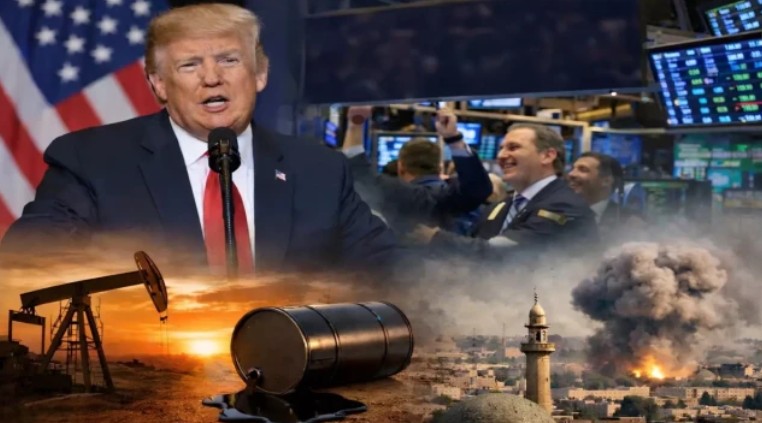
WASHINGTON / NEW YORK —The intersection of geopolitical warfare and global financial markets has just birthed one of the most glaring and controversial market anomalies in modern history. Wall Street and Washington are currently engulfed in a firestorm of speculation following perfectly timed, massive trades executed minutes before a highly sensitive national security announcement by U.S. President Donald Trump.
The sequence of events suggests either an impossibly lucky algorithmic gamble or, more alarmingly, a direct intelligence leak from the highest levels of the U.S. government—potentially the Situation Room itself.
The 60-Second Market Earthquake
According to Bloomberg data and analysis by the Financial Times, the morning of March 23, 2026, was devoid of any scheduled economic data, Federal Reserve speeches, or immediate public catalysts. Yet, within a frantic 60-second window, the markets moved with aggressive, calculated precision.
In near-total silence, approximately 6,200 Brent and West Texas Intermediate (WTI) crude futures contracts changed hands. This represented a torrent of selling with a notional value of roughly $580 million.
Simultaneously, a massive mirror trade occurred in the equities market. An estimated $1.5 billion to $2 billion worth of S&P 500 futures were aggressively bought. The position was crystal clear: Sell oil, buy stocks. It was a textbook bet that a major geopolitical de-escalation was imminent.

The 15-Minute Catalyst
Exactly 15 minutes after these colossal financial positions were secured, President Donald Trump took to his Truth Social platform. He announced that “productive talks” had been held with Tehran and that a temporary pause in the ongoing Iran war was on the horizon.
The markets reacted instantly to the Commander-in-Chief’s post. Oil prices collapsed significantly, shedding dollars per barrel in minutes, while the S&P 500 surged upward. The anonymous entities holding those newly acquired futures contracts saw their wealth multiply astronomically almost instantly.
Intelligence Leak or Market Manipulation?
From an intelligence and security analysis perspective, proving causality in financial markets is notoriously difficult. However, veteran portfolio managers and defense analysts agree that a highly coordinated, multi-market bet of this magnitude—occurring in a vacuum of public information—rarely happens by chance.
“You don’t drop half a billion dollars shorting oil on a quiet Monday morning unless you know something the rest of the world doesn’t,” noted one Wall Street strategist analyzing the volume spikes.
The narrative grew even more complex hours later when the Iranian government officially and categorically denied Trump’s claims, stating no such “productive talks” had occurred. This secondary development has led some analysts to question whether the entire diplomatic signaling was a calculated maneuver intended to manipulate commodities, or if it was a genuine diplomatic effort that simply fell apart after the leak.
As federal regulators and market watchdogs quietly review the trading data to identify the entities behind the $580 million oil dump, the core question remains: Who had advanced access to the President’s social media strategy regarding a highly classified wartime posture, and how did they manage to monetize it so flawlessly?