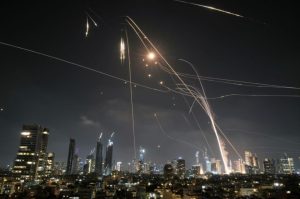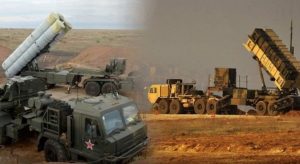

The Golden Dome vs. Fattah-2: Can Western Shields Hold Against Iran’s Hypersonic Sword?

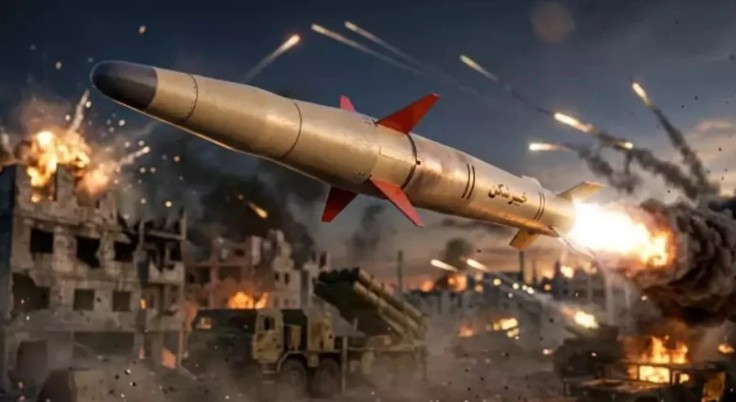

STRATEGIC ANALYSIS – As the April 2026 conflict in the Middle East reaches its boiling point, a silent revolution is occurring in the physics of warfare. The “Golden Dome”—the multi-layered, U.S.-Israeli integrated air defense network—is facing its most significant test since its inception. The adversary? Iran’s Fattah-2, a Hypersonic Glide Vehicle (HGV) that promises to render traditional interceptors obsolete.
For decades, air defense was a game of mathematics. If you knew the parabola of a ballistic missile, you could hit it. But with the Fattah-2, the math has changed.
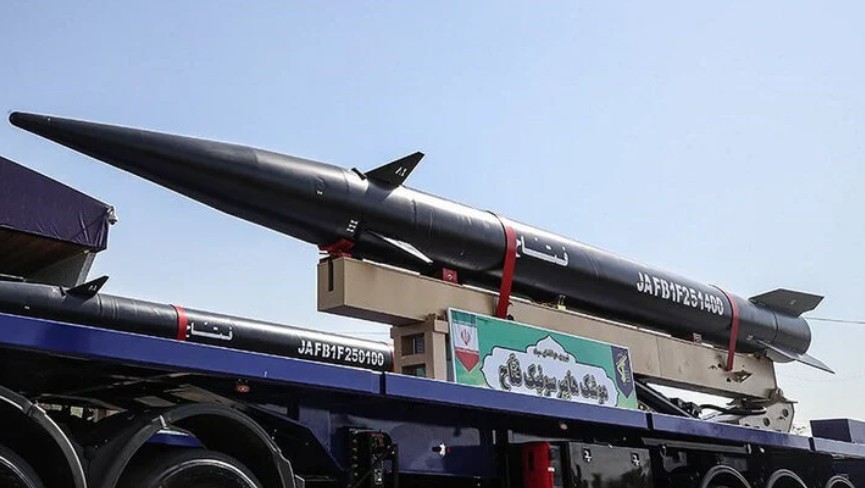
1. The HGV Advantage: Why Speed is Only Half the Story
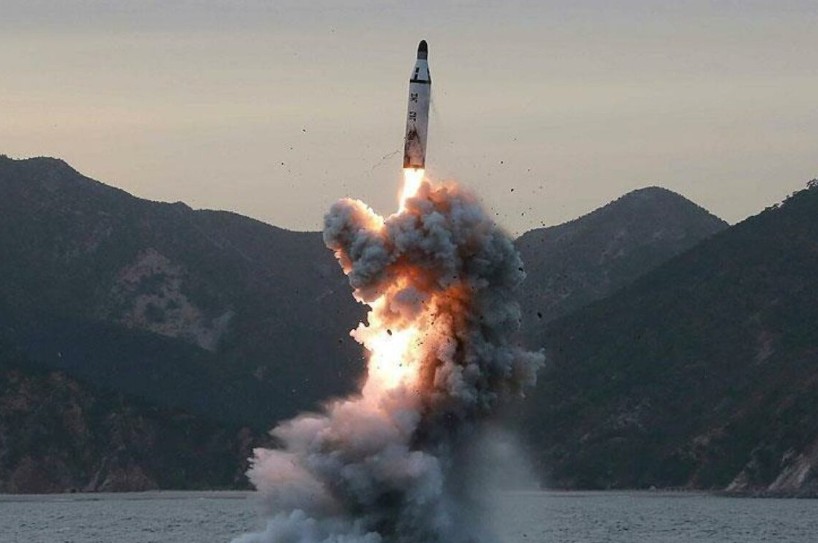
While much of the defense news focus is on the Fattah-2’s Mach 15 speed, the real danger lies in its maneuverability.
Traditional ballistic missiles follow a predictable, arching path. However, the Fattah-2 skips along the upper atmosphere like a stone on water. By staying at lower altitudes than standard ballistic missiles, it stays beneath the optimal engagement window of high-altitude systems like the Arrow-3 and THAAD.
-
The Tracking Crisis: Modern radars utilize “predictive tracking.” When a Fattah-2 warhead maneuvers mid-flight, the AI controlling the interceptor must recalculate the impact point in milliseconds. Reports from early April strikes suggest that Western sensors experienced “track-loss” as the warheads performed 10-G maneuvers at hypersonic speeds.
2. The Saturation Point of the Golden Dome
The “Golden Dome” relies on a tiered response: Iron Dome for short-range, David’s Sling for mid-range, and Arrow-2/3 for long-range/exo-atmospheric threats.
The Iranian doctrine uses “Saturation Warfare” to break this hierarchy. By launching waves of low-cost Shahed-series drones to activate the Iron Dome, followed by subsonic cruise missiles to distract David’s Sling, Tehran creates a “data flood.” In this chaos, the Fattah-2 is launched as the final, precision strike. Even the U.S. Navy’s Aegis-equipped destroyers, considered the gold standard of naval defense, have faced “sensor saturation” when dealing with more than 120 simultaneous tracks.
3. The Physical Limits of Interceptors
Interceptors like the Patriot PAC-3 MSE utilize “Hit-to-Kill” technology. This requires the interceptor to physically collide with the incoming warhead.
At Mach 15, the “closing speed” between the Fattah-2 and an interceptor is nearly Mach 20. At these velocities, even a micro-second delay in fuse activation or a one-degree deviation in steering can result in a total miss. Furthermore, the heat generated by the Fattah-2 creates a plasma cloud around the warhead, which can act as a natural radar-absorbent shield, making it harder for the interceptor’s onboard seeker to find its target.
4. The 2026 Outcome: A Shift to Directed Energy?
The current “Iran War News” cycle highlights a grim reality: the cost-exchange ratio is currently favoring the offensive. A single Arrow-3 interceptor costs roughly $3.5 million, while a volley of Fattah-2 missiles can be produced at a fraction of the cost of the infrastructure they destroy.
World Defense News outlets are now reporting an accelerated push for Directed Energy Weapons (Lasers). Systems like Israel’s “Iron Beam” or the U.S. Navy’s HELIOS are seen as the only long-term solution. Unlike missiles, a laser travels at the speed of light, making even Mach 15 look stationary.
Strategic Verdict
The duel between the Golden Dome and the Fattah-2 has proven that “absolute defense” is a myth in the age of hypersonics. The shield is not broken, but it is certainly leaking. As the U.S. begins its blockade of the Strait of Hormuz, the ability of these air defense systems to adapt to hypersonic maneuvers will determine the survival of regional power structures.
Editor’s Note: This technical intelligence report is based on telemetry analysis from the April 8th engagement. Defense & Tech will continue to track the deployment of AI-driven radar updates intended to mitigate Fattah-2 maneuvers.