
FIBER OPTIC DRONES EMERGE ON THE BATTLEFIELD: A ‘GAME-CHANGER’ TECHNOLOGY IN ELECTRONIC WARFARE ENVIRONMENTS
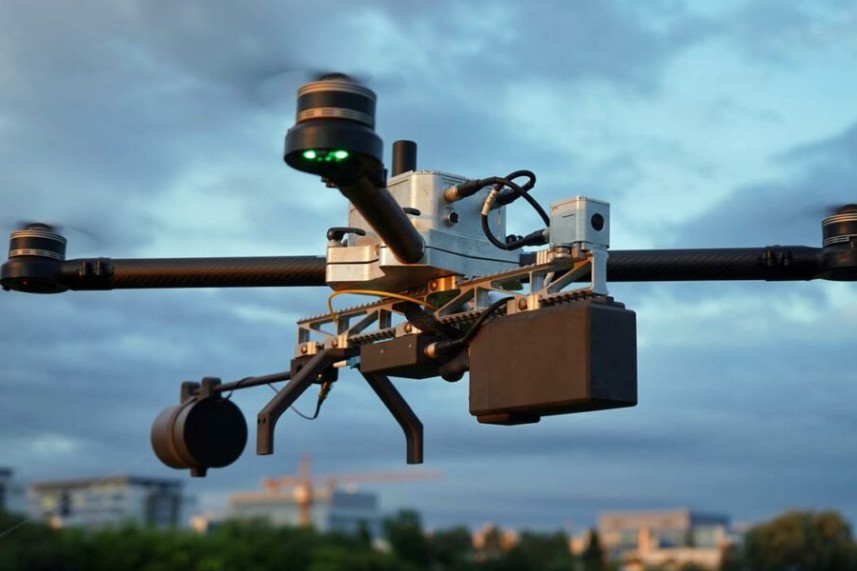
In the rapidly evolving landscape of modern warfare, unmanned aerial vehicles (UAVs) have become an indispensable component of tactical operations. However, as the proliferation of first-person view (FPV) drones has grown, so too has the sophistication of Electronic Warfare (EW). Traditional radio frequency (RF) controlled drones are increasingly falling victim to powerful jammers and GPS spoofing. In response, a new, highly effective, and virtually unstoppable innovation has taken center stage: the fiber-optic drone.
Absolute Immunity to Electronic Warfare The most defining advantage of fiber-optic drones is their communication architecture. Instead of relying on wireless signals that can be intercepted, degraded, or blocked, these drones spool out a physical, hair-thin fiber-optic cable as they fly. This tether completely nullifies the effects of traditional EW systems. Jamming equipment, which creates invisible domes of electromagnetic interference to sever the link between a drone and its operator, is entirely useless against a hardwired connection.
Recent battlefield analyses confirm that while wireless systems remain highly vulnerable to these interventions, fiber-optic systems provide a “secure and uninterrupted data link.” This ensures complete operational continuity and absolute control, even in the most heavily contested electronic environments.

Unmatched Video Quality and Zero RF Signature Beyond jam-resistance, the fiber-optic tether provides significant tactical benefits. The massive bandwidth of fiber optics allows for the transmission of crystal-clear, uncompressed, ultra-low latency video feeds in real time. This high-definition imagery enables operators to identify targets with pinpoint precision, maneuvering through complex terrain, urban ruins, or dense foliage with zero lag.
Furthermore, because these drones do not emit any electromagnetic RF signals to communicate, they are practically invisible to enemy radio direction-finding equipment. This “zero RF signature” ensures that the operator’s location remains entirely hidden, protecting them from retaliatory artillery or counter-battery fire.
Battlefield Proliferation and the Countermeasure Dilemma Emerging at scale during intense combat operations in Eastern Europe, fiber-optic drones have rapidly graduated from a niche capability to a staple weapon. With cables that can spool out anywhere from 10 to 20 kilometers—and advanced prototypes reaching up to 40 kilometers—they offer a terrifyingly precise strike capability deep behind front lines. The technology has proven so effective that it is rapidly proliferating globally, with various armed forces and non-state actors heavily integrating them into their arsenals by 2026.
Defending against this “game-changer” has forced militaries back to the drawing board. Because the multi-million-dollar electronic warfare dome is bypassed by a simple string of glass, countermeasures have reverted to physical and kinetic solutions. Militaries are now deploying vast physical netting systems over supply routes and utilizing AI-assisted computerized sights on assault rifles to physically shoot down the incoming threat.
Conclusion The rise of fiber-optic drones underscores a fundamental truth of military innovation: every countermeasure breeds a new adaptation. By physically circumventing the invisible shield of electronic warfare, fiber-optic drones have reasserted the dominance of unmanned systems, fundamentally altering the calculus of battlefield survival and strike precision.