What Is the KAAN Fighter Jet? Specs, Engine and Delivery Date
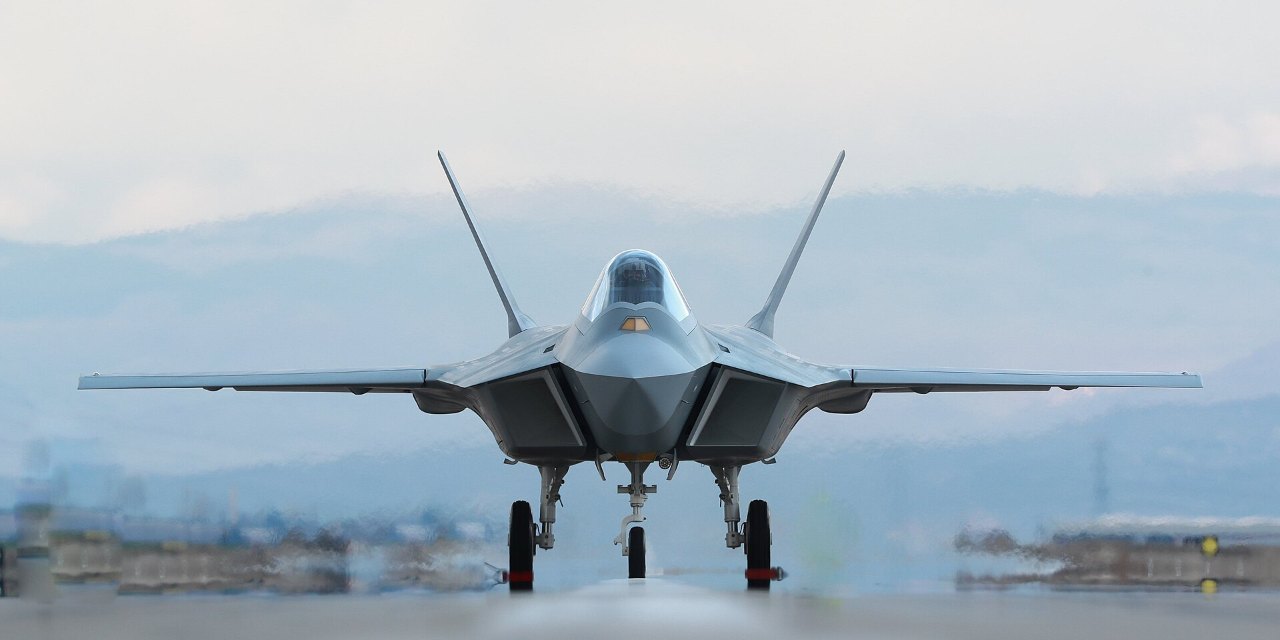
KAAN is the twin-engine stealth fighter that Turkish Aerospace is building in Ankara to replace the air force’s F-16s. One prototype has flown, twice, in 2024. A second, much closer to the production aircraft, finished its ground checks at the start of October 2026 and is due to fly within weeks. The air force is meant to receive its first aircraft in 2028.
This guide sets out what the aircraft is, the figures published for it, which engine it uses and why that matters, and who has ordered it.
What is the KAAN?
KAAN is a single-seat fighter with two engines, internal weapons bays and the angled surfaces of a stealth design. Turkey began the programme in 2010 under the name TF-X, later MMU, the Turkish initials for National Combat Aircraft. Turkish Aerospace received a development contract worth $1.18 billion in 2016, and Britain’s BAE Systems was brought in the following year to help with the engineering. The aircraft was named KAAN in 2023.
The project became urgent in 2019, when the United States removed Turkey from the F-35 programme over its purchase of Russian S-400 missiles. Turkey had planned to buy 100 F-35s. KAAN is now the only fifth-generation aircraft it is sure of getting, and it has to replace a fleet described in our guide to Turkey’s fighter jets.
KAAN specifications
| Item | Figure |
|---|---|
| Length | 20.3 m |
| Wingspan | 13.4 m |
| Height | 5 m |
| Maximum take-off weight | 34,750 kg |
| Engines | 2 × General Electric F110-GE-129, 131 kN each with afterburner |
| Maximum speed | Mach 1.8 |
| Service ceiling | 55,000 ft (16,764 m) |
| Radar | Aselsan MURAD active electronically scanned array |
| Gun | 30 mm cannon |
| Crew | 1 |
These numbers describe a large aircraft. KAAN is longer than the American F-22 and almost five metres longer than the F-35, which gives it room for fuel and for weapons carried inside the fuselage.
First flight and the prototypes
The first prototype, known as P0, began taxi trials in March 2023 and flew on 21 February 2024 for 13 minutes. A second flight on 6 May 2024 lasted 14 minutes and reached 10,000 feet and 230 knots. P0 has not flown since. It was a demonstrator, flown without some of its sensors, and its job was to prove that the basic design worked.
The aircraft that matter now are P1 and P2. Turkish Aerospace showed three prototypes to the press on 13 February 2026, and P1 began taxi tests under its own power on 31 July. It differs from P0 in its control surfaces, air intakes, cockpit area and landing gear, and it carries the forward sensors that P0 lacked. On 2 October 2026 the company’s general manager, Mehmet Demiroğlu, said all system checks on P1 were complete and that it would fly within a few weeks. P2 has finished its slow taxi tests and is to follow before the end of the year.
Which engine does KAAN use?
The prototypes and the first production aircraft use the General Electric F110, the engine that powers Turkey’s F-16s. It is assembled under licence in Turkey, but it remains an American product, and each export needs Washington’s consent. That consent was in doubt for years. On 24 June 2026 the US administration notified Congress of a sale worth about $705 million, and Congress cleared it on 9 July. Turkish Aerospace says it has ten engines in Ankara for testing and is buying 80 more for the first production aircraft.
The Turkish replacement is the TF35000, designed by TEI and TRMotor to produce about 35,000 pounds of thrust. It passed its critical design review early in 2026. Ground tests are planned for later this year, a prototype engine around 2027, and installation in production aircraft from 2032. Until then every KAAN will fly on engines that another government can refuse to supply.
Weapons and sensors
KAAN is designed around Turkish weapons. For air combat it is to carry the Gökdoğan radar-guided missile and the short-range Bozdoğan, with the ramjet-powered Gökhan to follow. For ground and sea targets the list includes the SOM cruise missile and the HGK, KGK and Teber guided bomb kits. These are described in our guide to Turkey’s missiles.
Its main sensor is Aselsan’s MURAD radar, backed by infrared search equipment and an electronic warfare suite. Turkey also intends the pilot to direct unmanned aircraft such as the Kızılelma, which is covered in our guide to Turkish drones.
When will KAAN enter service, and who has ordered it?
Turkey signed a contract for the first 20 aircraft, called Block 10, at the SAHA exhibition in May 2026. Deliveries are planned for 2028 to 2030. Turkish Aerospace said in July 2026 that serial production was two to two and a half years away, and it plans to pass up to 70% of the parts and assembly work to subcontractors to raise the rate. The long-term plan is for about 250 aircraft.
| Date | Event |
|---|---|
| 2010 | Programme launched as TF-X |
| 2016 | Development contract awarded to Turkish Aerospace |
| March 2023 | First prototype begins taxi trials |
| 21 February 2024 | First flight |
| June 2025 | Indonesia agrees to buy 48 aircraft |
| May 2026 | Turkey contracts 20 Block 10 aircraft |
| 31 July 2026 | Prototype P1 begins taxi tests |
| 2028 | First deliveries planned |
| 2032 | Turkish TF35000 engine planned for production aircraft |
The first export customer is Indonesia, which agreed in June 2025 to buy 48 aircraft in a deal Turkish media valued at $10 billion. Egypt announced in July 2025 that it would take part in the programme, and Pakistan and Azerbaijan have cooperation agreements. Saudi Arabia has been reported as a possible buyer, which has not been confirmed.
Is KAAN a fifth-generation fighter?
By shape and layout, yes: internal weapons bays, aligned edges and a modern radar. In its first version it will fall short of the F-35 in several ways. The F110 was not designed for a stealth aircraft, and the prototypes use ordinary round exhaust nozzles that are easy to see on radar and infrared from behind. Sensor fusion and the software that links the aircraft’s systems take years of flight testing to mature. The early blocks are best understood as a stealth-shaped fighter that will grow into its intended role. A comparison with South Korea’s programme is in our article on the KF-21 and KAAN.
Frequently asked questions
Has the KAAN fighter flown?
Yes. The first prototype flew on 21 February 2024 and again on 6 May 2024. The next prototype, P1, completed its ground checks in early October 2026 and was expected to fly within weeks.
What engine does the KAAN use?
Two General Electric F110-GE-129 engines, the type used in Turkish F-16s. A Turkish engine, the TF35000, is planned for production aircraft from 2032.
When will KAAN enter service?
Turkish Aerospace aims to deliver the first aircraft to the Turkish Air Force in 2028. The first 20, known as Block 10, are due between 2028 and 2030.
How fast is the KAAN?
Its published top speed is Mach 1.8, with a service ceiling of 55,000 feet.
Which countries have ordered the KAAN?
Turkey has contracted 20 aircraft and Indonesia has agreed to buy 48. Egypt, Pakistan and Azerbaijan have partnership or cooperation agreements.
How much does a KAAN cost?
No unit price has been confirmed. The head of Turkish Aerospace said in 2023 that it could exceed the $100 million originally promised.
- The War Zone – Turkey’s latest Kaan fighter prototype begins taxi tests (July 2026): twz.com
- Defence Turkey – Turkish Aerospace details KAAN roadmap at Farnborough 2026: defenceturkey.com
- Aviacionline – US greenlights $700 million F110 engine sale for KAAN (June 2026): aviacionline.com
- MiGFlug – KAAN P1 first flight weeks away, says TUSAŞ (October 2026): migflug.com
- Defense News – Turkey to deliver 48 Kaan jets to Indonesia (June 2025): defensenews.com
- Wikipedia – TAI TF Kaan (specifications and programme history): en.wikipedia.org