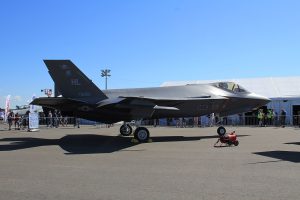

KF-21 vs KAAN, Asia’s New Fighters Head to Head

Two nations that spent decades buying American fighters are now building their own, and their jets entered the world twenty months apart. South Korea’s KF-21 Boramae flew in July 2022 and reached operational service in September 2026; Turkey’s KAAN flew in February 2024 chasing a bolder, riskier fifth-generation ambition. The comparison is really a contest of two national strategies.
Two philosophies, evolution vs leap
The KF-21 is deliberately a 4.5-generation aircraft, stealth-shaped but flying with external weapons, built around proven General Electric F414 engines and an accelerated schedule. Korea Aerospace Industries chose to bank capability early and add stealth features in later blocks. KAAN aims directly at a fifth-generation configuration with internal weapons bays from the start, accepting more schedule risk in exchange for a jet designed to replace F-16s in contested airspace, a decision shaped by Turkey’s removal from the F-35 program in 2019.
Airframes and engines compared
| Parameter | KF-21 | KAAN |
|---|---|---|
| First flight | July 2022 | February 2024 |
| Length | 16.9 m | 20.3 m |
| Max takeoff weight | 25,400 kg | 34,750 kg |
| Engines | 2x GE F414 (22,000 lbf class) | 2x GE F110 (29,000 lbf class) |
| Top speed | Mach 1.8 (tested) | Mach 1.8 (projected) |
| Weapons carriage | External, semi-recessed | Internal bays planned |
| Service entry | September 2026 | Planned late 2020s-2030s |
KAAN is simply a bigger aircraft, closer to an F-22 in footprint, with the internal volume that true stealth carriage demands. The KF-21 sits in the size class of a Typhoon. Both currently depend on American engines, the F414 and F110 respectively, which gives Washington quiet leverage over both programs and explains why each country is funding an indigenous engine, Korea for later blocks and Turkey through the TF35000 project announced in 2025 for integration after 2030.
Sensors, weapons and stealth roadmaps
South Korea’s jet flies with Hanwha’s APY-016K AESA radar, roughly a thousand transmit-receive modules detecting fighter-sized targets at 150 to 200 kilometers, paired with an infrared search and track and integration of MBDA’s Meteor plus IRIS-T. Block II, targeted around 2027, completes air-to-ground integration, and Block III sketches a full-stealth evolution. KAAN’s avionics draw on Turkey’s proven domestic electronics industry, with Aselsan AESA radar and electro-optics, and its weapons roadmap leans on the national missile portfolio including Gökdoğan and Bozdoğan air-to-air missiles.
Timelines, the decisive gap
On paper the jets are rivals; on calendars they are a generation apart in maturity. Six KF-21 prototypes logged 1,600 accident-free sorties by January 2026, forty production aircraft are on order, the first rolled out in March 2026 and squadron service began that September. KAAN unveiled improved P1 and P2 prototypes in February 2026 and targets twenty Block 10 deliveries by 2028, a schedule most observers consider ambitious for an aircraft carrying so much new content at once.
The gap is rational, not damning. Korea started earlier, chose lower-risk architecture and had an uninterrupted supply relationship with its engine maker. Turkey is attempting more airplane with more geopolitical friction, and its record on drones suggests underestimating Turkish aerospace is unwise.
Exports and the Indonesia twist
Indonesia connects the two programs personally. Jakarta joined the KF-21 as a 20 percent development partner, fell behind on payments, cut its share to 7.5 percent in 2024, and then in 2025 signed for 48 KAAN aircraft from Turkey, a stunning pivot that handed the Turkish program its anchor export customer before the jet reached production. Both fighters chase the same future market, air forces that want modern combat aircraft without the political conditions attached to American and European types, with Gulf states, Southeast Asia and Central Asia watching both.
The Engine Question Behind Everything
Both programs share a structural vulnerability, American engines that can be withheld. Export approval for the F414 and F110 gives Washington a quiet veto over third-country sales, a fact both Seoul and Ankara have absorbed into industrial policy. South Korea’s Hanwha is maturing domestic turbofan work aimed at later KF-21 blocks, while Turkey’s TF35000, announced by TEI in May 2025, targets a 35,000-pound-class engine with integration after 2030, arguably the hardest single engineering task in either program.
Until those engines exist, every export announcement carries an asterisk, and every political dispute with Washington threatens a production line. The nation that first fields a credible indigenous fighter engine will have bought something more valuable than a jet, full sovereignty over who receives its aircraft.
Frequently asked questions
Which is better, KF-21 or KAAN?
KF-21 is operational now with lower-risk 4.5-generation design; KAAN targets fuller fifth-generation capability but remains in prototype flight test. They optimize different trade-offs.
Do KF-21 and KAAN use American engines?
Yes, the KF-21 flies with GE F414s and KAAN prototypes with GE F110s; both nations are developing indigenous replacements for the 2030s.
Why did Indonesia order KAAN after partnering on KF-21?
Jakarta reduced its KF-21 funding share amid payment disputes, then signed a 2025 agreement for 48 KAAN jets, becoming the Turkish program’s first export customer.
When will KAAN enter service?
Turkish Aerospace targets initial Block 10 deliveries around 2028, with fuller capability in the 2030s.
- Wikipedia – KAI KF-21 Boramae and TAI TF Kaan (accessed October 2026)
- KAI and TAI program announcements
- Reporting on the 2025 Indonesia-Turkey KAAN agreement