Netherlands Signs Letter of Intent With EOS for Apollo Anti-Drone Laser
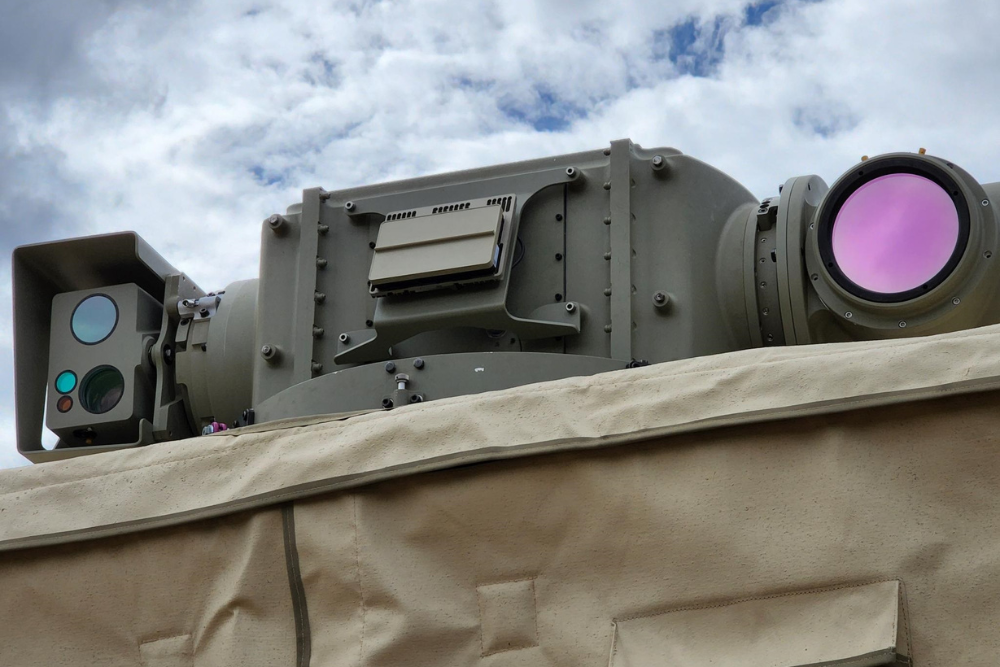
The Netherlands has signed a letter of intent with Australia’s Electro Optic Systems (EOS) to move its Apollo high-energy laser toward service as a counter-drone weapon. The Dutch Ministry of Defence says it intends to buy a number of systems if the work succeeds.
State Secretary for Defence Derk Boswijk signed the letter, which was announced last week. Under it, the ministry and EOS will explore how Apollo can become a fully operational weapon system for the Netherlands. No quantity, price or delivery date has been disclosed.
A Dutch Production Base Is on the Table
The two sides will also look at setting up a production facility in the Netherlands, backed by a Dutch-led European supply chain. EOS said it intends, in principle, to carry out development and production there, and the country could become the company’s European base.
The ministry’s own statement, as translated by Defence Connect, said the laser converts energy into a high-power beam and has proved very effective against drones. It added that the weapon can be more effective and more cost-efficient than kinetic air defence.
Army Recognition reported that EOS had earlier disclosed a €71.4 million contract for a 100 kW-class prototype in an Australian Securities Exchange filing, with production first planned in Singapore. The Dutch plan would bring manufacturing to Europe instead.
What Apollo Is Built to Do
EOS describes Apollo as a scalable laser of 50 to 150 kW, designed against Group 1 to 3 uncrewed aircraft. The company says it can destroy targets at ranges from 50 metres to 3 kilometres and can blind or deny an enemy drone’s optical sensors out to 15 kilometres.
Firing rate is the headline claim. EOS says the 100 kW configuration can engage more than 20 small drones a minute under representative swarm conditions. It also says the system can make more than 200 engagements on its own power and fire continuously when connected to external power. The laser is packaged in a 20-foot ISO container, and the company says an experienced crew can deploy it in under two hours. It is designed to work with NATO air defence command and control systems.
These figures come from EOS, and the announcements did not include independent test results.
EOS chief executive Andreas Schwer told NL Times that “there is a paradigm shift in warfare; the warfare of today, as we can see in Ukraine, is driven by massive attacks by drones.”
Lasers Join the Counter-Drone Mix
EOS is based in Canberra and listed on the Australian Securities Exchange. Its best-known counter-drone product so far has been the Slinger, a gun-based system; Ukraine was announced as the recipient of 160 of them in September 2023. Apollo takes the company into directed energy, where the appeal is a low cost per shot compared with missiles.
Other governments are moving in the same direction. India’s DRDO is looking for an industry partner for a 30 kW anti-drone laser weapon, and the UK plans to arm its Type 45 destroyers with the DragonFire laser from 2027.
For now the Dutch step is an agreement to explore, not an order. The ministry has said any purchase depends on further development work and assessment, and neither side has published a timeline.
Source: NL Times; Defence Connect; Army Recognition; Army Technology.