
Japan to Transfer Five Abukuma-Class Destroyers to the Philippines
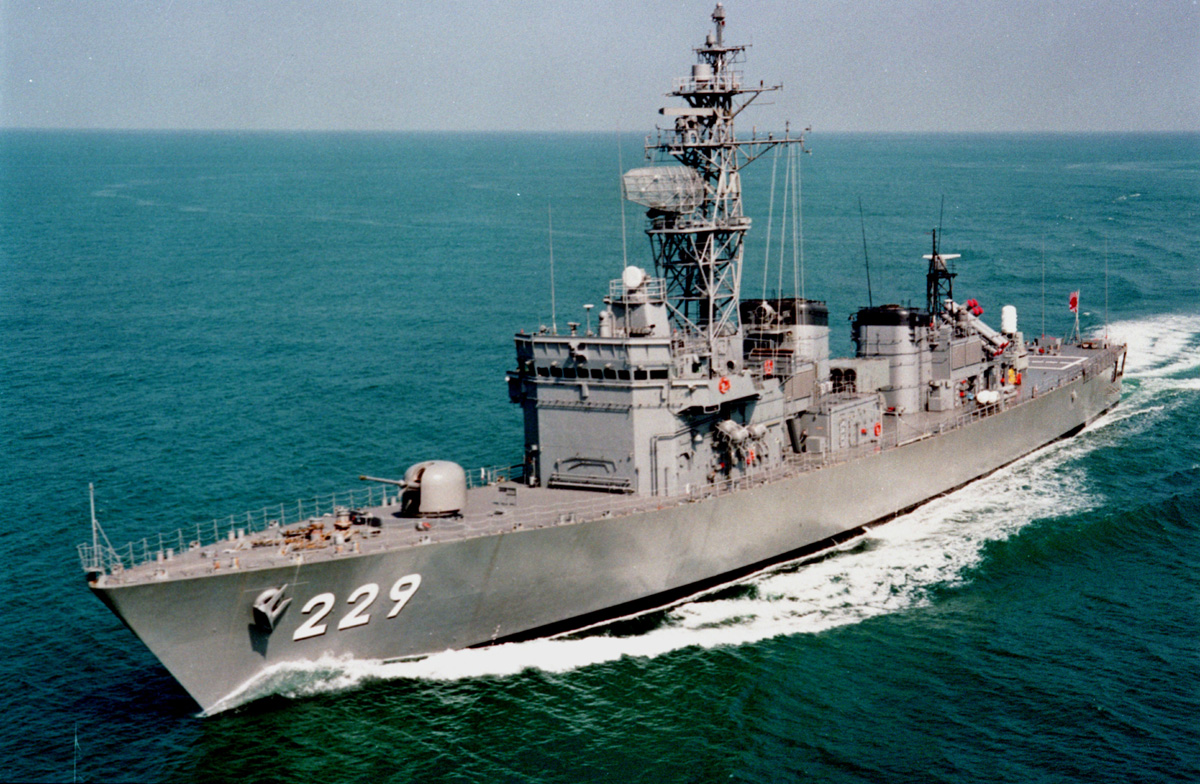
Japan and the Philippines have finalized the terms of a transfer that Philippine Defense Secretary Gilberto Teodoro Jr. has called “a done deal”: five of the Japan Maritime Self-Defense Force’s six Abukuma-class destroyer escorts will be handed over to the Philippine Navy once Japan decommissions them, with deliveries expected within two to three years. Teodoro announced on July 7, 2026, in Manila that only administrative arrangements remained. The transfer, enabled by Tokyo’s April 2026 revision of its arms-export rules, would mark the first time Japan has exported a lethal surface combatant since the Second World War, and gives the Philippine Navy its first dedicated anti-submarine warfare platforms as it confronts China in the South China Sea.
What Happened
Japanese Defense Minister Shinjiro Koizumi and Teodoro reached a broad agreement on June 2, 2026, that Japan would transfer an Abukuma-class destroyer escort to the Philippines “promptly after decommissioning,” alongside a TC-90 surveillance aircraft. A bilateral working group held its first director-general-level meeting in Singapore on May 29, 2026, and by July 7 Teodoro confirmed in Manila that the two governments had moved from five individual negotiations to a single package covering five of the six Abukuma-class ships. He added that the vessels would come to the Philippines free of charge, but that Manila would pay for shipping the ships, training their crews, and making their combat systems interoperable with the rest of the Philippine fleet.
The announcement followed months of caution on the Philippine side. As recently as February 2026, Philippine Navy spokesperson Capt. Marissa Martinez said Tokyo had not yet made a formal offer and had only invited Philippine officials to inspect the ships. The shift from an informal inspection to a near-final package in five months reflects both the urgency Manila attaches to naval modernization amid repeated confrontations with Chinese coast guard and militia vessels around Scarborough Shoal and Second Thomas Shoal, and Tokyo’s own interest in building a defense-export track record under its loosened rules.
The Product/System
The Abukuma class comprises six destroyer escorts built by Japan for coastal defense and anti-submarine patrol, commissioned between December 1989 and March 1993. Each ship displaces roughly 2,000 tons standard, is about 109 meters long, and can make around 27 knots. Armament includes a 76mm OTO Melara naval gun, a Phalanx close-in weapons system, Harpoon anti-ship missiles, an ASROC anti-submarine rocket launcher, and lightweight torpedo tubes. The class has no area air-defense missiles and no helicopter hangar, so it is not a substitute for a modern multi-role frigate; its value lies in anti-submarine sensors and weapons the Philippine Navy currently lacks entirely.
The transfer is possible because of a change in Japanese policy, not in the ships themselves. On April 21, 2026, the Japanese government, under Prime Minister Sanae Takaichi, revised the implementation guidelines of its Three Principles on Transfer of Defense Equipment and Technology, scrapping a rule that had confined exportable equipment to five categories — rescue, transport, warning, surveillance and minesweeping — since 2014. The new framework splits equipment into “weapons” and “non-weapon defense equipment” by lethality, and restricts weapons exports such as destroyers and missiles to the 17 countries that have signed security-information-protection agreements with Japan, a group that includes the United States, the United Kingdom, Australia and the Philippines. Commentators have called it the most significant loosening of Japan’s arms-export restrictions since they were first imposed in 1967.
Who Uses It
All six Abukuma-class ships currently serve with the Japan Maritime Self-Defense Force and are based at various escort flotillas around Japan; none has previously operated outside Japanese service. Once transferred, the Philippine Navy would become the class’s only foreign operator. The ships would be retired from JMSDF service on a rolling basis from around Japan’s 2027 fiscal year, with the Philippines receiving each hull only after its Japanese decommissioning, which is why officials have so far avoided giving a fixed arrival date beyond a general two-to-three-year window from mid-2026.
Export/Procurement History
Japan supplied the Philippines with TC-90 King Air surveillance aircraft in 2017 and 2018 under the same bilateral defense-equipment-transfer agreement signed in 2016 — then limited to non-lethal categories. The Abukuma-class package, under discussion since Naval News first reported talks in July 2025, is explicitly framed by both governments as the first test of Japan’s new, broader export authority. No price was disclosed for the ships themselves because Japan is transferring them without charge; the Philippines’ only confirmed financial commitment covers logistics, training and systems integration, figures for which have not been made public.
Global Competitors
The Abukuma transfer sits alongside, rather than replaces, the Philippine Navy’s main modernization pipeline. South Korea’s HD Hyundai Heavy Industries has delivered four frigates and a corvette to Manila since 2020 and is building two additional 3,200-ton Miguel Malvar-class frigates under a $587 million contract for delivery by 2029, under the Philippines’ decade-long, roughly $34 billion Horizon 3 modernization program. The United States has separately cleared sales of Bell 505 helicopters and is in discussions over a Typhon land-based missile system. Against that backdrop, the ex-JMSDF destroyer escorts are a comparatively low-cost way to add anti-submarine capability the Korean-built frigates do not emphasize, rather than a competing flagship program.
Why It Matters
For Japan, a successful handover would be the first concrete case of its revised export rules being used for a lethal surface combatant, a precedent regional defense planners and the Japanese defense industry will watch closely for what it signals about future sales of frigates or missiles to other security partners. For the Philippines, five additional hulls — even older, modestly armed ones — meaningfully add to a navy that has struggled to keep pace with the scale of Chinese coast guard and maritime militia activity in the South China Sea, and they introduce an anti-submarine warfare capability that was previously absent from the fleet entirely. The deal also deepens a Japan-Philippines defense relationship that already includes a Reciprocal Access Agreement, which entered into force in 2025 and enables joint exercises and reciprocal troop visits.
What Happens Next
The remaining steps are administrative rather than political: finalizing transfer documentation, scheduling each ship’s JMSDF decommissioning, and arranging Philippine crew training and the logistics of sailing or transporting the vessels to the Philippines. Both governments have pointed to a two-to-three-year delivery window from mid-2026, meaning the first hull could realistically arrive in the Philippines in 2027 or 2028, though neither side has published a hull-by-hull schedule. Analysts will also be watching whether Tokyo follows this with further weapons-category exports, given its stated interest in expanding defense-equipment sales across Southeast Asia.
FAQ
Is this a done deal, or still a proposal?
Philippine officials describe the core agreement as finalized, pending administrative arrangements; no binding transfer document or fixed delivery date for each hull had been publicly released as of this writing.
Will the Philippines pay for the ships?
No purchase price has been disclosed because Japan is transferring the vessels without charge. The Philippines has committed to covering transport, crew training and systems-integration costs, which have not been made public.
Why is this Japan’s “first” warship export, when Japan has sold ships before?
Japan has previously transferred non-lethal vessels and equipment such as patrol aircraft under the five-category rule in force since 2014. The Abukuma-class escorts, armed with guns, missiles and torpedoes, fall under the newly created “weapons” category that Japan’s April 2026 rule change allowed it to export for the first time.
What capability do these ships actually add?
Anti-submarine warfare sensors, an ASROC launcher and lightweight torpedoes — a capability set the Philippine Navy does not currently field on any of its frigates or corvettes. The ships lack area air-defense missiles and a helicopter hangar, so they complement rather than replace the Navy’s Korean-built frigates.
Why only five of the six Abukuma-class ships?
Neither government has publicly explained the exclusion of the sixth hull; officials have discussed the package only in terms of the five ships being transferred.
Sources
- Naval News, “Philippines Confirms Deal to Acquire Five Japanese Abukuma-class Destroyer Escorts,” July 2026 — primary source for Teodoro’s July 7 announcement, ship specifications and delivery timeline.
- Naval News, “Japan, Philippines Launch Working Group on Transfer of Abukuma-class Destroyer Escorts,” May 2026 — used for the Koizumi-Teodoro agreement, the Three Principles revision date, and working-group timeline.
- Manila Bulletin, “PH to Shoulder Logistics for Japan’s Abukuma-Class Warships, Says Defense Chief,” July 10, 2026 — used for the free-transfer/logistics-cost split.
- Inquirer.net, “No Formal Offer Yet From Japan for Abukuma-class Ships – Navy,” February 2026 — used to establish the pre-deal status and Capt. Marissa Martinez’s statement.
- Jurist.org / Adnkronos, coverage of Japan’s April 21, 2026 revision of the Three Principles on Transfer of Defense Equipment and Technology — used for the policy-change details and historical context since 1967.
- Korea JoongAng Daily, coverage of HD Hyundai Heavy Industries’ Philippine Navy frigate contracts — used for Horizon 3 program and competing naval procurement context.