Patriot Missile System Specs, Variants, Cost and Operators
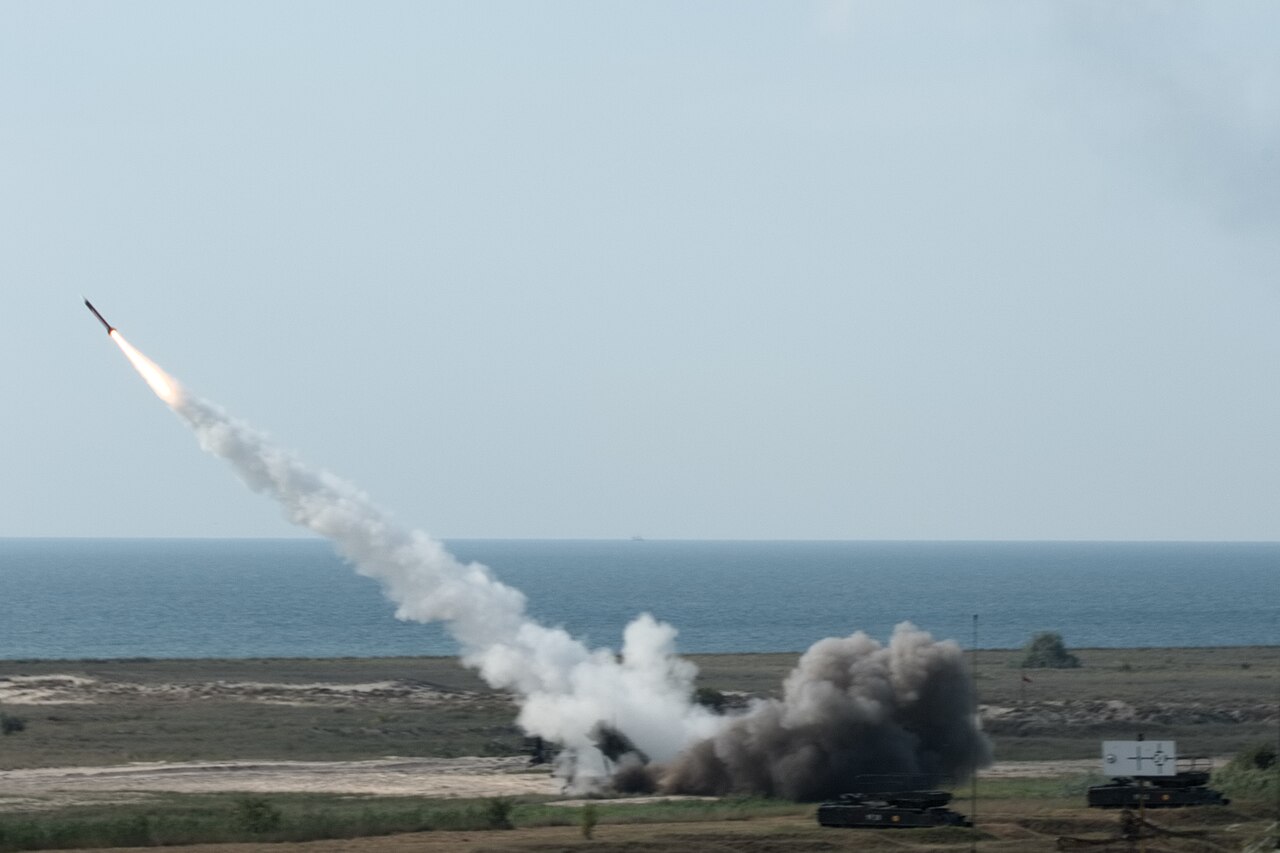
The MIM-104 Patriot is a US-designed surface-to-air missile system, developed by Raytheon and fielded since 1984, that defends against aircraft, cruise missiles and tactical ballistic missiles. Its current interceptors are the PAC-2 GEM-T from Raytheon and the hit-to-kill PAC-3 MSE from Lockheed Martin, and Raytheon says 19 countries operate the system (April 2026).
A US Army battery typically costs about $1.09 billion (FY2022 figure), and one PAC-3 MSE interceptor about $4 million to $4.6 million depending on the source. Demand from Ukraine, Europe and the Gulf has pushed Lockheed Martin toward a target of about 2,000 PAC-3 MSE missiles a year by the end of 2030, up from 620 delivered in 2025.
What Is the MIM-104 Patriot System?
Patriot grew out of the earlier SAM-D programme, whose missile hit a drone target in 1975. It received its designation in 1976, full-scale development began that year, and the system was deployed in 1984, according to Wikipedia. It was first built to counter aircraft and was later reworked to shoot down ballistic missiles, a role that defined its combat record in the 1991 Gulf War.
| Item | Detail |
|---|---|
| Designation | MIM-104 Patriot (Phased Array Tracking Radar to Intercept on Target) |
| Role | Surface-to-air and anti-ballistic missile defence |
| Original developer | Raytheon |
| In service since | 1984 |
| Interceptors | PAC-2 GEM-T (Raytheon); PAC-3 MSE (Lockheed Martin) |
| Radars | AN/MPQ-53; AN/MPQ-65 and 65A; LTAMDS entering service |
| Command and control | Engagement Control Station; IBCS (Northrop Grumman) on newer configurations |
| Missiles produced to date | More than 10,000 (Wikipedia) |
| Operators | 19 countries (Raytheon, April 2026) |
What Are the Patriot Missile Variants and Specs?
The PAC-1 upgrade was software only, widening radar search angles so the system could find steeper ballistic trajectories. PAC-2 (MIM-104C) followed in 1990 with a larger warhead fragment size and refined guidance. GEM variants added better seekers and fuzing, and the PAC-3 (MIM-104F) is a near-total redesign built to destroy tactical ballistic missiles by direct impact.
| Missile | Guidance and kill method | Approx. mass and length | Notes |
|---|---|---|---|
| MIM-104A (original) | Fragmentation warhead | 907 kg, 5.3 m | Aircraft-focused, limited ballistic capability |
| PAC-2 GEM-T | Fragmentation warhead, improved seeker | About 900 kg, 5.3 m | Ballistic-missile-optimised; up to about 160 km max range across PAC-2 variants |
| PAC-3 | Hit-to-kill with active radar seeker | 315 kg, 5.2 m | Small missile, so 16 fit on an M902 launcher |
| PAC-3 MSE | Hit-to-kill, dual-pulse motor, larger fins | 5.3 m | Range extended by up to 50% over PAC-3; initial operating capability August 2016 |
What Does a Patriot Battery Consist Of?
A battery combines a radar, a command station and several launchers. Wikipedia lists the fire control section as a radar set, an engagement control station, an antenna mast group and an electric power plant. Launchers include the M901 (four PAC-2 missiles), the M902 (16 PAC-3 missiles) and the M903 (mixed loads). A battery has roughly 70 to 90 soldiers and a battalion about 600, though a minimum crew of three can operate the engagement station.
| Element | Maker | What it does |
|---|---|---|
| AN/MPQ-53 | Raytheon | Original phased-array radar used with PAC-2 units |
| AN/MPQ-65 / 65A | Raytheon | Supports PAC-2 and PAC-3; the 2017 65A added a gallium nitride AESA transmitter and, per Wikipedia, 50% lower maintenance costs |
| LTAMDS | Raytheon | Three fixed 120-degree arrays for 360-degree coverage; low-rate initial production contract of $2 billion announced August 2024 with deliveries to November 2028 |
| IBCS | Northrop Grumman | Network battle command system that lets different radars and launchers share one air picture |
Poland became the first US ally to declare full operational capability for an IBCS-enabled Patriot configuration, in December 2025, and the same source notes its LTAMDS radar reached full readiness that month.
How Much Does a Patriot System and Missile Cost?
| Item | Figure | Basis |
|---|---|---|
| One US Army battery | About $1.09 billion | FY2022, Wikipedia |
| One export battery | About $2.37 to $2.5 billion | FY2018, Wikipedia |
| PAC-3 MSE, US Army | About $4.6 million (FY2026), $4.8 million (FY2025) | Army budget lines cited by GlobalSecurity |
| PAC-3 MSE, export | $6 to $10 million (estimate) | FY2018, Wikipedia |
The steep price of each interceptor against cheap drones has driven the search for alternatives. The Pentagon recently backed a $750,000 interceptor aimed at the Patriot cost curve, and the Army is running its own second-interceptor competition.
Who Operates the Patriot? Countries and Numbers
Raytheon said in April 2026 that Patriot serves 19 countries. Wikipedia lists the following users. Dates are the latest statements found, not a full acquisition history, and force sizes are omitted where sources do not agree.
| Region | Countries | As-of note |
|---|---|---|
| North America | United States | Original and largest operator; about 1,106 US launchers (Wikipedia) |
| Europe (NATO) | Germany, Netherlands, Poland, Romania, Spain, Greece, Sweden, Switzerland | Poland IBCS capability declared December 2025; Germany, Romania, Spain and the Netherlands ordered up to 1,000 GEM-T missiles (Wikipedia, 2026) |
| Europe (non-NATO) | Ukraine | Operating since 2023; roughly seven batteries in 2025 and 2026 from several donors (press reports) |
| Middle East | Saudi Arabia, United Arab Emirates, Qatar, Kuwait, Bahrain | Gulf states list per Wikipedia, 2025 to 2026 |
| Asia-Pacific | Japan, South Korea, Taiwan | Japan builds PAC-3 under licence at Mitsubishi Heavy Industries, about 30 rounds a year (GlobalSecurity) |
The list keeps changing. Poland has secured a $4 billion US loan guarantee for its purchases, and the Gulf is reshaping its own layers, as with the UAE and Hanwha air defence deal.
How Has the Patriot Been Used in Ukraine?
Ukraine has fielded Patriot since 2023. The US Army has confirmed five interceptor types supplied there: PAC-2 GEM, GEM-C, GEM-T, PAC-3 CRI and PAC-3 MSE, The War Zone reported. Ukrainian crews have shot down Iskander short-range ballistic missiles and examples of the air-launched Kinzhal, and a Ukrainian air force source once described firing 160 interceptors in a single month.
Supply is the constraint. Germany assembled a package of about 30 PAC-3 missiles from European partners in March 2026, and about 35 arrived together with reserve stock. On 14 April 2026 Raytheon announced a $3.7 billion direct commercial sale of GEM-T interceptors for Ukraine, to be built mainly at a new plant in Schrobenhausen, Germany, run by COMLOG, a Raytheon and MBDA Deutschland joint venture. That plant is planned to deliver its first interceptors in 2027. Washington also cleared a separate $2.68 billion Ukraine air defence sale.
What Are the Roles of Raytheon and Lockheed Martin?
Raytheon (RTX) designed the original system and still makes the PAC-2 GEM-T interceptor, the AN/MPQ-65 radar and the LTAMDS radar. Lockheed Martin is prime contractor for the PAC-3 Missile Segment Enhancement and builds the interceptor mainly in Camden, Arkansas. Boeing supplies the MSE seeker in Huntsville, Alabama, and Northrop Grumman provides IBCS.
| Date | Event |
|---|---|
| 1976 | SAM-D becomes Patriot; full-scale development begins |
| 1984 | Patriot deployed |
| 1990 | PAC-2 deployed ahead of the Gulf War |
| August 2016 | PAC-3 MSE reaches initial operational capability |
| 2025 | 620 PAC-3 missiles delivered, up about 20% (Lockheed, via The Defense Post); Boeing wins a $2.7 billion multiyear seeker deal in October (GlobalSecurity) |
| 7 January 2026 | Lockheed and the Pentagon sign a framework to triple PAC-3 MSE output to about 2,000 a year by the end of 2030 |
| 2026 | A Pentagon undefinitized contract action for PAC-3 MSE of up to $58.6 billion over seven years (2026 to 2032) is reported |
| 14 April 2026 | Raytheon signs $3.7 billion GEM-T deal for Ukraine |
Lockheed is growing its Camden workforce from about 1,200 to 1,850. Other suppliers benefit too, such as L3Harris in rocket propulsion for THAAD, and readers can see the company context in our Lockheed Martin profile. Raytheon is separately ramping AMRAAM output under a $20.7 billion contract, the missile that also arms NASAMS batteries.
Patriot Missile System FAQ
What does Patriot stand for?
Phased Array Tracking Radar to Intercept on Target. The system carries the designation MIM-104.
Who makes the Patriot missile?
Raytheon makes the system and the PAC-2 GEM-T; Lockheed Martin makes the PAC-3 MSE.
How much does a Patriot missile cost?
About $4 million to $4.6 million for a PAC-3 MSE in US Army budgets; export estimates run $6 to $10 million.
How much does a Patriot battery cost?
About $1.09 billion for a US battery (FY2022), and about $2.4 to $2.5 billion in export estimates (FY2018).
How many countries use the Patriot?
Raytheon said 19 countries in April 2026.
How many Patriot missiles are produced each year?
Lockheed delivered 620 PAC-3 missiles in 2025 and aims for about 2,000 a year by the end of 2030.
Does Ukraine have Patriot systems?
Yes, since 2023. Reports put the number at about seven batteries in 2025 and 2026, supplied by the US, Germany, the Netherlands and Romania.
What is the difference between PAC-2 and PAC-3?
PAC-2 uses a fragmentation warhead, while PAC-3 destroys targets by direct impact using its own radar seeker.
- Wikipedia – MIM-104 Patriot, PAC-3 MSE, LTAMDS
- Raytheon (RTX) – Raytheon to deliver Patriot interceptors to Ukraine (14 April 2026)
- The Defense Post – PAC-3 MSE production to triple (7 January 2026)
- American Machinist – Pentagon raises Patriot missile order to $58B
- GlobalSecurity – Patriot PAC-3 production and industrial base
- The War Zone – Types of Patriot missiles used in Ukraine
- US Army – Poland declares full operational capability of IBCS-enabled Patriot