
PL-15, the Chinese Missile That Rattled Western Air Forces
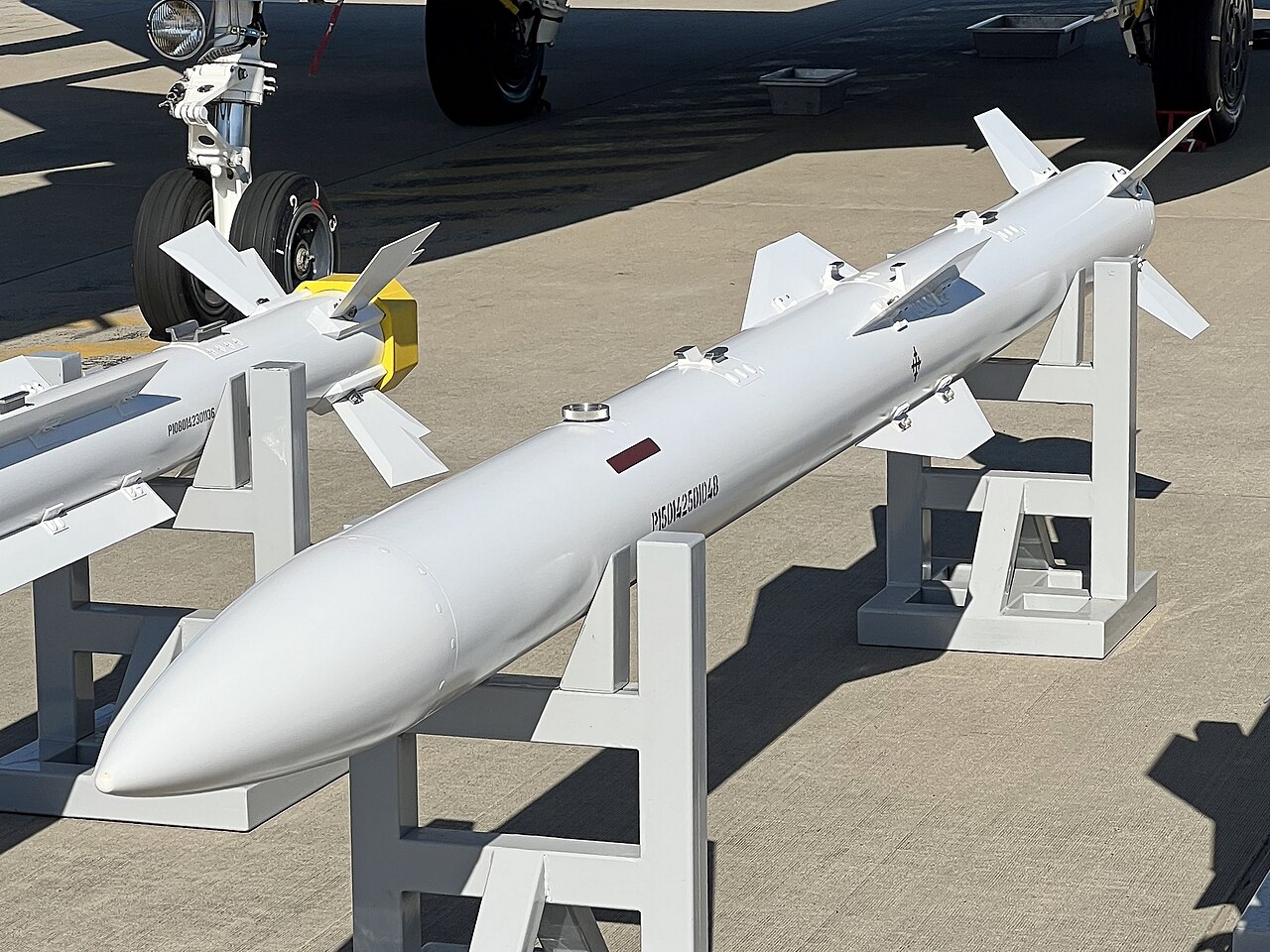
The PL-15 is China’s standard long-range air-to-air missile, an AESA-seeker weapon credited by analysts with 200 kilometers or more of reach and thrust into headlines when Pakistan reportedly employed it in the May 2025 clash with India. It is the missile that ended Western complacency about beyond-visual-range air combat and directly spurred America’s AIM-260 program.
What is the PL-15
The PL-15 (Pili-15, “Thunderbolt”) is a beyond-visual-range air-to-air missile developed by the China Airborne Missile Academy in Luoyang, fielded from roughly 2016 as the replacement for the PL-12. Its defining features are a miniaturized active electronically scanned array seeker, a two-way datalink for mid-course updates, and a dual-pulse solid rocket motor that saves a second burn for the endgame, restoring energy exactly when older missiles run out of it.
It arms China’s entire modern fighter line, carried internally by the J-20 and externally by the J-16 and J-10C, and its export version has become a selling point for Chinese fighters abroad, a dynamic visible in our J-20 vs F-22 comparison.
PL-15 missile range
Range claims require labels. Western analysts commonly credit the domestic PL-15 with 200–300 kilometers under ideal high-altitude launch conditions, while Chinese sources have suggested similar or greater figures; none of this is independently verified. The export PL-15E carries a manufacturer-claimed range of 145 kilometers, a deliberate downgrade. For comparison, current AMRAAM variants are generally credited with 160–180 kilometers in the AIM-120D, which is precisely why the PL-15 alarmed US planners into funding a longer-ranged successor.
PL-15 specifications
| Item | Detail |
|---|---|
| Type | Long-range active-radar air-to-air missile |
| Seeker | Miniature AESA radar with two-way datalink |
| Propulsion | Dual-pulse solid rocket motor |
| Range | 200–300 km estimated (domestic); 145 km claimed (PL-15E export) |
| Speed | Mach 4+ claimed |
| Length | Around 4 m, estimates |
| Weight | Roughly 210–230 kg, estimates |
| Service entry | Around 2016 |
| Developer | China Airborne Missile Academy (AVIC), Luoyang |
PL-15 vs AMRAAM and Meteor
| Missile | Nation | Credited range | Distinctive feature |
|---|---|---|---|
| PL-15 | China | 200–300 km est. | AESA seeker, dual-pulse motor |
| AIM-120D AMRAAM | USA | Roughly 160–180 km | Combat-proven, massive production base |
| Meteor | Europe (MBDA) | 200 km class est. | Throttleable ramjet, large no-escape zone |
| R-37M | Russia | 300+ km claimed | Very large, anti-support-aircraft role |
The fair summary, the PL-15 likely out-sticks legacy AMRAAMs on paper, while Meteor’s ramjet sustains energy better in the terminal phase. America’s answer, the AIM-260, exists because of this table, and the record AMRAAM production contract shows the incumbent is far from finished.
PL-15 combat record
In the May 2025 India–Pakistan air battle, Pakistani aircraft reportedly employed PL-15Es, and Indian authorities later displayed recovered missile debris. Pakistani operator-reported claims included the downing of Indian fighters, among them Rafales; India has not confirmed the specifics, and independent verification remains unavailable. Whatever the final accounting, the engagement marked the PL-15’s combat debut and the first clash between top-tier Chinese and Western air combat systems, and it is being studied accordingly, including for what it says about the Rafale ecosystem it faced.
Which aircraft carry the PL-15
In Chinese service the missile flies on the J-20, J-16, J-10C and carrier-borne J-15 variants, with the J-35A expected to follow. Export PL-15Es arm Pakistan’s J-10CE and JF-17 Block III fleets, and the missile is offered with Chinese fighters marketed to Egypt, Gulf states and others. Each export sale spreads a weapon whose true performance Western air forces would rather not discover empirically.
Integration depth varies by platform. On the J-20 the missile rides internally, its folding control surfaces sized for the stealth fighter’s weapon bays, while external carriage on the J-16 allows heavier loadouts for barrage tactics. Chinese media has also shown the missile paired with airborne early warning aircraft acting as offboard sensors, a networked kill chain in which the launching fighter never switches on its own radar, the same direction Western air forces are moving with their newest missiles and AEW&C links.
PL-15 frequently asked questions
What is the range of the PL-15 missile?
Analysts estimate 200–300 km for the domestic version; the export PL-15E is claimed at 145 km by its manufacturer.
Has the PL-15 been used in combat?
Yes, reportedly by Pakistan in the May 2025 clash with India, its combat debut; kill claims remain operator-reported and unverified.
Is the PL-15 better than AMRAAM?
On claimed range it exceeds legacy AMRAAMs; the AIM-120D narrows the gap and carries an unmatched combat record. Verified comparison data does not exist publicly.
What fighters carry the PL-15?
China’s J-20, J-16, J-10C and J-15 variants; export versions arm Pakistan’s J-10CE and JF-17 Block III.
Why did the PL-15 trigger the AIM-260 program?
Its combination of AESA seeker and long claimed reach threatened AMRAAM’s advantage, pushing the US to develop a longer-ranged successor.
- CSIS and open-source analyses of Chinese air-to-air missiles
- Wikipedia – PL-15 (accessed October 2026)
- Reporting on the May 2025 India–Pakistan air engagement (operator-reported claims noted)
- Manufacturer claims via Chinese state media and export literature
- Defence & Tech reporting on BVR missile programs