

Inside STM, the Turkish Firm Behind Kargu Drones and Mini Submarines
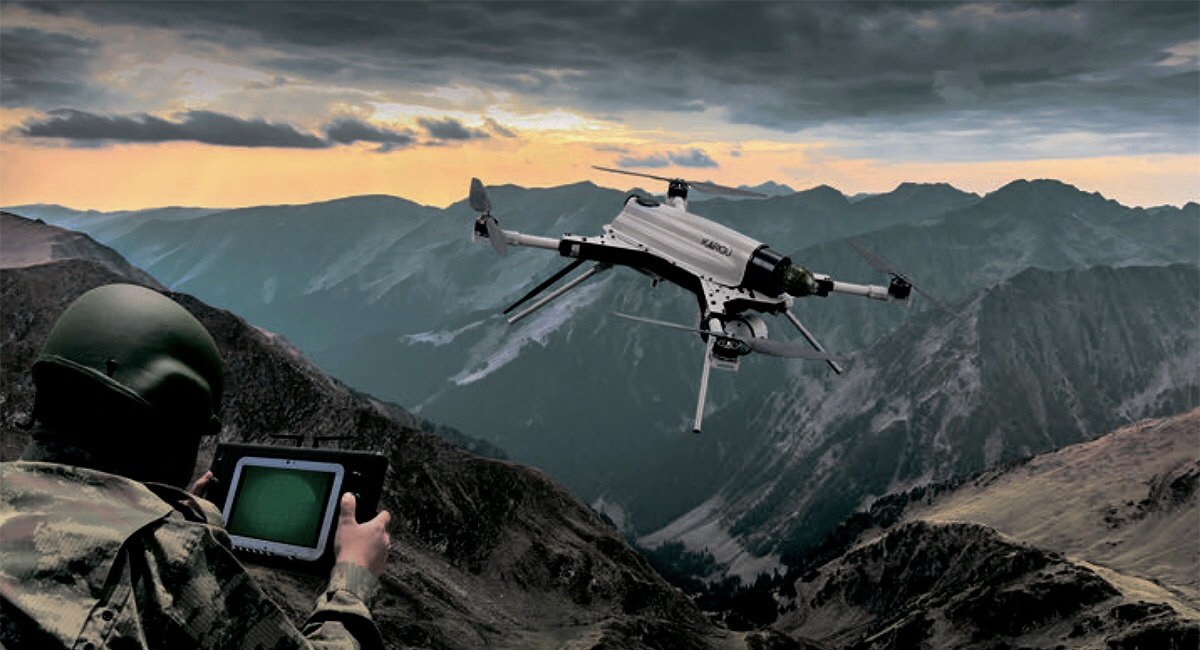
STM is the Turkish defense firm that put loitering munitions on the map with Kargu, designs the country’s warships and is building its first indigenous mini submarine, all with a workforce of under a thousand engineers. Founded in 1991 as an engineering house for the procurement bureaucracy, the Ankara company has quietly become one of the most influential players in Turkish naval and autonomous-weapon programs.
STM at a glance
| Item | Detail |
|---|---|
| Full name | STM Savunma Teknolojileri Muhendislik ve Ticaret A.S. |
| Headquarters | Ankara, Turkey |
| Founded | 1991 |
| Ownership | Turkish state defense ecosystem (Presidency of Defense Industries sphere) |
| Employees | About 850, roughly 63 percent engineers |
| Core fields | Naval platform design, tactical drones and loitering munitions, cybersecurity, C2 software, satellite and radar work |
Kargu and the loitering munition line
Kargu, a rotary-wing attack drone that dives on its target with an onboard warhead, made STM globally known, partly through a UN report debating its autonomous use in Libya. It is fielded by the Turkish Armed Forces for border security and has been exported, and it sits in a family alongside the fixed-wing Alpagu tube-launched munition and Togan reconnaissance quadcopter. STM’s pitch is swarming: the company has demonstrated coordinated group behavior, the direction the whole loitering-munition category is moving.
Naval design, from MILGEM to STM500
Less visible but arguably weightier is STM’s naval role. The company has been a principal design and engineering contractor in Turkey’s MILGEM corvette and frigate line, whose export variants sail for Pakistan and Ukraine, and it leads modernization programs for Turkish submarines and Pakistani Agosta 90B boats. Its own product is the STM500, a roughly 500-tonne small submarine aimed at littoral navies and special operations, the first submarine designed indigenously in Turkey, now in build toward a customer the company has courted across the Gulf and Southeast Asia. That places STM in the same conversation as far larger builders profiled in our TKMS piece, at the opposite end of the tonnage scale.
Software, cyber and NATO work
The third leg is invisible: STM runs one of Turkey’s main cyber operations centers, builds command-control and big-data software for the armed forces, and has delivered engineering and software to NATO agencies for years, with activity in more than 30 countries. This services backbone is what funded the leap into products, and it keeps the company profitable between platform cycles.
The Libya report and the autonomy debate
STM acquired an unusual kind of fame in 2021, when a UN Panel of Experts report on Libya described a 2020 engagement in which Kargu-2 systems ‘hunted down’ retreating fighters, language widely read as the first documented combat use of a loitering munition with autonomous engagement capability. The report’s interpretation remains disputed, and STM has said its systems require operator authorization for strikes, but the episode made Kargu a fixture of every autonomous-weapons policy debate since, cited in UN and academic discussions far more often than systems with far larger combat records. For a company of STM’s size, the notoriety doubled as marketing: few defense buyers had heard of the firm before 2021; most have now.
Programs in the pipeline
Beyond Kargu and the STM500, the current book includes the Turkish Navy’s MILGEM follow-on engineering, the Agosta 90B mid-life upgrades completed for Pakistan, a tactical drone line refreshed at successive IDEF and Teknofest shows, and cybersecurity operations that make STM one of the state’s main cyber contractors. The company also publishes ThinkTech, a technology foresight arm whose reports circulate through Turkish procurement, a small but telling sign of its position: STM is consulted on what Turkey should build next, then often hired to engineer it.
The mini-submarine market STM is betting on
STM500’s wager is that a tier of navies priced out of 1,500-tonne boats, Gulf states, Southeast Asians, Caspian and African fleets, will pay for a 500-tonne submarine that still fires heavyweight torpedoes, lays mines and inserts special forces. The competition at that tonnage is thin: a handful of European concepts and North Korean-style midgets nobody exports respectably, which is why STM pitches it as a category of one. The first steel is cut with the Turkish Navy as reference customer; the first export signature, which the company has chased publicly at IDEF and DIMDEX, would validate a market Turkish industry would then own nearly alone.
Where STM fits in Turkish industry
Turkish defense’s giants, ASELSAN in electronics, Baykar in heavy drones, TUSAS in aircraft, own their domains. STM’s niche is the seams between them: design authority, systems engineering and fast product bets like Kargu that bigger houses moved on later. At ADEX 2026 in Baku it exhibited inside the 50-plus-company Turkish contingent, selling exactly that mix to navies and armies shopping below the blockbuster price tier.
Frequently asked questions
What is STM known for?
The Kargu loitering munition, naval design work on Turkey’s MILGEM warships and submarine modernizations, and the STM500 mini submarine.
How big is STM?
About 850 employees, small next to ASELSAN’s 12,000, but with design authority in major national programs.
What is the STM500?
A roughly 500-tonne indigenous small submarine design for littoral operations and special forces, Turkey’s first homegrown submarine class.
Does STM export?
Yes: Kargu has foreign users, Pakistani naval programs carry its engineering, and it works with NATO bodies across 30-plus countries.
Is Kargu autonomous?
Kargu can navigate and identify targets with onboard processing; STM and Turkish officials state that engagement decisions remain under operator control.
- Defence Turkey and company materials on STM programs
- Public reporting on Kargu, Alpagu and STM500
- STM statements on workforce and international activity


