Russia vs NATO: Military Strength Compared in 2026
On almost every measure that can be counted, NATO is far stronger than Russia: its 32 members spent about eight times as much on defense in 2025 and field nearly three times as many active troops and almost five times as many military aircraft. Yet European governments and their intelligence services treat a Russian attack on the alliance within a few years as a real possibility.
The explanation lies in what the totals hide: readiness, geography, ammunition stocks and dependence on the United States. This comparison sets out the numbers as of October 2026 and then the reasons they do not settle the question.
Russia vs NATO: the headline numbers
The table combines the most widely used open sources. Counting methods differ: Global Firepower includes everything in the inventory, while the International Institute for Strategic Studies (IISS) counts only equipment in active units and puts Russia’s active strength nearer 1.1 million and its tank fleet at about 3,460. The overall picture is the same either way, and Russia’s own position is covered in our overview of Russian military strength.
| Indicator | NATO (32 members) | Russia | Source |
|---|---|---|---|
| Military spending, 2025 | $1,581 billion | $190 billion | SIPRI |
| Active personnel | About 3.65 million | About 1.32 million | Global Firepower 2026 |
| Military aircraft | 20,375 | 4,237 | Global Firepower 2026 |
| Main battle tanks | About 12,300 | About 5,600 | Global Firepower 2026 |
| Naval vessels | More than 2,800 | About 750 | Global Firepower 2026 |
| Nuclear warheads in stockpile | About 4,200 (US, UK, France) | About 4,400 | Federation of American Scientists |
Defense spending: an eight-to-one gap
According to the Stockholm International Peace Research Institute (SIPRI), NATO members spent $1,581 billion in 2025, or 55% of the world total. The United States accounted for $954 billion and the European members for $559 billion, almost three times Russia’s $190 billion on their own. All allies with armed forces met the 2% of GDP guideline in 2025, and at The Hague that year they pledged to reach 5% by 2035, of which 3.5% is for core defense.
Two caveats apply. Russia devotes 7.5% of its GDP to the military, as explained in our guide to Russia’s military budget, and its rubles buy more: soldiers’ pay and domestically built weapons cost far less than in the West, so analysts estimate its real purchasing power at two to three times the dollar figure. NATO’s money is also split among 32 budgets, dozens of duplicate programs and a large share of personnel costs.
Land forces: numbers against readiness
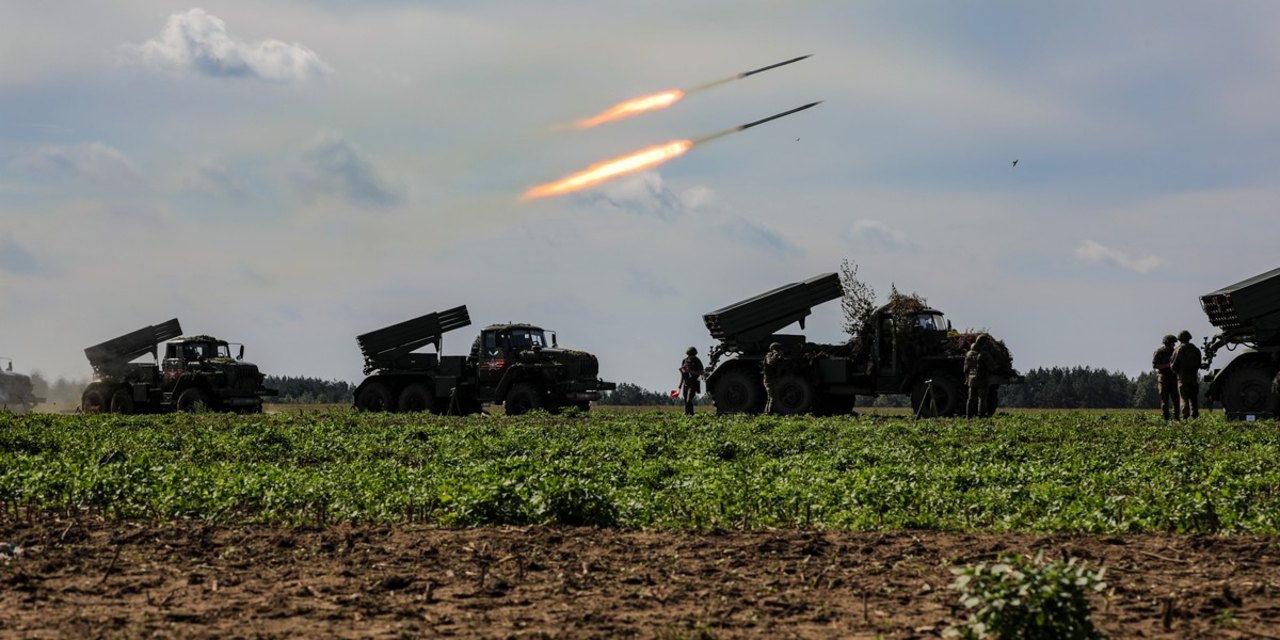
NATO has more soldiers and more tanks, but they are spread from Alaska to Anatolia. Russia’s ground forces are concentrated, experienced after nearly four years of war, and backed by an industry on a war footing; Estonian intelligence estimated that Russia produced about 7 million artillery rounds in 2025, more than all NATO members combined. The structure of that force is described in our guide to the size of Russia’s army.
The limits are equally clear. Ukraine’s commander-in-chief put the Russian force committed to the war at about 721,000 in June 2026, with losses of 30,000–35,000 a month, and Soviet-era equipment reserves are largely spent. NATO’s answer has been forward defense: multinational battlegroups in eight eastern states, a German brigade stationed permanently in Lithuania, and a plan to hold 300,000 troops at high readiness.
Air and sea power: NATO’s clearest advantage
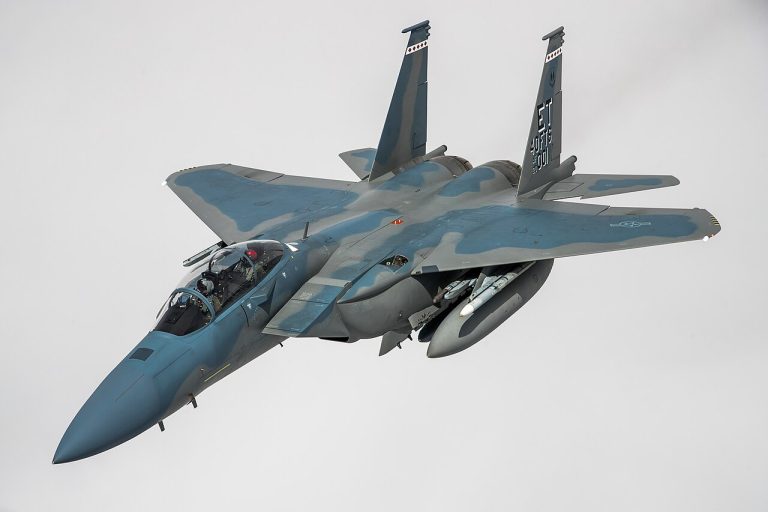
The alliance’s lead is widest in the air. NATO operates more than 20,000 military aircraft against Russia’s 4,200, including several hundred F-35 stealth fighters in Europe alone, backed by tankers, airborne early warning aircraft and precision munitions in quantities Russia cannot match. In Ukraine, Russia has failed to win air superiority against a far smaller opponent, a point developed in our guide to the Russian air force.
At sea the gap is similar. NATO navies operate more than a dozen aircraft carriers; Russia’s only carrier has not sailed since 2017, as described in our article on Russia’s aircraft carrier. Russia’s real naval strength lies in its submarines and long-range missiles, which threaten undersea cables and Atlantic reinforcement routes more than they contest control of the sea. See our guide to the Russian navy.
The nuclear balance
Nuclear weapons are the one area of rough parity. The Federation of American Scientists estimates Russia’s military stockpile at about 4,400 warheads, against roughly 3,700 for the United States, 290 for France and 225 for the United Kingdom. Russia has a large lead in shorter-range non-strategic weapons, with around 1,800, while the United States keeps about 100 gravity bombs in Europe. Details are in our guide to Russia’s nuclear arsenal.
This is why Moscow leans on nuclear signalling. The deployment of the intermediate-range missile described in our Oreshnik explainer to Belarus, and the expiry of the New START treaty in February 2026, are meant to remind European capitals that conventional superiority does not remove risk.
Where Russia could still hold an advantage
No serious analyst argues that Russia could defeat NATO in a long war. The concern is a short one. Russia could mass forces against the Baltic states faster than the alliance could reinforce them, seize a limited area and then threaten escalation, betting that 32 governments would not agree to fight. Germany’s chief of defense has said Russia could be capable of such an attack by 2029, and NATO’s secretary general has spoken of a window of about five years.
The second variable is Washington. The United States provides most of NATO’s intelligence, airlift, air refueling, missile defense and long-range strike, and European states are years from replacing them. Russia’s daily use of jamming, sabotage and airspace violations against alliance members, including the interference described in our guide to Russian electronic warfare, tests that cohesion without crossing the threshold of open war.
Frequently asked questions
Is NATO stronger than Russia?
Yes, by a wide margin in aggregate. NATO spends about eight times as much, has nearly three times the active personnel and almost five times the aircraft. Russia’s advantages are concentration, wartime production and experience, and a slightly larger nuclear stockpile.
How many troops does NATO have compared with Russia?
NATO members together have about 3.65 million active personnel, against roughly 1.1–1.3 million for Russia depending on the source. About 720,000 Russian troops were committed to the war in Ukraine in mid-2026.
How much does NATO spend on defense compared with Russia?
SIPRI estimates that NATO’s 32 members spent $1,581 billion in 2025, including $954 billion by the United States, compared with $190 billion for Russia. Adjusted for purchasing power the gap is smaller but still large.
Does Russia have more nuclear weapons than NATO?
Slightly. Russia’s military stockpile is estimated at about 4,400 warheads, against about 4,200 for the three NATO nuclear powers combined. Russia has far more short-range non-strategic weapons.
Could Russia attack NATO?
Western officials consider a limited attack possible within several years, most likely against the Baltic states, if Russia rebuilds its forces after the war in Ukraine and doubts NATO’s unity. A prolonged conventional war would heavily favor the alliance.
- SIPRI – Trends in World Military Expenditure, 2025 (April 2026): sipri.org
- CSIS – What does NATO defense spending look like heading into the Ankara summit?: csis.org
- Statista – Comparison of the military capabilities of NATO and Russia 2026: statista.com
- Federation of American Scientists – Status of World Nuclear Forces: fas.org
- NATO – Defence expenditures and the 5% commitment: nato.int