
How Many Nuclear Weapons Does Russia Have in 2026?
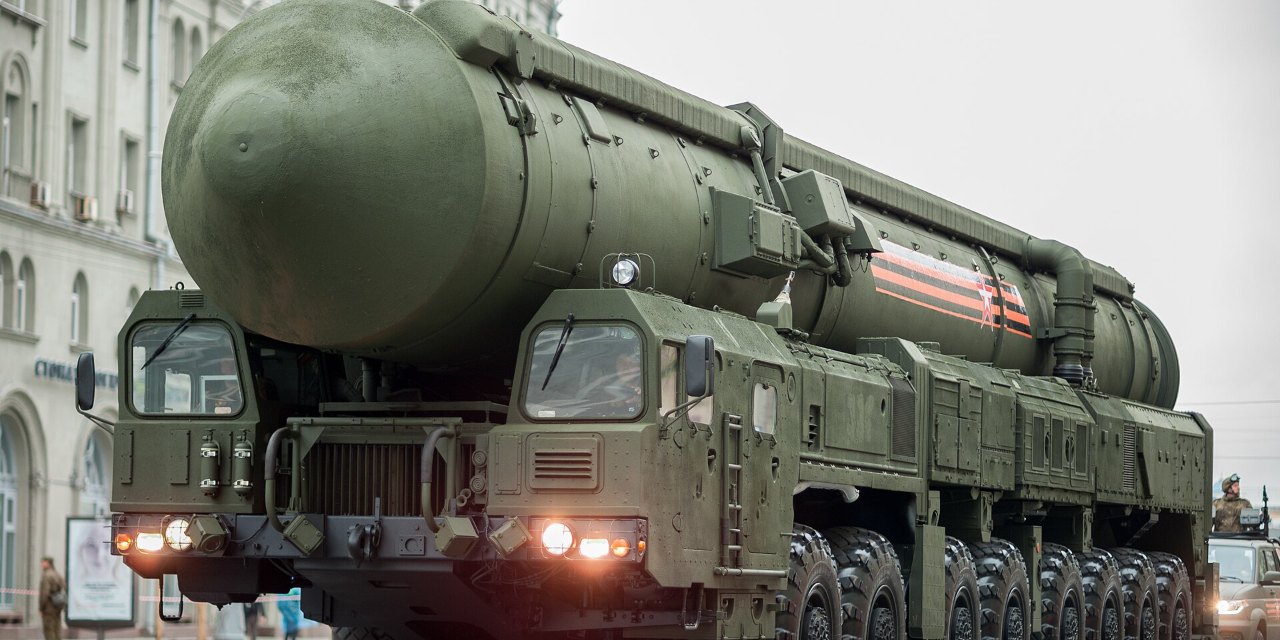
Russia has about 5,420 nuclear warheads in 2026, the largest arsenal of any country, according to the Federation of American Scientists. About 4,400 are in the military stockpile, and an estimated 1,796 strategic warheads are deployed on missiles and at bomber bases.
The number that changed most this year is a legal one. New START, the last treaty capping US and Russian strategic forces, expired in February 2026. This guide explains how the arsenal is counted, what delivers it, what tactical weapons Russia holds and when its doctrine says they could be used.
How many nuclear weapons does Russia have?
The standard reference is the Nuclear Notebook, compiled each year by researchers at the Federation of American Scientists (FAS) and published in the Bulletin of the Atomic Scientists. Its 2026 edition puts Russia’s total inventory at about 5,420 warheads. The United States, with an inventory of just over 5,000, is the only country in the same class. Together the two hold close to 90 percent of the world’s nuclear weapons.
| Category | Warheads |
|---|---|
| Deployed strategic, on land-based missiles | About 892 |
| Deployed strategic, on submarine missiles | About 704 |
| Deployed strategic, at bomber bases | About 200 |
| Strategic warheads in reserve | About 810 |
| Non-strategic warheads | About 1,794 |
| Military stockpile | About 4,400 |
| Retired, awaiting dismantlement | About 1,020 |
| Total inventory | About 5,420 |
The Stockholm International Peace Research Institute noted that the deployed figure is the highest for Russia since 2017. The total has fallen far from the Soviet peak of about 40,000 warheads in the mid-1980s, but the decline has stalled.
Russia’s nuclear triad
Strategic warheads are spread across three kinds of delivery system so that no single attack could destroy them all. Land-based missiles carry the largest share. The missile types are described in what missiles Russia has.
| System | Number | Notes |
|---|---|---|
| RS-24 Yars ICBM | About 207 | Silo-based and road-mobile |
| Topol-M ICBM | 78 | 60 in silos, 18 mobile |
| R-36M2 Voevoda ICBM | About 40 | Heavy missile, being retired |
| Avangard glide vehicle | Two regiments | Carried on UR-100N missiles |
| Borei-class submarines | 8 | 16 Bulava missiles each |
| Delta IV-class submarines | 5 | 16 Sineva missiles each |
| Tu-95MS and Tu-160 bombers | About 60 | Nuclear cruise missiles |
Russia’s tactical nuclear weapons
Russia keeps about 1,800 non-strategic warheads, far more than any other country. They are meant for shorter-range systems: Iskander missiles, naval cruise missiles and torpedoes, aircraft bombs and air defense interceptors. FAS assesses that they are held in central storage, not mounted on launchers.
Russia says it has stationed some nuclear weapons in Belarus since 2023, and the dual-capable Oreshnik missile was placed on combat duty there in December 2025. Western governments have not publicly confirmed how many warheads, if any, are in Belarusian storage sites.
Is there still a treaty limiting Russia’s arsenal?
No. New START limited each side to 1,550 deployed strategic warheads and 700 deployed launchers and allowed on-site inspections. Russia suspended its participation in February 2023, and the treaty expired on 5 February 2026.
Vladimir Putin offered in September 2025 to keep observing the central limits for a year if the United States did the same, but no follow-on agreement had been reached by mid-2026. FAS warns that without data exchanges, outside estimates of Russian forces will become less certain. Russia also withdrew its ratification of the nuclear test ban treaty in 2023, though it has not carried out an explosive test since the Soviet era.
Russia’s new nuclear weapons
Putin announced a set of new strategic systems in 2018. Their progress has been mixed. The Avangard hypersonic glide vehicle is deployed in small numbers. The RS-28 Sarmat heavy missile, meant to replace the Voevoda, suffered a silo explosion in September 2024 and another failed launch in November 2025 before a successful test in May 2026. It is still not in service.
Two nuclear-powered weapons remain in testing: the Burevestnik cruise missile, which Russia says flew a long-duration test in October 2025, and the Poseidon underwater drone. FAS does not consider either operational. For the technology behind glide vehicles, see how hypersonic missiles work.
When would Russia use nuclear weapons?
Russia revised its nuclear doctrine in November 2024. The document says nuclear weapons could be used in response to a nuclear or other mass-destruction attack, or to conventional aggression that creates a critical threat to the sovereignty or territorial integrity of Russia or Belarus. It also states that an attack by a non-nuclear country backed by a nuclear power would be treated as a joint attack.
The wording lowered the stated threshold and was aimed at Western support for Ukraine. Despite repeated warnings from Moscow since 2022, US and allied officials have said they have seen no change in the posture of Russian nuclear forces that would indicate preparation for use.
Frequently asked questions
Who has more nuclear weapons, Russia or the United States?
Russia, by a small margin. FAS estimates about 5,420 Russian warheads against just over 5,000 American ones. Deployed strategic forces are roughly equal.
How many Russian nuclear weapons are ready to use?
An estimated 1,796 strategic warheads are deployed on missiles and at bomber bases.
Can Russia’s nuclear missiles reach the United States?
Yes. Its intercontinental and submarine-launched ballistic missiles can reach all of the United States in about 30 minutes or less.
What is Russia’s most powerful nuclear missile?
The R-36M2 Voevoda, which can carry up to ten warheads. The Sarmat is intended to replace it.
Does Russia have nuclear weapons in Belarus?
Russia and Belarus say so. Independent confirmation of warheads on Belarusian territory is limited.
- Bulletin of the Atomic Scientists – Russian nuclear weapons, 2026 (Kristensen, Korda, Johns, Knight-Boyle): thebulletin.org
- SIPRI – World nuclear forces, SIPRI Yearbook 2026: sipri.org
- Federation of American Scientists – Status of World Nuclear Forces: fas.org
- Wikipedia – RS-28 Sarmat: en.wikipedia.org
- Arms Control Association – New START at a glance: armscontrol.org