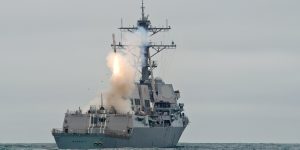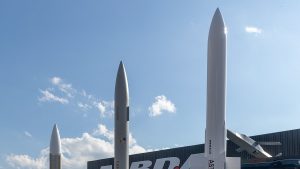

Top 10 Longest-Range SAM Systems in the World in 2026
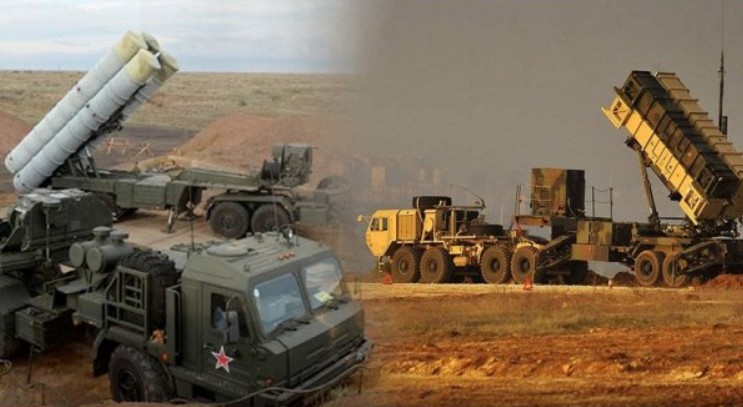
The longest-range SAM systems in the world now claim engagement distances of up to 600 kilometers, far enough to threaten aircraft over a neighboring country’s capital from home soil. This ranking orders ten fielded systems by their maximum claimed engagement range in 2026, and it is worth saying up front that the biggest numbers on the list are also the least verified.
How this ranking works
Systems are ordered by the maximum engagement range publicly attached to their longest-reaching interceptor, against any target class. Where the figure comes from Russian, Chinese or Iranian sources it is labeled as manufacturer claims or state media figures, not verified performance, and Western official figures are themselves usually understated floors. Only fielded, operational systems qualify, no prototypes. Consistent with this site’s editorial policy, companies and platforms headquartered in Israel are excluded from consideration.
The top ten longest-range SAMs
| Rank | System | Nation | Max claimed range |
|---|---|---|---|
| 1 | S-500 Prometheus | Russia | Up to 600 km vs ballistic targets (manufacturer claims) |
| 2 | S-400 Triumf with 40N6 | Russia | 380 km (manufacturer claims) |
| 3 | S-300V4 | Russia | About 350-400 km (manufacturer claims) |
| 4 | Bavar-373 (upgraded) | Iran | About 300 km (Iranian state media claims) |
| 5 | HQ-9B | China | About 250-300 km (manufacturer claims) |
| 6 | SM-6 / Aegis | USA | More than 240 km stated; longer reported |
| 7 | THAAD | USA | About 200 km, upper-tier ballistic defense |
| 8 | Patriot PAC-2 GEM-T | USA | About 160 km vs aircraft |
| 9 | SAMP/T NG with Aster 30 B1NT | France/Italy | About 150 km class |
| 10 | L-SAM | South Korea | About 150 km class, entering service |
Russia sweeps the podium on paper, which is precisely the problem with paper. The S-400 has seen its Ukrainian combat record run far below its brochure, with launchers and radars destroyed by the very ATACMS and drone strikes the system exists to stop, and the 40N6’s 380 km figure has never been independently demonstrated against a maneuvering target. The S-500 remains scarce, its 600 km claim tied mainly to ballistic and exoatmospheric targets. China’s HQ-9B has spread across contested geography, and Iran’s upgraded Bavar-373 claims grew after its predecessors’ performance in 2024-25 drew scrutiny.
The Western entries carry smaller numbers and larger credibility. SM-6 is the fleet’s long arm and has intercepted targets in combat, THAAD has a perfect test record in its upper-tier niche, Patriot GEM-T anchors NATO’s air picture, Europe’s SAMP/T NG brings the Aster 30 B1NT, and South Korea’s L-SAM gives Seoul an indigenous upper tier against northern ballistic threats.
Why claimed range is not real range
A SAM’s maximum range is measured against the friendliest possible target, high, fast, straight and radiant. Against a low-flying cruise missile the radar horizon, not the rocket motor, sets reach, typically 30-40 km from a ground radar regardless of the missile’s brochure. Kinematics decay too, a missile at the edge of its envelope arrives with little energy left to chase a maneuvering fighter. That is why airborne radars, datalinked launch, and over-the-horizon cueing matter more to real reach than another hundred kilometers of motor.
What Ukraine taught about long-range SAMs
Three lessons stand out. First, long-range SAMs shape wars even when they miss, both air forces spent years flying low and standing off because the threat existed. Second, the launcher is now the target, operator-reported Ukrainian strikes with ATACMS and drones have destroyed S-400 components deep in occupied territory, and Russia has claimed Patriot kills in return. Third, magazine depth beats maximum range, the systems that mattered most were the ones that could keep firing, a theme our Top 10 air defense systems ranking explores across every tier.
The next generation coming
The next edition of this list will look different. Europe’s Aster and IRIS-T lines are stretching their envelopes, the US is pairing SM-6 with ever better Aegis networking, South Korea’s L-SAM II and Japan’s upgraded interceptors are in development, and glide-phase interceptors against hypersonic weapons are the new prestige race. Range will keep growing, but the winners will be decided by sensors, networks and stockpiles, the unglamorous trio Ukraine elevated above every brochure number.
Longest-range SAM frequently asked questions
What is the longest-range SAM in the world?
By claimed figures, Russia’s S-500 at up to 600 km against ballistic targets, per manufacturer claims; the longest-range Western system is the SM-6 at 240+ km.
What is the real range of the S-400?
Its 40N6 missile is credited with 380 km by manufacturer claims, but against low-flying targets the radar horizon limits any ground-based SAM to a few dozen kilometers.
What is the longest-range NATO air defense system?
SM-6 fired from Aegis ships, officially 240+ km, followed by THAAD at about 200 km and Patriot PAC-2 GEM-T at about 160 km.
Can SAMs shoot down targets at 400 km?
Only high-altitude, non-maneuvering targets like AWACS orbits or ballistic missiles; at those distances the intercept geometry collapses against agile, low-flying threats.
Why is Iron Dome not on this list?
This site’s editorial policy excludes Israel-headquartered platforms from rankings; Iron Dome is also a short-range system that would not qualify on range.
- Manufacturer statements and state media claims (flagged as unverified)
- US, NATO and South Korean official program data
- Wikipedia – articles on the listed systems (accessed October 2026)
- Operator-reported and open-source strike documentation from Ukraine
- Defence & Tech reporting on air defense