

Military SATCOM Bands Explained, From UHF Whispers to Ka Firehoses
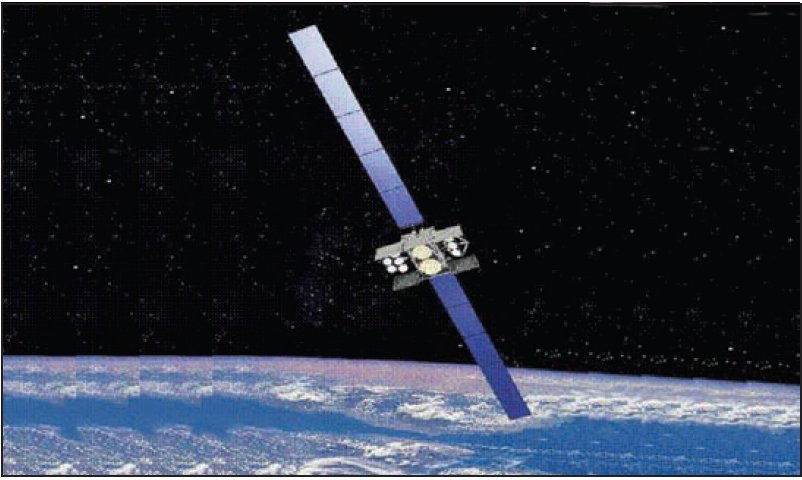
Military satellite communications run on a handful of frequency bands, UHF, X, Ku, Ka and the protected EHF range, and the 10 Wideband Global SATCOM satellites alone carry more capacity than entire national militaries possessed a generation ago. Each band is a different bargain among antenna size, data rate, weather and jamming, and understanding the trade explains most of modern military space architecture.
Why frequency bands matter in satcom
Physics sets the menu. Lower frequencies like UHF punch through foliage, weather and even poor antenna pointing, but carry little data. Higher frequencies like Ka move enormous data rates through small dishes, but rain absorbs them and pointing must be precise. Military planners therefore buy a portfolio, not a band, and the real architecture question is which traffic, a rifle squad’s voice check-in or a drone’s video feed, rides which layer.
UHF satcom and MUOS
UHF around 240-320 MHz is the soldier’s band. A manpack radio with a stubby antenna, moving under jungle canopy or in a rolling ship, can close a UHF satellite link where nothing else works. The US Navy’s five-satellite MUOS constellation modernized this niche with a cellular-style WCDMA waveform, delivering roughly ten times the capacity of the legacy UFO fleet it replaced, though the price of UHF’s forgiveness is permanent, kilobit-class data rates and crowded, jammable channels.
X-band and Ka-band, the WGS workhorses
| Band | Frequency | Strengths | Limits | Key systems |
|---|---|---|---|---|
| UHF | ~240-320 MHz | Works on the move, through foliage and weather | Very low data rates | MUOS, legacy UFO |
| X-band | ~7-8 GHz | Reserved for government use, rain-resilient, mature | Moderate throughput | WGS, Skynet, Syracuse |
| Ku-band | ~12-18 GHz | Huge commercial capacity, cheap terminals | Shared spectrum, moderate rain fade | Leased GEO, Starlink-class LEO |
| Ka-band | ~20-31 GHz | Very high throughput, small antennas | Rain fade, precise pointing | WGS, commercial HTS |
| EHF (protected) | ~44 GHz uplink class | Jam-resistant, encrypted, survivable | Costly, limited capacity | AEHF, Milstar legacy |
The Wideband Global SATCOM constellation, 10 satellites with an eleventh in work, is the backbone of US and allied high-capacity traffic and unusually, it speaks both X and Ka from every spacecraft, cross-banding between them aboard. Partner nations from Australia to Norway bought into the program rather than flying their own. This is the layer that moves drone video, of the kind that made the Akinci generation of aircraft controllable across continents, along with logistics data and command traffic.
Ku-band and the commercial LEO wave
Ku-band belongs mostly to commerce, and militaries have become its biggest customers anyway. Leased GEO transponders carried much of two decades of counterinsurgency traffic, and the LEO revolution, Starlink and its military Starshield derivative above all, runs largely in Ku and Ka. Ukraine turned commercial LEO into a battlefield utility, and the lesson stuck, proliferated constellations are hard to jam wholesale and harder to destroy, which is why the Space Development Agency’s Transport Layer applies the same logic to dedicated military birds.
Protected satcom, AEHF and jam resistance
At the top of the pyramid sits protected satcom, the six-satellite AEHF constellation and its Milstar predecessors. Operating up in the EHF range with onboard processing, frequency hopping and narrow beams, these links are engineered to keep the president connected to nuclear forces and commanders connected to theaters through active jamming, with nuclear-hardened electronics. Capacity is precious, an AEHF satellite moves less data than a single WGS, and the follow-on Evolved Strategic SATCOM program is designed to keep this survivable core alive into the 2030s. Electronic attack against satcom is now routine, the same discipline described in our ECM vs ECCM explainer, and band choice is the first line of defense.
Military satcom frequently asked questions
What frequency bands does military satcom use?
Mainly UHF for narrowband mobile users, X and Ka through systems like WGS for high capacity, leased Ku commercially, and protected EHF through AEHF for survivable command links.
What is MUOS?
The US Navy’s five-satellite UHF constellation, using a cellular-style waveform to give mobile users roughly ten times the capacity of the legacy UFO satellites.
What is the WGS system?
Wideband Global SATCOM, a 10-satellite X- and Ka-band constellation shared with allies, the main high-capacity pipe for US and partner forces.
Why is Ka-band affected by rain?
At 20-31 GHz the wavelength approaches raindrop size, so heavy rain absorbs and scatters the signal, a penalty paid for very high data rates through small antennas.
What makes protected satcom jam-resistant?
Frequency hopping, narrow steerable beams, onboard processing and encryption in the EHF range, plus hardening against nuclear effects, at the cost of limited capacity.
- US Space Force and program office public information (WGS, MUOS, AEHF)
- Wikipedia – Wideband Global SATCOM and related articles (accessed October 2026)
- Satellite operator and terminal manufacturer literature
- Defence & Tech reporting on military space