

Stealth Explained, What Radar Cross-Section Really Means
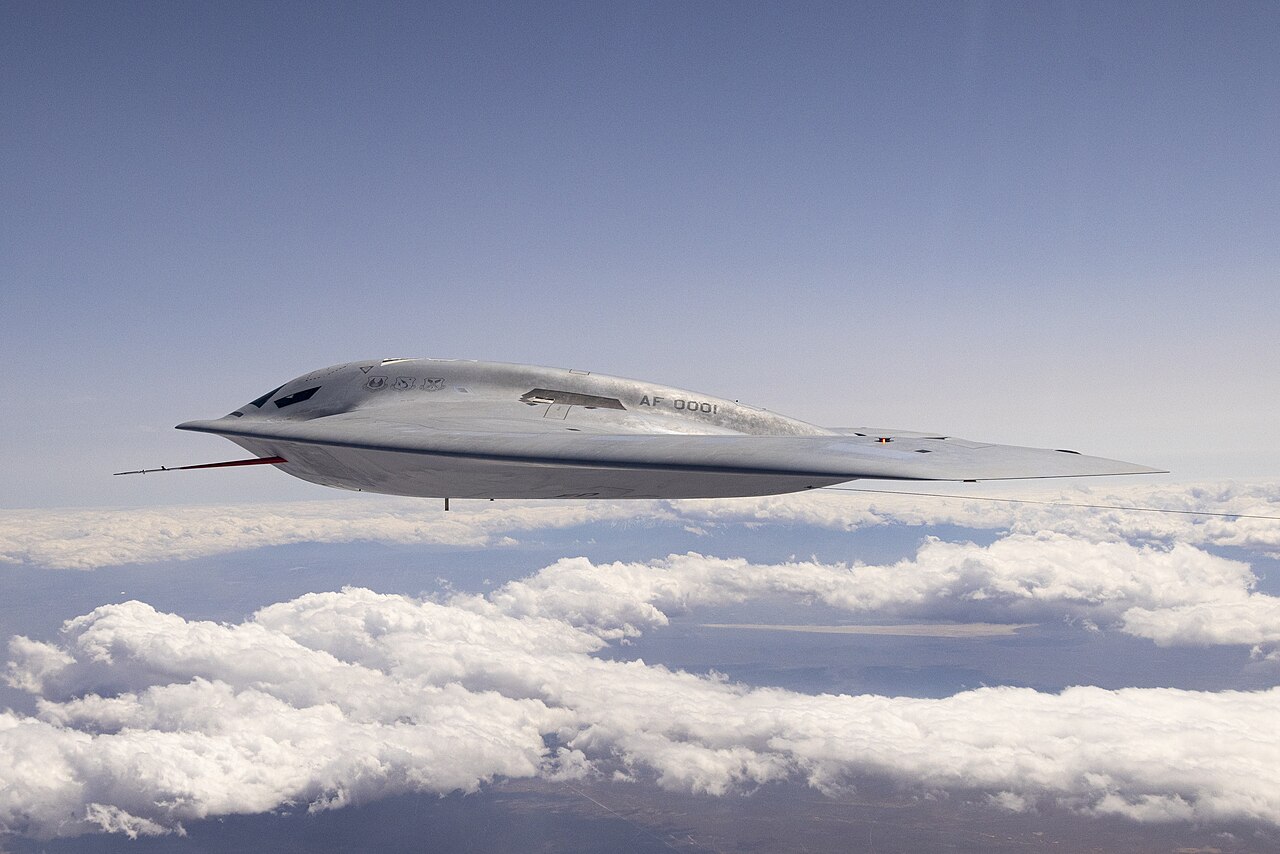
Stealth is not invisibility, it is a bet about ranges. Shrink an aircraft’s radar echo enough and the defender’s detection range collapses inward faster than the attacker’s weapon range, opening a corridor where you can kill without being engaged. Everything about stealth, the alien shapes, the secret coatings, the billion-dollar price tags, exists to win that one exchange of distances.
What radar cross-section measures
Radar cross-section, measured in square meters, describes how much radar energy an object scatters back toward the receiver compared to a perfectly reflective sphere of that cross-section. It is not physical size. A metal fighter with right angles and external stores can return like a barn door, tens of square meters, while a B-2’s flying wing, physically enormous, reportedly returns like a bird. RCS also varies wildly with aspect and frequency, an aircraft stealthy nose-on to an X-band fire-control radar may glow in a long-wave search radar’s view from the side.
The brutal fourth-root law
The radar equation contains stealth’s justification and its curse. Detection range scales with the fourth root of RCS, so cutting the echo by half buys almost nothing, about 16 percent less detection range. Meaningful gains demand reductions of thousands of times, which is why stealth is an all-or-nothing design philosophy rather than a feature. It is also why partial stealth retrofits on conventional airframes yield modest results, the physics refuses half measures.
| Object | Typical RCS class | Meaning |
|---|---|---|
| Conventional fighter, stores | 5-15 m² | Seen at full radar range |
| Cruise missile | 0.1-1 m² | Late detection, compressed reaction |
| F-117 / early stealth | ~0.01-0.025 m² | Fire-control radars struggle |
| F-35 class (reported) | ~0.001-0.005 m² | Insect-to-golf-ball figures cited |
| F-22 / B-2 class (reported) | ~0.0001-0.001 m² | Detection ranges collapse |
Shaping, the 90 percent solution
Most of stealth is geometry. Flat aligned panels bounce radar energy away from the sender rather than back, edges are grouped into a few planned angles so reflections concentrate in narrow, predictable directions, and every seam, door and weapons bay edge is serrated to the same alignments. Internal weapons carriage exists because a single external missile can multiply the whole aircraft’s return. The F-117’s faceting, the B-2’s flying wing and the F-35’s blended chines are three generations of the same idea, control every bounce.
Coatings, inlets and details
Radar-absorbent materials convert incoming energy to heat in lossy layers, mopping up what shaping cannot redirect, at the cost of maintenance burden that made early stealth jets hangar queens. Engine faces are hidden behind serpentine ducts or mesh because spinning fan blades are radar beacons. Antennas, sensors and even pilot helmets get treatments, since stealth is an accounting exercise where the loudest remaining reflector defines the aircraft, and a single neglected fastener can undo millions in coatings.
What stealth cannot do
Stealth does not defeat physics, it redistributes it. Low-frequency search radars with long wavelengths see shaped aircraft better, though they localize poorly and cannot guide missiles precisely. Bistatic and networked radars catch energy deflected away from one receiver with another. Infrared search and track ignores radar games entirely and hunts engine and skin heat. And stealth constrains everything else, payload lives in cramped bays, fuel in awkward volumes, and emissions discipline means even radio and radar use must be rationed. A stealth aircraft is a compromise flown carefully, not a cloak.
The counter-stealth fight
Russia and China market long-wave radars, IRST networks and multistatic systems explicitly as stealth-killers, and the claims contain real physics wrapped in exaggeration. Detecting that something stealthy is present is increasingly plausible; building a weapons-quality track that survives to missile impact remains the hard part, which is why stealth aircraft still plan routes around known emitters and fly with jamming support. The contest is an arms race of margins, and both sides’ honest engineers describe it in probabilities, never absolutes.
Frequently asked questions
What does radar cross-section mean?
A measure, in square meters, of how strongly an object reflects radar energy back to the radar, independent of its physical size.
Why do stealth aircraft look so strange?
Shaping is the dominant stealth technique, aligning surfaces and edges to bounce radar energy in a few controlled directions away from the sender.
Can radar detect stealth aircraft?
Low-frequency and networked radars can often sense stealth aircraft at useful ranges, but producing a track accurate enough to guide weapons remains much harder.
Does rain or dirt ruin stealth?
Degraded coatings and open panels measurably raise RCS, which is why stealth fleets carry heavy maintenance regimes and signature-verification testing.
- Wikipedia – Radar cross-section and Stealth technology (accessed October 2026)
- Declassified US Air Force materials on low-observable design
- Published analyses of counter-stealth radar claims (manufacturer claims noted)