US Cruise Missiles: Tomahawk, JASSM, LRASM and LRSO
The main American cruise missiles are the ship- and submarine-launched Tomahawk, with a range of about 1,600 km, and the air-launched JASSM-ER, a stealthy weapon that reaches about 1,000 km. Around them are the anti-ship LRASM, the short-range Naval Strike Missile and one nuclear type, the AGM-86B.
More than 2,000 of these missiles were fired at Iran in 2026. This guide explains what each one does, what carries it, and how quickly the United States can replace what it has used.
What cruise missiles does the US have?
A cruise missile is a small pilotless aircraft with a jet engine, wings and a warhead. It flies low and, in the American case, below the speed of sound, relying on stealth and terrain rather than speed to get through. How it finds its way is explained in our guide to cruise missile guidance. The wider arsenal is covered in what missiles the US has.
| Missile | Launched from | Range | Warhead | Role |
|---|---|---|---|---|
| Tomahawk Block IV and V | Destroyers, cruisers, submarines, Typhon ground launcher | About 1,600 km | About 450 kg | Land attack; Block Va also anti-ship |
| AGM-158A JASSM | Fighters and bombers | About 370 km | About 450 kg | Stealthy land attack |
| AGM-158B JASSM-ER | Fighters and bombers | About 1,000 km | About 450 kg | Stealthy land attack |
| AGM-158C LRASM | F/A-18E/F, B-1B | More than 370 km | About 450 kg | Anti-ship |
| Naval Strike Missile | Littoral combat ships, Marine coastal launchers | About 185 km | About 125 kg | Anti-ship |
| AGM-86B ALCM | B-52H | More than 2,400 km | W80-1 nuclear | Nuclear strike |
| AGM-181 LRSO | B-52 and B-21, from about 2030 | Classified | W80-4 nuclear | Nuclear strike |
Tomahawk, the Navy’s long arm
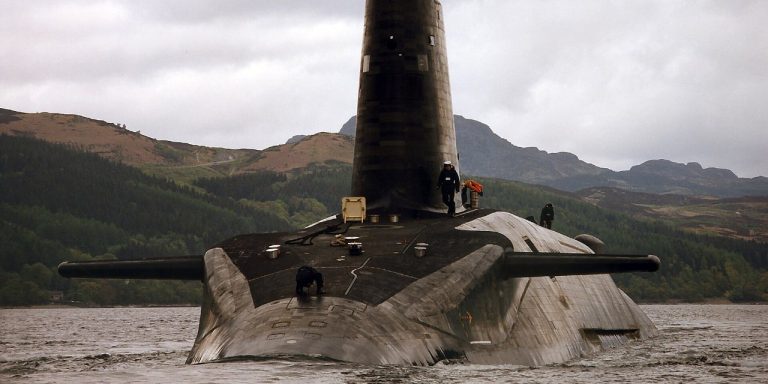
The Tomahawk has been in service since 1983 and in combat since 1991. It is fired from the vertical launch cells of Arleigh Burke destroyers and Ticonderoga cruisers and from attack submarines. The four Ohio-class guided-missile submarines carry 154 each, more than any surface ship, but the first of them, USS Georgia, began inactivation in July 2026 and the rest follow by 2029.
The current Block V missiles have upgraded navigation and communications. The Block Va adds a seeker to hit moving ships, and the Block Vb a warhead for hardened targets. On land, the Army’s Typhon battery fires the same round. The full history and export list are in our Tomahawk guide.
The 2026 war showed the limit. At least 850 Tomahawks were fired in the first four weeks and more than 1,000 before the April ceasefire, about a third of the stock. The Navy had been buying fewer than 100 a year.
JASSM and LRASM: the air-launched family
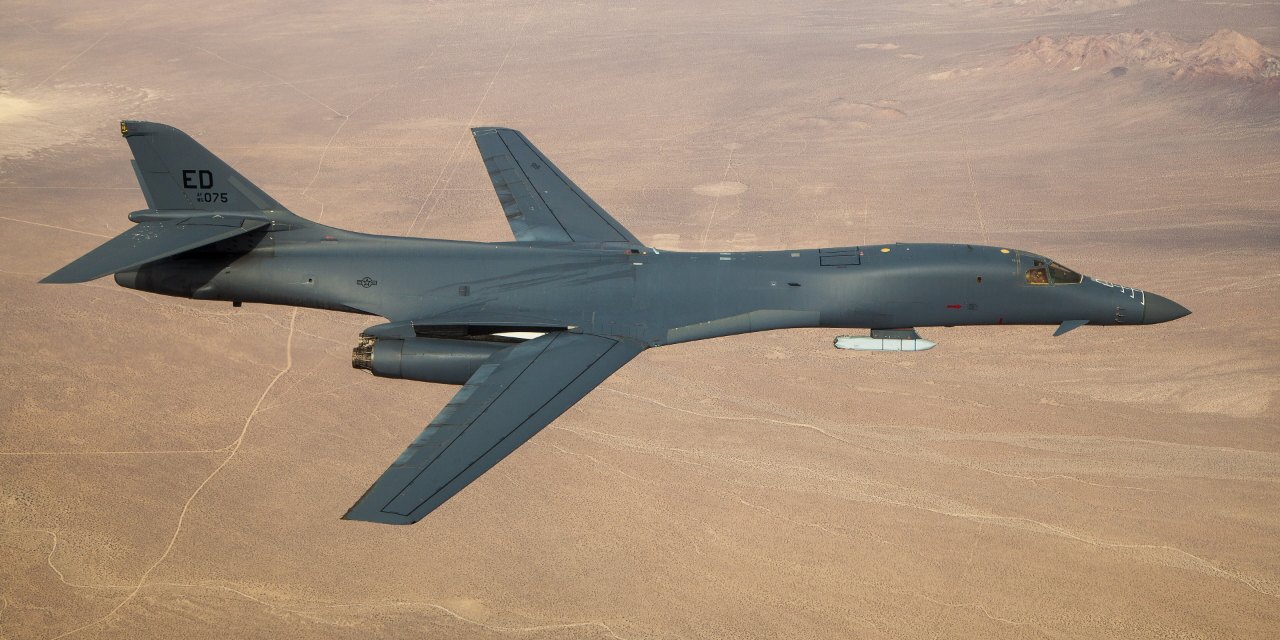
The AGM-158 Joint Air-to-Surface Standoff Missile is the Air Force’s answer to modern air defenses. Its angular body is hard to see on radar, it navigates by GPS and inertial sensors, and an infrared seeker matches the target against a stored image in the last seconds. The extended-range JASSM-ER flies about 1,000 km. A B-1B can carry 24. The B-52, B-2, F-15E and F-16 carry it too. See our JASSM guide.
The AGM-158C LRASM uses the same airframe with a seeker that can pick a warship out of a group and attack without outside help. It arms Navy Super Hornets and Air Force B-1Bs and is the weapon American planners count on most in a war at sea with China. Details are in our LRASM guide, and its rivals in the top 10 anti-ship missiles.
About 1,100 JASSM-ERs were used against Iran, by press and CSIS estimates. Both missiles come off the same Lockheed Martin production line, under a contract that passed $10 billion in September, as we reported in JASSM and LRASM deal passes $10 billion.
Nuclear cruise missiles: AGM-86B, LRSO and SLCM-N
The only nuclear cruise missile in American service is the AGM-86B, a 1980s design carried by the B-52H. It is due to be replaced around 2030 by the AGM-181 Long-Range Standoff weapon, a stealthy missile that will arm both the B-52 and the B-21. The Air Force plans to buy 1,087.
A second nuclear missile is on the way. The sea-launched SLCM-N, intended for attack submarines, was cancelled by one administration and restored by Congress, and is now due in the early 2030s. Both are covered in how many nuclear weapons the US has.
The push for cheaper missiles
A Tomahawk or JASSM costs upwards of $2 million and takes about two years to build. The Pentagon is therefore funding a second tier of simpler missiles from newer companies, designed to be made in thousands. Examples include Anduril’s Barracuda family, the Extended Range Attack Munition built for Ukraine, and Zone 5 Technologies’ Rusty Dagger, which won a Navy contract in August 2026. None matches a Tomahawk’s range or warhead. The point is to save the expensive missiles for the targets that need them.
How many cruise missiles does the US have, and how fast can it build them?
The Pentagon does not publish stock figures. The table uses the estimates of the Center for Strategic and International Studies and the fiscal 2027 budget request.
| Missile | Stock before the 2026 Iran war | Used in the first 39 days | FY2027 request | Time to replace |
|---|---|---|---|---|
| Tomahawk | About 3,000 | More than 1,000 | 785 | Four to five years |
| JASSM, all versions | About 4,000 | About 1,100 | 821 | About one year |
The fix is under contract. In August 2026 the Navy gave Raytheon $22.9 billion over seven years to raise Tomahawk output from about 60 a year to more than 1,000, reported in our coverage of the award. Lockheed Martin is expanding the JASSM and LRASM line in parallel. Russia, for comparison, builds its Kalibr and Kh-101 missiles at a combined rate of roughly 1,000 a year, by Ukrainian estimates.
Frequently asked questions
What is the range of a Tomahawk cruise missile?
About 1,600 km for the Block IV and Block V versions now in service.
What is the difference between JASSM and Tomahawk?
JASSM is launched from aircraft and is built to be stealthy. Tomahawk is launched from ships, submarines and ground launchers and flies further.
How much does a Tomahawk missile cost?
Roughly $2 million or more, depending on the version and the size of the order.
Does the US have nuclear cruise missiles?
Yes, one type. The AGM-86B is carried by B-52H bombers. Its replacement, the LRSO, is due around 2030.
How many Tomahawks can a US submarine carry?
An Ohio-class guided-missile submarine carries up to 154. A Virginia-class boat with the Virginia Payload Module will carry 40.
- CSIS – Last Rounds? Status of Key Munitions at the Iran War Ceasefire (April 2026): csis.org
- Al Jazeera – US weapons stockpile estimates after the Iran war (July 2026): aljazeera.com
- 19FortyFive – The Navy is retiring its Ohio-class guided-missile submarines (July 2026): 19fortyfive.com
- Bulletin of the Atomic Scientists – United States nuclear weapons, 2026: thebulletin.org
- CSIS Missile Threat – Missiles of the United States: missilethreat.csis.org