
Top 10 Anti-Ship Missiles in the World in 2026
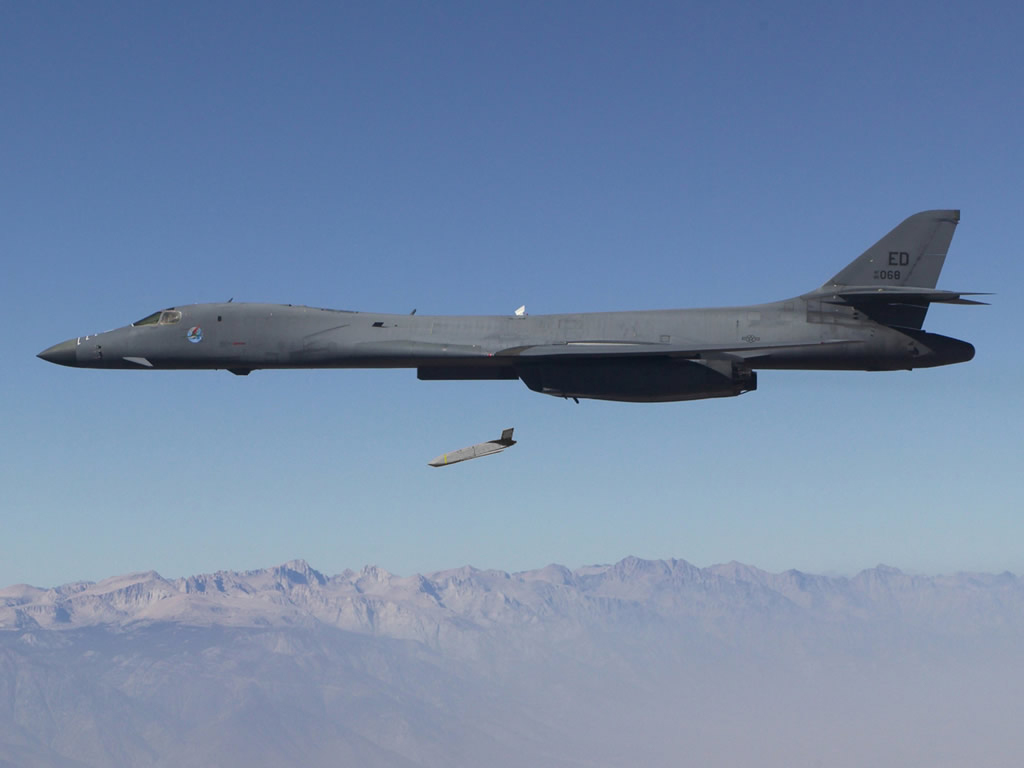
The anti-ship missile has sunk or disabled more warships since 2022 than in the previous three decades, and the ten weapons ranked here are the reason every navy is rethinking how close it can sail to a hostile coast. This 2026 ranking weighs reach, survivability against modern defenses, targeting, production health and demonstrated performance.
How this ranking works
The ranking rewards what wins salvo competitions in 2026, the ability to find a moving ship at range, survive layered defenses on the way in, and arrive in militarily meaningful numbers. Range and seeker sophistication weigh most, then low observability or terminal speed, then production rate and operator base; combat record breaks ties where one exists. Sea-skimming cruise missiles are the core of the list, while ballistic anti-ship weapons are treated separately below because their targeting chains remain harder to verify. Russian and Chinese performance figures are manufacturer claims or state media figures unless noted, and Ukraine-war results are operator-reported. Consistent with this site’s editorial policy, companies and platforms headquartered in Israel are excluded from consideration.
The top ten anti-ship missiles
| Rank | Missile | Nation | Edge |
|---|---|---|---|
| 1 | AGM-158C LRASM | USA | Stealth, autonomous targeting, 370+ km reach, ramping production |
| 2 | Naval Strike Missile / JSM | Norway | Stealthy, passive IIR seeker, huge NATO operator base, NMESIS |
| 3 | YJ-18 | China | Subsonic cruise with supersonic sprint, fleet-wide fit, manufacturer claims |
| 4 | BrahMos | India/Russia | Mach 3 across the whole run, combat-tested by India, exports growing |
| 5 | 3M22 Zircon | Russia | Claimed Mach 8 hypersonic, combat-fired; performance per Russian statements |
| 6 | Type 12 SSM (improved) | Japan | Program stretching toward 900 km-class standoff, per official plans |
| 7 | Exocet MM40 Block 3c | France | Deepest combat record in the West, 200 km-class, wide operator base |
| 8 | Harpoon Block II | USA | Ubiquity itself, dozens of navies, operator-reported hits off Ukraine |
| 9 | Hsiung Feng III | Taiwan | Supersonic, built for one specific fight in the strait |
| 10 | Atmaca | Türkiye | Modern seeker and datalink, fast-growing export list |
The US Navy’s LRASM takes first because it solves the hardest problem, finding and hitting a defended, moving ship without external cues, with a stealthy airframe and a seeker that hunts on its own. Kongsberg’s NSM, covered in our Kongsberg profile, ranks second on sheer adoption, a dozen-plus navies, the US Marines’ NMESIS shore batteries and the F-35-compatible JSM variant.
China’s YJ-18 earns third on fleet integration, it arms most modern Chinese surface combatants and submarines, though its sprint performance rests on manufacturer claims. BrahMos places fourth as the proven supersonic, India fired it in anger against ship targets in the May 2025 confrontation with Pakistan per Indian statements, and Manila’s shore batteries made it the Indo-Pacific’s hottest export. Zircon’s hypersonic claims would top the list if independently verified; its use against land targets in Ukraine is documented, its anti-ship performance is not.
The bottom half is about credibility per dollar. Japan’s improved Type 12 is the quiet riser, a program officially stretching toward 900 km-class ranges as Tokyo builds standoff mass. Exocet keeps its place on history and ubiquity, Harpoon on the world’s largest installed base and operator-reported strikes off Ukraine in 2022, Taiwan’s Hsiung Feng III on supersonic speed aimed at one scenario, and Turkey’s Atmaca debuts on the list as exports and ship integrations multiply.
Why stealth beats speed, for now
| Missile | Speed | Range | Launch platforms |
|---|---|---|---|
| AGM-158C LRASM | Subsonic, stealthy | 370+ km stated | B-1B, F/A-18E/F, F-35 integration underway |
| NSM / JSM | Subsonic, stealthy | 185–250+ km class | Ships, NMESIS shore launchers, F-35 (JSM) |
| YJ-18 | Subsonic with claimed Mach 2.5–3 sprint | Roughly 500+ km, manufacturer claims | Chinese destroyers, cruisers, submarines |
| BrahMos | Mach 3 class | 300–500+ km by variant | Ships, shore batteries, Su-30MKI |
| 3M22 Zircon | Mach 8 claimed | 1,000 km claimed, per Russian statements | Frigates, submarines; land use observed in Ukraine |
The list’s top two are subsonic, which looks backwards until you count interceptor economics. A sea-skimming stealthy missile compresses a defender’s reaction time to seconds at the horizon, and it does so while being hard to detect, hard to classify and cheap enough to salvo. Supersonic and hypersonic weapons stress defenses differently, less reaction time but a brighter infrared and radar signature, and their cost limits magazine depth. The last-ditch defenses that evolved against Exocet-era threats are being rebuilt for both problems at once.
The ballistic wildcards
China’s DF-21D and DF-26 anti-ship ballistic missiles sit outside this ranking deliberately. Their speed and range reshape carrier operations, but hitting a moving ship at 1,500-plus kilometers depends on a surveillance-to-strike chain whose wartime resilience no outsider can audit, and no combat use has tested it. Treat them as a separate, unproven category of enormous consequence.
What ship defenses can and cannot stop
Red Sea combat since 2023 showed Western ships parrying subsonic and some ballistic threats from Houthi arsenals, at the cost of burning interceptors worth far more than their targets. Ukraine’s operator-reported Neptune strike on the Moskva in 2022 showed the other side, a distracted, poorly defended ship dies to a pair of subsonic missiles. The honest summary for 2026 is that saturation, not any single missile, is the ship-killer, which is why production rate weighed so heavily in this ranking.
Anti-ship missiles frequently asked questions
What is the best anti-ship missile in 2026?
The AGM-158C LRASM, on stealth, autonomous targeting and growing production, with Kongsberg’s NSM the most widely adopted Western alternative.
What is the longest-range anti-ship missile?
Among cruise missiles, Japan’s improved Type 12 program targets a 900 km class and LRASM exceeds 370 km; Chinese ballistic DF-26 claims reach much further but remain combat-unproven.
Are hypersonic anti-ship missiles in service?
Russia states the Zircon is operational and has fired it in Ukraine against land targets; its claimed Mach 8 anti-ship performance has not been independently verified.
What sank the cruiser Moskva?
Ukraine reports two domestically built subsonic Neptune missiles struck the ship in April 2022, the operator-reported account consistent with the ship’s loss.
Can modern warships stop anti-ship missiles?
Layered defenses stop individual subsonic and even some ballistic threats, as Red Sea engagements showed, but saturation salvos remain the unsolved problem.
- Wikipedia – class articles for all ten missiles (accessed October 2026)
- Manufacturer literature from Lockheed Martin, Kongsberg, MBDA and Roketsan
- Russian and Chinese figures via state media, treated as manufacturer claims
- Operator-reported engagement results from Ukraine and the Red Sea
- Defence & Tech reporting