
F-35 Engine: F135 Thrust, Upgrades and Problems
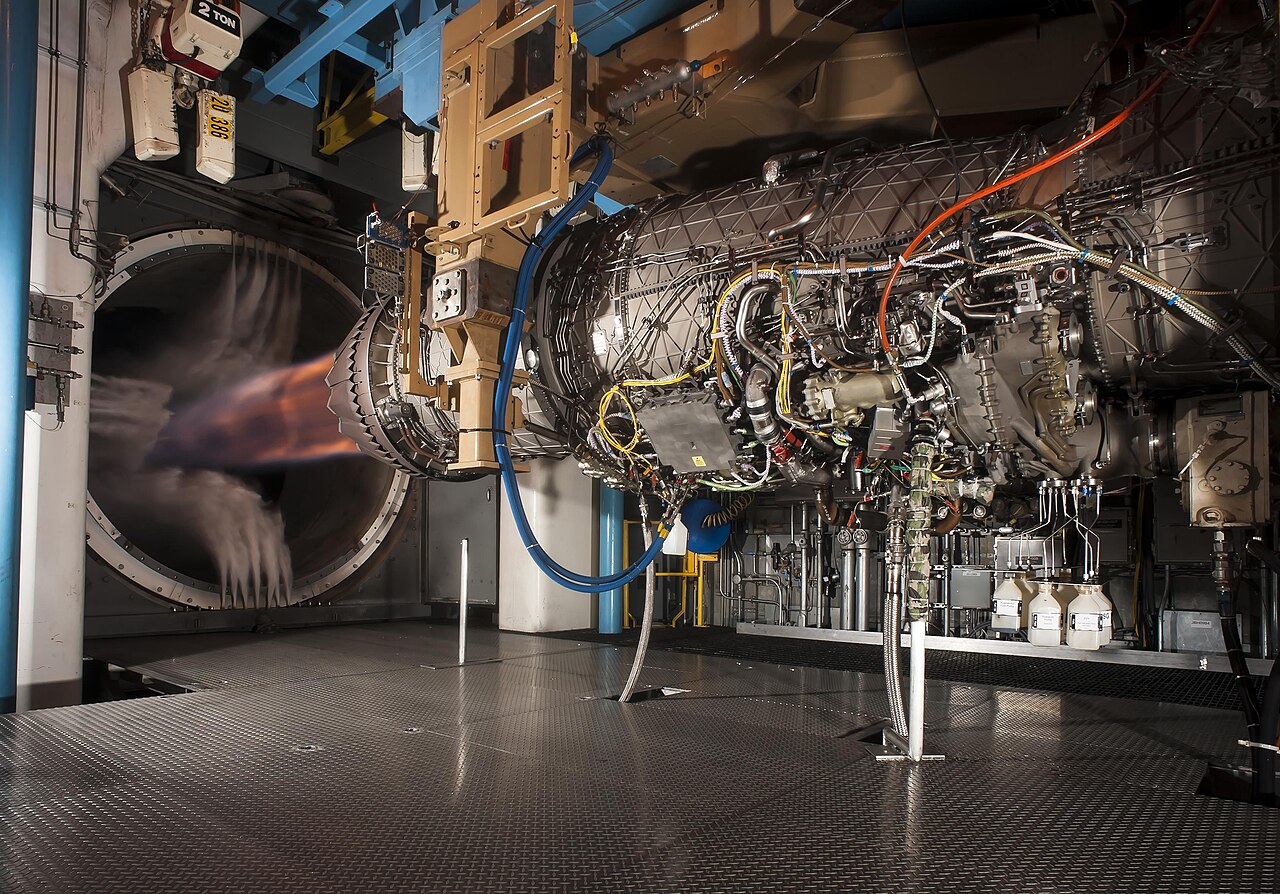
The F-35 engine is the Pratt & Whitney F135, a single afterburning turbofan that produces about 43,000 lbf of thrust, more than any other fighter engine in service. The same core powers all three variants, with an added lift system in the F-35B that lets the jet hover.
The engine has a problem its designers did not plan for. The aircraft’s electronics need far more cooling than expected, and the F135 has been run harder to provide it, which wears it out faster. An Engine Core Upgrade is in development to fix that. This guide explains how the F-35 engine works and what is changing.
What engine does the F-35 use?
Every F-35 has one F135. It is a development of the F119 that powers the twin-engine F-22, with a larger fan to give more thrust from a single unit. First production engines were delivered in 2009.
There are three versions. The F135-PW-100 goes in the F-35A. The PW-400 for the F-35C is the same engine with materials that resist salt corrosion at sea. The PW-600 for the F-35B has a drive shaft at the front and a swivelling nozzle at the back.
| Item | F135-PW-100 and PW-400 | F135-PW-600 (F-35B) |
|---|---|---|
| Thrust, dry | 28,000 lbf (125 kN) | 27,000 lbf (120 kN) |
| Thrust, afterburner | 43,000 lbf (191 kN) | 41,000 lbf (182 kN) |
| Vertical thrust | Not applicable | 40,650 lbf (181 kN) |
| Length | 220 in (5.59 m) | 369 in (9.37 m) with lift system |
| Dry weight | 6,422 lb (2,910 kg) | 7,260 lb (3,290 kg) |
| Bypass ratio | 0.57 to 1 | 0.56 to 1 in conventional flight |
| Overall pressure ratio | 28 to 1 | 28 to 1 |
How does the F-35B hover?
The F-35B does not point its whole engine downward as the Harrier did. A shaft from the front of the engine drives a two-stage lift fan mounted vertically behind the cockpit. At the rear, a three-bearing nozzle swivels the exhaust through about 95 degrees to point at the ground. Two small roll posts under the wings bleed air to keep the jet level.
| Source | Thrust | Share |
|---|---|---|
| Lift fan | 18,680 lbf | About 46% |
| Swivelling exhaust nozzle | 18,680 lbf | About 46% |
| Roll posts under the wings | 3,290 lbf | About 8% |
| Total | 40,650 lbf | 100% |
The fan blows cool air, so the column of gas under the nose is far cooler than a jet exhaust. That protects the deck and stops hot gas being sucked back into the intakes. The cost is weight and space, which is why the B carries less fuel, as set out in F-35A vs F-35B vs F-35C.
Why does the F135 need an upgrade?
The engine does two jobs. It pushes the aircraft, and it supplies compressed air and shaft power to cool and run the electronics. The cooling demand turned out to be much higher than the original specification, so more air is bled from the engine than it was designed to give. To compensate it runs hotter, and hot parts wear out sooner.
The Government Accountability Office has estimated that the extra wear will add tens of billions of dollars to sustainment costs over the life of the fleet. Block 4 makes it worse. The new APG-85 radar and other systems need still more power and cooling than the current engine and thermal system can provide.
What is the Engine Core Upgrade?
In 2023 the Pentagon had two options. One was a new adaptive-cycle engine, developed by General Electric and Pratt & Whitney under an Air Force research programme, which promised much better range but would not fit the F-35B. The other was to rebuild the core of the existing F135. It chose the second.
The Engine Core Upgrade replaces the compressor, combustor and turbine with improved parts while keeping the rest of the engine. Pratt & Whitney says it restores the engine’s design life, provides the cooling Block 4 needs and gives small gains in thrust and fuel burn. It works on all three variants and can be fitted during normal depot overhauls. The target for fielding is about 2029. A new power and thermal management system is being developed alongside it.
What problems has the F-35 engine had?
The best known came in June 2014, when a fan blade rubbed against its casing and an F-35A caught fire on take-off at Eglin Air Force Base. The fleet was grounded for weeks and the type missed its international debut at Farnborough. The fix was a change to the fan seal.
Later problems were about support, not design. A shortage of repair capacity at the engine depot left dozens of aircraft without engines in 2021, and turbine blade coatings wore faster than expected in dusty conditions. A second engine, the General Electric and Rolls-Royce F136, was developed as a competitor but was cancelled in 2011, leaving the F135 as the only option.
Performance figures are in how fast the F-35 is, and the engine’s share of the price is in our guide to how much an F-35 costs.
Frequently asked questions
What engine is in the F-35?
One Pratt & Whitney F135 afterburning turbofan.
How much thrust does the F-35 engine produce?
About 28,000 lbf dry and 43,000 lbf with afterburner in the F-35A and F-35C. The F-35B’s version makes 41,000 lbf with afterburner.
Does the F-35 have one engine or two?
One. The F-22, by comparison, has two F119 engines.
Who makes the F-35’s lift fan?
Rolls-Royce builds the lift system for the F-35B, including the lift fan, swivelling nozzle and roll posts.
What is the F135 Engine Core Upgrade?
A rebuild of the engine’s core to restore its service life and supply more cooling for Block 4 systems, targeted for about 2029.
How much does an F135 engine cost?
About $20 million in recent lots, according to trade press reports.
- Wikipedia – Pratt & Whitney F135: en.wikipedia.org
- US Government Accountability Office – F-35 sustainment report GAO-26-108113 (June 2026): files.gao.gov
- The Aviationist – DOT&E says no combat-capable TR-3 F-35s were delivered in FY2025: theaviationist.com
- Wikipedia – Lockheed Martin F-35 Lightning II: en.wikipedia.org