Egypt Requests 24 More Rafale F4 Jets to Reach 78-Jet Fleet
Lead
Egypt has submitted a Request for Proposal (RFP) to Dassault Aviation for 24 additional Rafale F4-standard fighter jets, according to French defense outlet La Tribune, which would expand Cairo’s Rafale fleet from 54 to 78 aircraft. The request, made on September 1, 2026, represents a third procurement tranche in Egypt’s decade-long Rafale program and comes as the Egyptian Air Force works to replace roughly 129 first-generation F-16s dating to the 1980s and early 1990s. Neither Dassault Aviation, France’s Direction Générale de l’Armement (DGA), nor Egypt’s Ministry of Defence has confirmed the request publicly.
What Happened
According to La Tribune’s September 1 report, corroborated by French defense-specialist outlets Meta-Defense and MenaDefense, Egypt has asked Dassault Aviation to price out a follow-on order of 24 Rafale F4 aircraft. If converted into a firm contract, the order would bring Egypt’s total Rafale fleet to 78 jets — a figure Egyptian officials reportedly flagged as a target “format” as early as 2021. No contract value, financing structure, aircraft configuration split (single- versus two-seat), or delivery timeline has been disclosed. Meta-Defense noted explicitly that “no contract, financial amount or delivery schedule has been made public at this stage,” and the request has not been confirmed by Dassault, the DGA, or Cairo.
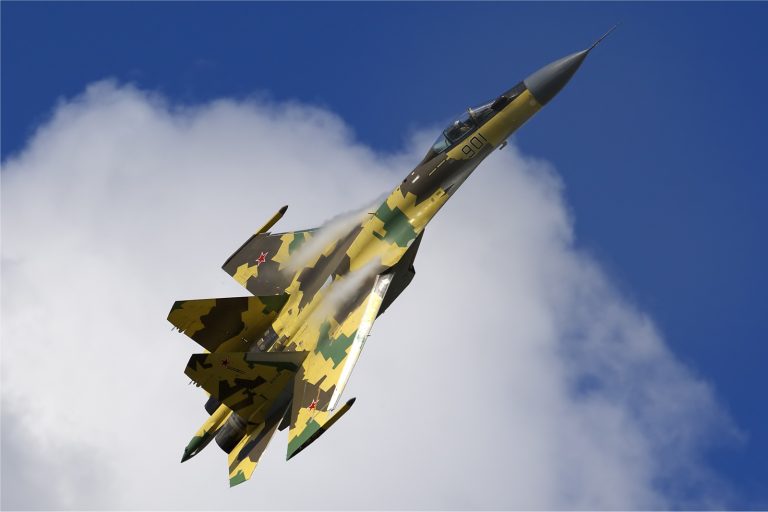
Defense-industry outlet Global Defense Corp, reporting on the same RFP, added that Egyptian defense planners assessed Russia’s export-configured Su-57E and found it did not meet requirements, citing the absence of an AESA radar and stealth characteristics comparable to what Egypt already operates. That assessment has not been independently verified through an official Egyptian or Russian statement, and should be read as one outlet’s characterization rather than confirmed policy.
The Product/System
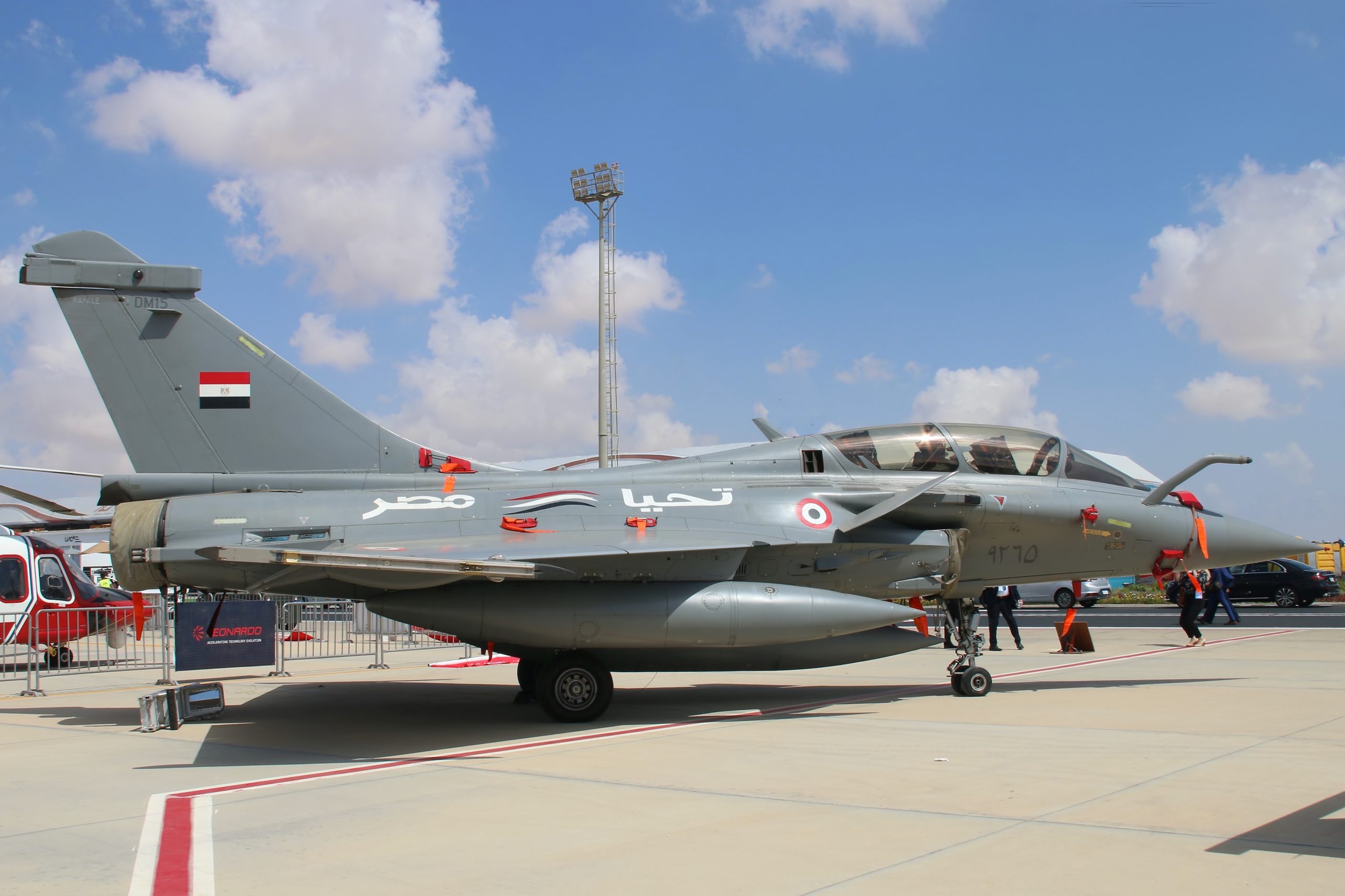
The Rafale is a twin-engine, delta-wing multirole fighter built by Dassault Aviation and in service with the French Air and Space Force, French Navy, and a growing list of export customers including India, Qatar, Egypt, Greece, Croatia, Indonesia, and the United Arab Emirates. The F4 standard under discussion is the latest operational configuration, adding improved AESA radar processing, enhanced datalink and networked targeting for cooperative engagement between aircraft, upgraded self-protection systems, and expanded weapons integration compared to the F3R standard Egypt currently flies. Networked targeting allows one Rafale to designate or share track data with another in real time, a capability increasingly central to how European and Gulf air forces plan to fight alongside allied aircraft.
Who Uses It
Egypt is Dassault’s largest export customer for the Rafale by cumulative order volume. Its current fleet of 54 aircraft was built from two contracts: 24 jets (16 two-seat DM and 8 single-seat EM variants) ordered in February 2015 for roughly $5.9 billion as part of a broader package that also included a FREMM frigate, and 30 F3R-standard aircraft ordered in May 2021 for approximately €3.75 billion. Deliveries under the second contract continued through 2025 and into 2026. The jets are flown by Egypt’s 203rd Tactical Fighter Wing at Gebel El Basur Air Base. Confirmed international Rafale operators beyond France and Egypt include India (36 jets), Qatar (36), Greece (24, a mix of new-build and ex-French aircraft), Croatia (12, secondhand from France), Indonesia (on order), and the UAE (on order).
Export/Procurement History
Egypt’s Rafale relationship began in 2015 as part of a wider push to diversify away from near-total reliance on US-supplied F-16s following a period of strained US-Egypt relations after 2011. The 2021 follow-on order signaled continued confidence in the French jet despite its high per-unit cost relative to competitors. A third tranche — the 24-jet RFP now reported — would track a trajectory Egyptian officials described in 2021 conversations with French counterparts, when they indicated an eventual target near 80 aircraft. Egypt has separately floated interest in additional platforms, including deeper cooperation with China; in August 2026 Egyptian Rafales and Chinese J-16 fighters exercised together, and a Chinese YY-20A tanker refueled an Egyptian Rafale for the first time during the “Eagles of Civilization 2026” drills, one of several recent, and unrelated, indications of an increasingly diversified Egyptian air power posture.
Global Competitors
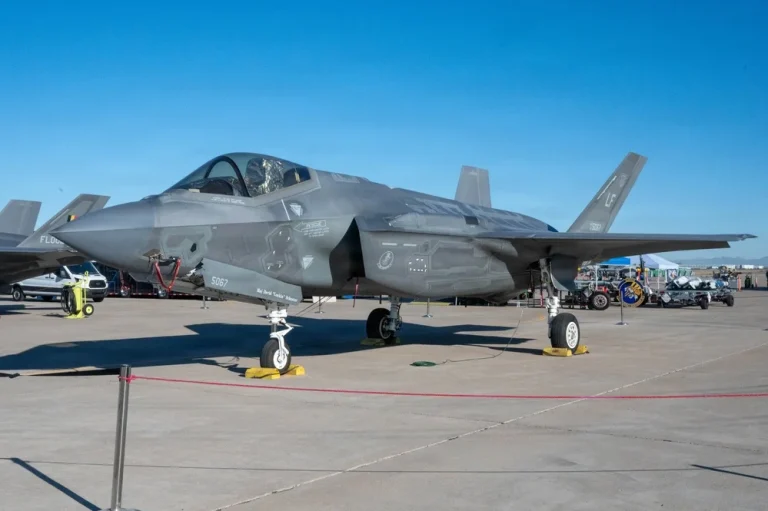
Any Egyptian decision to expand its Rafale fleet plays out against the backdrop of a broader fighter-replacement competition. Egypt’s aging F-16 inventory — roughly 42 Block 15s (1982-1985), 40 Block 32s (1986-1988), and 47 Block 40s (1991-1995) — is well past the midpoint of its service life, and Washington has periodically constrained Cairo’s access to newer F-16 variants and advanced munitions. Russia has offered the export-configured Su-57E, which Global Defense Corp reported Egyptian planners passed over, though this has not been officially confirmed. China’s J-10C and J-16 have also featured in recent joint exercises with Egypt, underscoring Cairo’s pattern of hedging across suppliers rather than committing to a single strategic partner — a posture increasingly common among Middle Eastern and North African air forces navigating US, European, Russian, and Chinese offers simultaneously.
Why It Matters
A move to 78 Rafales would make Egypt’s fleet the largest Rafale operator by unit count outside France, cementing Dassault’s position in North Africa’s most capable air force and reinforcing Egypt’s shift away from single-supplier dependence. For Egypt, the request reflects an urgent operational reality: roughly a quarter of its combat aircraft inventory is more than 35 years old, and modernization has become a readiness question, not merely a prestige purchase. For the wider region, a confirmed order would extend a trend already visible in Egypt’s parallel outreach to China and its historical Russian MiG-29M/M2 purchases — African and Middle Eastern air forces increasingly building multi-supplier fleets that reduce leverage any single arms exporter holds over them.
What Happens Next
An RFP is a pricing and technical request, not a contract; Egypt has sent similar requests in the past that took months or years to mature into signed agreements, if they did at all. The next milestones to watch are a formal Dassault response, any statement from France’s DGA on export authorization, and confirmation — or denial — from Egypt’s Ministry of Defence. Financing terms will also matter: Egypt’s two prior Rafale contracts relied heavily on French state-backed export credit, and a third tranche of this size would likely require a similar arrangement given Egypt’s ongoing IMF-monitored fiscal constraints.
FAQ
How many Rafale fighters does Egypt currently operate?
Egypt operates 54 Rafale fighters, delivered under two contracts signed in 2015 (24 jets) and 2021 (30 jets).
Has Egypt signed a contract for 24 more Rafales?
No. As of this report, Egypt has sent a Request for Proposal to Dassault Aviation, not a signed contract. Dassault, France’s DGA, and Egypt’s Ministry of Defence have not confirmed the request.
Why does Egypt want more Rafale jets instead of upgrading its F-16s?
Much of Egypt’s F-16 fleet — roughly 129 aircraft — dates to the 1980s and early 1990s and is approaching the end of its practical service life. Rafale F4 offers newer radar, networking, and self-protection capability that would be costly to retrofit onto legacy F-16 airframes.
Did Egypt reject a Russian Su-57E offer?
One defense-industry outlet, Global Defense Corp, reported that Egyptian planners passed over the Su-57E over radar and stealth shortfalls, but this has not been confirmed by an official Egyptian or Russian statement and should be treated as unverified at this stage.
What is the Rafale F4 standard?
F4 is Dassault’s latest operational Rafale configuration, adding improved radar processing, expanded networked/cooperative targeting between aircraft, upgraded defensive systems, and broader weapons integration compared to the F3R standard Egypt currently flies.
Sources
- La Tribune, “L’Égypte négocierait 24 Rafale supplémentaires auprès de Dassault Aviation,” September 1, 2026 — original report on the RFP.
- Meta-Defense, “L’Égypte négocie 24 Rafale F4 à Dassault,” September 2, 2026 (https://meta-defense.fr/2026/09/02/egypte-negocie-24-rafale-f4-dassault/) — corroborating French specialist-press coverage with F4-standard detail and explicit non-confirmation caveat.
- MenaDefense, “L’Égypte envisagerait une troisième commande de 24 Rafale,” September 2026 (https://www.menadefense.net/legypte-envisagerait-une-troisieme-commande-de-24-rafale/) — additional corroboration.
- Army Recognition, “Egypt sends proposal request to France for 24 additional Rafale fighters as U.S. F-16 fleet ages,” September 2026 (https://www.armyrecognition.com/news/aerospace-news/2026/egypt-dassault-rafale-24-fighter-jet-rfp-78-fleet) — fleet composition and F-16 age data.
- Global Defense Corp, September 4, 2026 (https://www.globaldefensecorp.com/2026/09/04/egypt-sends-a-proposal-request-to-france-for-24-additional-rafale-fighters-rejecting-russias-su-57e-fourth-generation-dud/) — Su-57E rejection claim, used with explicit hedging as it is not independently confirmed.