

Allen Control Systems Wins Place on Army’s $7 Billion Counter-Drone Contract


Allen Control Systems, the Austin startup behind the Bullfrog autonomous weapon station, is one of ten companies picked for a US Army counter-drone contract vehicle worth up to $7 billion. The Army announced the indefinite delivery, indefinite quantity awards on September 29, and Breaking Defense lists ACS with a base contract value of $500 million.
The vehicle covers sensors, effectors and command-and-control tools for counter-unmanned aircraft work. ACS is competing for orders alongside DroneShield, Echodyne, SRC, L3Harris WESCAM and other firms, several of them also holding $500 million base values.
How the Army Framed the Awards
Brent Ingraham, the Army’s assistant secretary for acquisition, logistics and technology, said the vehicles “span counter-UAS capabilities” and give the service “options as newer requirements emerge.” Brig. Gen. Matt Ross, who commands Joint Interagency Task Force 401, said the aim is a layered defense that can detect, track, identify, mitigate and capture drones.
An IDIQ ceiling is not a guaranteed sale. Companies now compete for individual task orders, and the money that flows to each depends on what units and installations ask for. The awards feed into the Pentagon’s drone and counter-drone marketplace and the Domestic Shield program, which is meant to protect US military installations and critical infrastructure.
A Machine Gun That Aims Itself
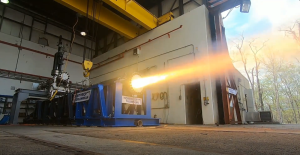
Bullfrog pairs a standard M240 machine gun with computer vision, autonomous control and robotic targeting. The company says the system handles the full kill chain against drones up to Group 3, the category that includes larger, faster aircraft than hobby-class quadcopters. The appeal to buyers is cost. A round of 7.62 mm ammunition costs a fraction of a missile interceptor, which matters when the threat is a cheap one-way attack drone.
ACS says Bullfrog is deployed with the US Army and Navy and has been validated through contracts with JIATF-401 and several allied militaries. The company announced deals with South Korea and the United Arab Emirates in November 2025, and it has a contract with ManTech to put the system on maritime platforms used by US special operations forces. The Marine Corps has also selected Bullfrog for its Ground Based Air Defense program, the company said.
The IDIQ arrives as the Army pushes a wide field of low-cost defenses. Northrop Grumman recently won an $18.8 million Army contract for a ramjet counter-drone missile, and the Pentagon has begun a year-long laser counter-drone test at five US bases. A gun-based option sits at the cheapest end of that range.
Scaling Up in Texas
The contract vehicle follows a run of expansion at the company. ACS said in February that it had tripled its Austin operations, and in May it raised a $200 million Series B at a $2.2 billion post-money valuation, led by Smash Capital. The money is earmarked for manufacturing and for new product lines.
On September 7 the company announced a new 191,000-square-foot manufacturing facility in Austin to expand Bullfrog production. It said demand from the US and allied nations facing weaponized low-cost drones is accelerating. ACS has not published a production rate for the plant or a date when it will reach full output.
What remains unclear is how quickly task orders will follow. It is not yet clear when the first orders under the new vehicle will be placed or how many Bullfrog units they will cover.


[…] opened a much larger door. It awarded a counter-drone IDIQ with a ceiling of up to $7 billion, and Allen Control Systems secured a place on that contract with its Bullfrog system. Earlier this month the Pentagon also began a year-long laser […]