Kratos to Power Boeing’s JDAM LR With Spartan J85 Turbojet Engines
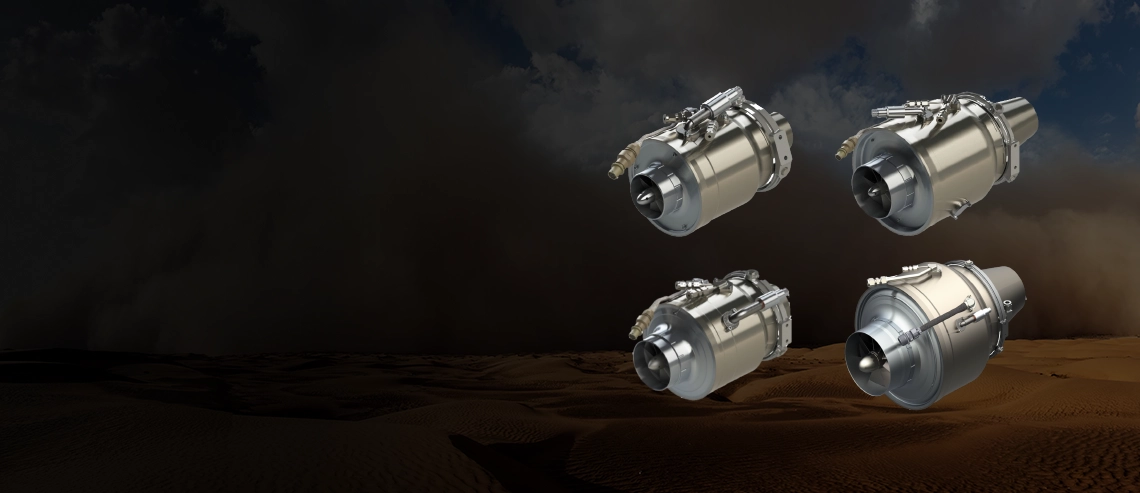
Kratos Defense & Security Solutions said Monday it will allocate expanded production capacity at its Michigan propulsion plant to build Spartan TDI-J85 turbojet engines for Boeing’s Joint Direct Attack Munition Long Range, adding a jet-powered standoff option to the U.S. Air Force’s precision-strike inventory.
The announcement follows a $75 million Undefinitized Contract Action the Air Force awarded Boeing earlier this month to acquire the BSU-111/B Payload Delivery Unit configuration of JDAM LR — a designation better known by its GBU-75 program name. The weapon pairs a standard JDAM guidance kit with a small turbojet, letting crews release the munition well outside the range of most short- and medium-range air defenses.
What the J85 Adds to JDAM LR
The baseline JDAM family turns unguided “dumb” bombs into GPS/INS-guided weapons with a strap-on tail kit, but its range is limited by the altitude and speed at release. JDAM LR closes that gap with a Kratos TDI-J85 turbojet rated at roughly 200 pounds of thrust, extending the weapon’s reach beyond 300 nautical miles while carrying a 500-pound-class (226-kilogram) payload.
That places JDAM LR in a niche between traditional guided bombs and dedicated cruise missiles such as the AGM-158 JASSM — offering a lower unit cost than a full cruise missile while giving aircrews far more standoff distance than a conventional JDAM.
Kratos’ Role and Production Capacity
Kratos builds the Spartan engine family, including the J85 variant selected for JDAM LR, at its 22,500-square-foot Propulsion Manufacturing Facility in Auburn Hills, Michigan. The company said the site is now fully operational and optimized for full-rate production, and that it has already begun procuring long-lead components to support a large-scale engine build in 2027 across multiple customers and applications, with the Boeing program cited as a key driver.
Kratos and Boeing have worked together on the JDAM LR concept since at least an earlier memorandum of understanding covering a “Powered JDAM” munition, positioning Kratos’ low-cost, high-volume manufacturing approach — developed originally for target drones and expendable systems — as the propulsion source for a mainstream Air Force munitions program.
Why It Matters
The Pentagon has pushed munitions manufacturers to expand capacity and shorten lead times amid sustained weapons expenditure supporting Ukraine and Indo-Pacific stockpile requirements. A jet-powered JDAM variant gives the Air Force a mid-cost standoff weapon that can be built on existing JDAM tail-kit production lines, rather than requiring an entirely new missile production chain.
For allied air forces that already operate JDAM-compatible aircraft and munitions stocks, a powered variant offers a potential upgrade path without a full transition to cruise-missile-class weapons and their higher per-unit cost and more complex logistics tail. Turkish industry has pursued a comparable strategy with its own precision-guided munitions programs, adding standoff range to existing guided bomb families rather than only fielding new missile types — a trend tracked in ongoing Turkish defense industry coverage.
Sources
- Kratos Defense & Security Solutions press release, Aug. 24, 2026 — official company statement announcing the Spartan J85 engine allocation.
- Defense News, Aug. 6, 2026 — reporting on Boeing’s first JDAM LR production contract award.