

Saab and Canada Agree Term Sheet for Six GlobalEye Aircraft

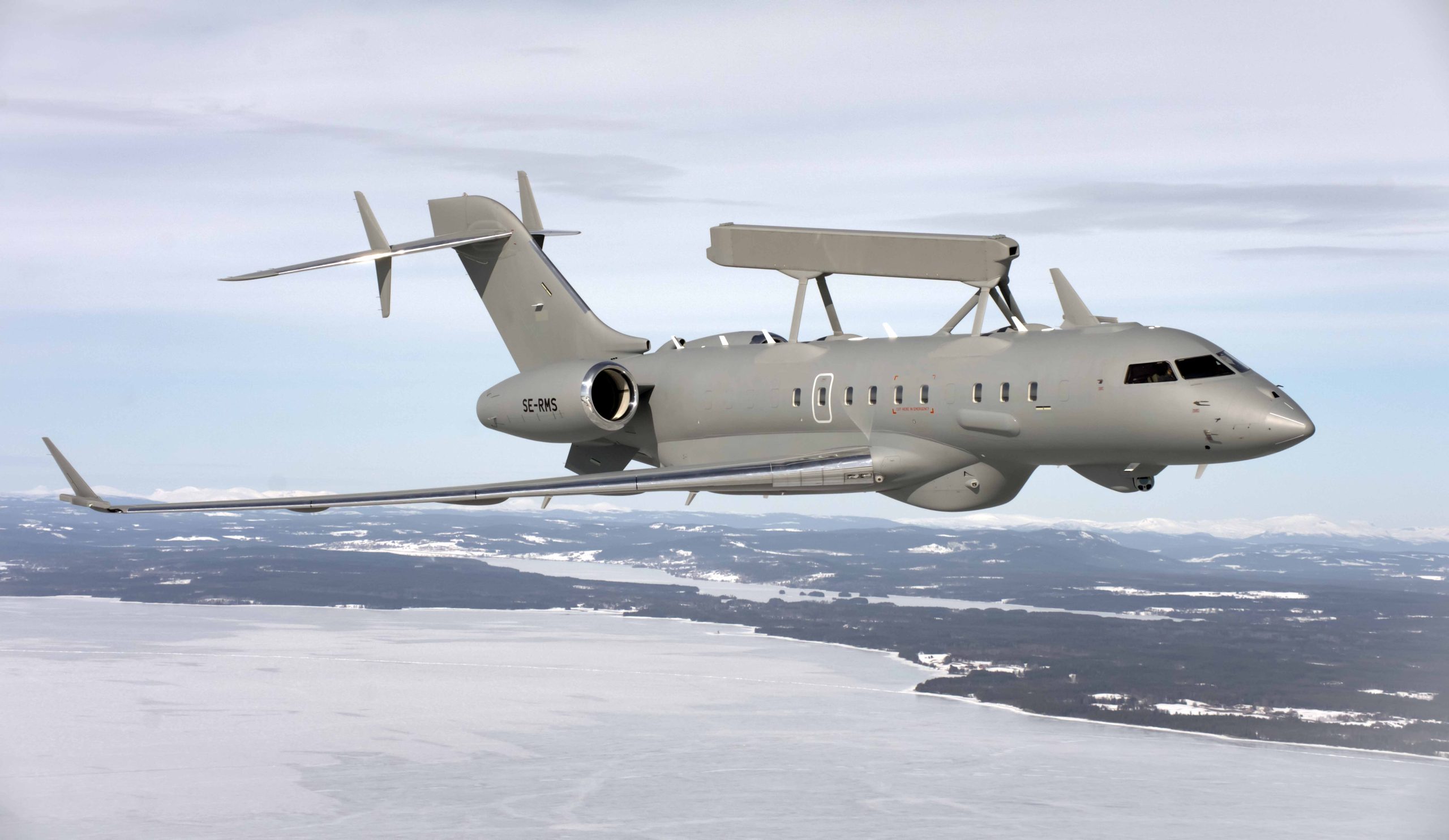
Saab and Canada’s Defence Investment Agency have signed a non-binding term sheet for the Canadian purchase of six GlobalEye airborne early warning and control aircraft, setting the ground rules for contract negotiations. Saab announced the agreement on September 25.
The document is not a contract. It commits neither side to a purchase, and no value has been disclosed. What it does is define the scope of the talks that come next.
Saab GlobalEye Canada Deal for Six Aircraft
| Item | Detail |
|---|---|
| Parties | Saab and Canada’s Defence Investment Agency (DIA) |
| Status | Non-binding term sheet; not a contract or purchase commitment |
| Quantity | Six GlobalEye aircraft with associated systems, training and support |
| Negotiation topics | System configuration, industrial participation, capability development, programme execution |
| Value | Not disclosed |
| Earlier step | Canada named Saab preferred supplier on May 27, 2026 |
Saab CEO Micael Johansson said the term sheet “reflects strong collaboration and establishes a clear framework for negotiations,” adding that the company is well positioned to show how its solution meets Canada’s requirements.
What Is the Saab GlobalEye?
GlobalEye is Saab’s airborne early warning and control system, an aircraft that carries a long-range radar and other sensors to watch for aircraft, missiles and ships across a wide area and pass that picture to commanders. It is built on the Bombardier Global 6000/6500 business jet and carries the Erieye ER active electronically scanned array radar. Saab says the aircraft combines active and passive sensors to detect and identify threats over long distances across domains.
Unlike the older Erieye installations on the Saab 340 and Saab 2000 turboprops, GlobalEye adds a jet airframe with higher speed and altitude, and it can track air and surface targets in the same mission.
Saab GlobalEye Specifications and Range
| Parameter | Figure | Basis |
|---|---|---|
| Airframe | Bombardier Global 6000/6500 business jet | Saab |
| Radar | Erieye ER, gallium nitride transmit/receive modules | Saab, public references |
| Detection range | Up to 450 km at 30,000 ft; up to 550 km at 35,000 ft | Public references to Saab data |
| Instrumented range | Above 350 nautical miles | Saab, via The Defense Post |
| Endurance | Over 11 hours | Saab, via The Defense Post |
| Improvement over earlier Erieye | About 70 percent longer detection range | Public references to Saab data |
| Operator stations | Five on board | Public references |
Canada AEW&C Program and the Reported Requirement Gaps
Canada is not buying an off-the-shelf configuration. Reporting by The Defense Post earlier this month said assessments after the May decision pointed to gaps against Canadian needs. Saab has indicated it is willing to add nose and tail radars and an aerial refuelling capability, the report said.
| Reported gap | Saab’s reported response |
|---|---|
| No 360-degree radar coverage | Willing to add nose and tail radars |
| No in-flight refuelling | Willing to add an aerial refuelling capability |
| Number of crew stations | Not detailed in the reporting |
| Connectivity for NORAD integration | Not detailed in the reporting |
The decision itself has drawn scrutiny. The Defense Post reported that Prime Minister Mark Carney announced the plan in May before operational requirements were finalised, and that the choice surprised senior military leaders, including the commander of the Royal Canadian Air Force. Former procurement officials quoted in the report compared the fast-track approach with the CH-148 Cyclone helicopter programme, which was plagued by delays and cost growth.
The Defence Investment Agency has defended the selection as a proven aircraft that reduces development risk. Secretary of State Stephen Fuhr was quoted as saying that “it’s not the only thing that needs to be considered here” and that there would be trade-offs everywhere, pointing to economic and geopolitical factors alongside pure capability.
GlobalEye vs E-7 Wedgetail
The obvious comparison is Boeing’s E-7 Wedgetail, which is built on the 737 and uses Northrop Grumman’s MESA radar. The two aircraft are built around different ideas: a large, crewed battle-management platform on one side, a smaller jet with a lighter mission crew on the other. The radar figures below are not like-for-like, because manufacturers quote them under different conditions.
| Feature | Saab GlobalEye | Boeing E-7 Wedgetail |
|---|---|---|
| Airframe | Bombardier Global 6000/6500 | Boeing 737 Next Generation |
| Radar | Erieye ER AESA | MESA fixed AESA with two broadside arrays |
| Quoted detection range | Up to 450 km at 30,000 ft; 550 km at 35,000 ft | Over 600 km in look-up mode |
| Endurance | Over 11 hours | Australian crews routinely fly 13-hour missions |
| Crew | Five operator stations | 2 flight crew and 19 mission crew |
| Customers | UAE, Sweden, France, an undisclosed Middle East buyer | Australia (6), Turkey (4), South Korea (4), UK (3 on order) |
The UK is the closest comparison for a NATO buyer. The RAF’s second E-7 Wedgetail rolled out in August, while NATO, according to public references, dropped its E-7 plan in November 2025 in favour of GlobalEye.
Saab GlobalEye Customers and Orders
| Customer | Aircraft | Status |
|---|---|---|
| United Arab Emirates | 5 | In service |
| Sweden | 3 | On order; deliveries from 2027 |
| France | 2 | Ordered December 2025 for SEK 12.3 billion ($1.3 billion); deliveries 2029 to 2032; option for two more |
| Undisclosed Middle East customer | 2 | Ordered July 27, 2026 for SEK 10.1 billion; delivery in 2030 |
| NATO allies (joint buy) | Up to 10 | Reported July 2026 plan to replace the E-3 Sentry fleet |
| Canada | 6 (planned) | Non-binding term sheet signed September 25, 2026 |
France’s order will replace its E-3F Sentry fleet, which has been in service since 1991. That pattern, older Sentry fleets reaching the end of their lives across allied air forces, is what is driving demand for the class.
Saab AB Company Profile
| Item | Detail |
|---|---|
| Headquarters | Stockholm, Sweden; development and manufacturing in Linköping |
| Founded | 1937 |
| Employees | About 26,100 (2025) |
| Revenue | SEK 79.1 billion (2025) |
| Listing | Nasdaq Stockholm (SAAB B); Investor AB is the largest shareholder |
| Key products | JAS 39 Gripen, GlobalEye and Erieye, Carl-Gustaf, NLAW, Giraffe radars, RBS-15 |
What Happens Next in the Canadian GlobalEye Talks
With the term sheet signed, the work shifts to the details that will decide price and schedule: what Saab must add to the aircraft, how much of the work stays in Canada, and how quickly the first aircraft can arrive. Reporting on the Canadian plan has tied the aircraft to Arctic surveillance and NORAD continental defence, a mission set that puts a premium on endurance and sensor range.
Two things will show whether the talks are on track. One is whether the nose and tail radars and refuelling capability turn into a costed configuration. The other is how the industrial participation package is shaped, since the Canadian-built airframe is only part of the domestic content story. Neither side has said when a binding contract might be ready.
Saab GlobalEye FAQ
How many GlobalEye aircraft does Canada want?
Six, along with associated systems, training and support, according to Saab’s September 25 announcement.
Has Canada signed a contract with Saab?
No. The agreement is a non-binding term sheet that sets the scope for negotiations. It is not a contract or purchase commitment, and no value was disclosed.
What is the range of the GlobalEye radar?
Public references to Saab data cite detection ranges of up to 450 kilometres at 30,000 feet and up to 550 kilometres at 35,000 feet, and an instrumented range above 350 nautical miles.
Which countries operate the GlobalEye?
The UAE operates five. Sweden and France have ordered aircraft, and an undisclosed Middle Eastern customer ordered two in July 2026.
Is the GlobalEye better than the E-7 Wedgetail?
The two are designed differently, and quoted figures are not like-for-like. Buyers weigh radar coverage, crew size, endurance, cost and industrial terms.
- Saab – “Canada takes next step towards future GlobalEye capability” (press release, September 25, 2026)
- Saab – “Saab receives order for GlobalEye” (press release, July 27, 2026)
- The Defense Post – “Canada GlobalEye spy plane” (September 14, 2026) and “France Orders Two GlobalEye AEW&C Aircraft From Saab for $1.3B” (January 2, 2026)
- Aviation Week – “Canada Sets Framework For GlobalEye Talks With Saab” (September 2026)
- Air Data News – “Canada moves closer to buying six Saab GlobalEye surveillance aircraft” (September 2026)
- Wikipedia – GlobalEye; Boeing E-7 Wedgetail; Saab AB (specifications, orders and company data)


[…] most recent step is Canada’s planned buy of six aircraft, covered in Saab and Canada agree term sheet for six GlobalEye aircraft. Saab is also close to Europe’s air-power debates, such as Airbus’s Eurofighter bid for […]