
F-35 Sensors: How DAS, EOTS and Sensor Fusion Work
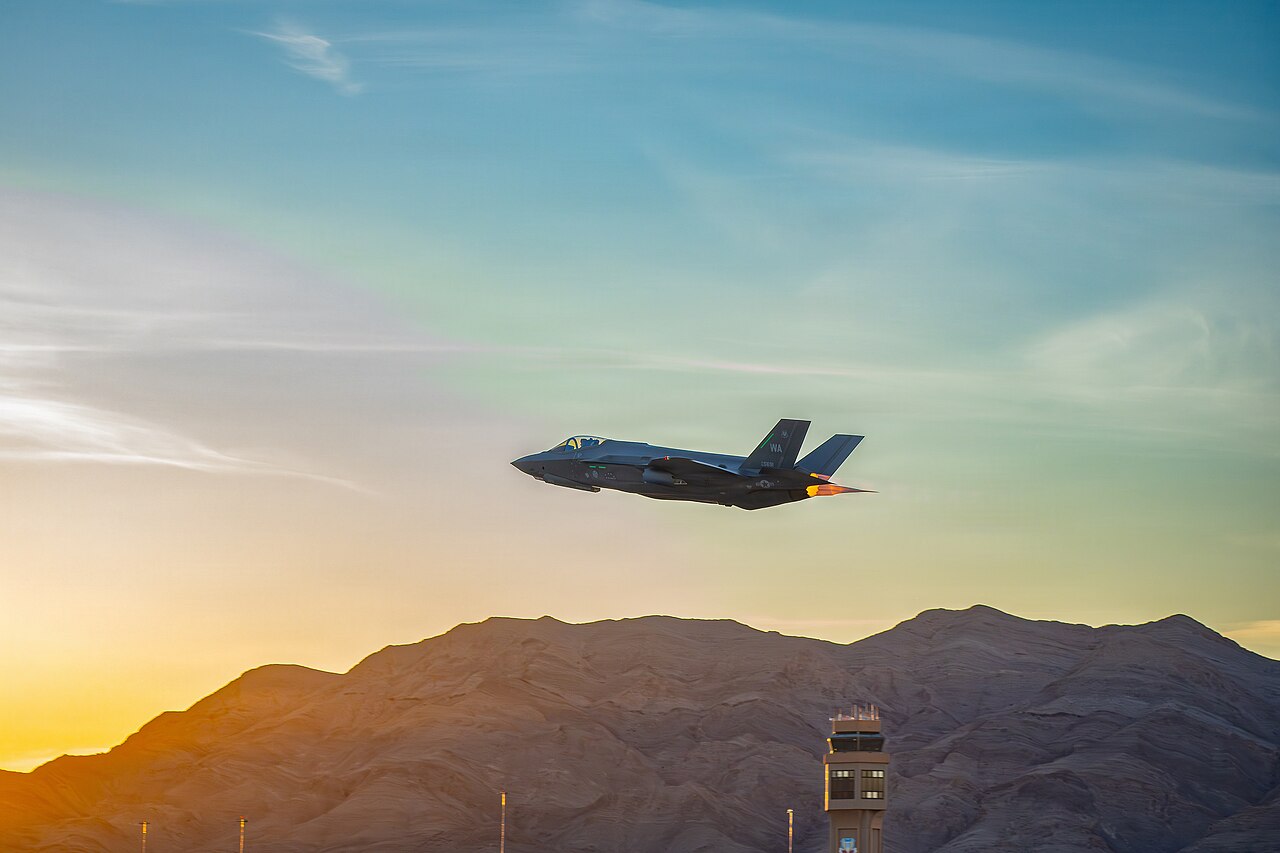
F-35 sensor fusion is the software that takes detections from the radar, infrared cameras, targeting system, electronic receivers and data links and merges them into a single track for each object. The pilot sees one symbol per aircraft, ship or missile site instead of several displays that have to be compared by eye.
Pilots and air forces describe this as the feature that most separates the F-35 from older jets, ahead of stealth. It is also the part of the aircraft most dependent on software, which is why the delayed TR-3 computer matters so much. This guide explains the sensors and how F-35 sensor fusion ties them together.
What sensors does the F-35 have?
Five systems feed the picture. Four are on the aircraft and one brings in what other platforms see.
| System | Type | Main job |
|---|---|---|
| AN/APG-81 radar | Active electronically scanned array | Finds and tracks air and ground targets, maps terrain, jams |
| AN/AAQ-37 Distributed Aperture System | Six infrared cameras around the airframe | Missile warning, tracking nearby aircraft, imagery for the helmet |
| AN/AAQ-40 Electro-Optical Targeting System | Infrared camera and laser under the nose | Long-range identification, laser designation, infrared search and track |
| AN/ASQ-239 electronic warfare suite | Antennas in the wings and tail | Detects and locates radars, warns of threats, jams |
| Communications, navigation and identification suite | Radios and data links | Shares tracks with other F-35s and other forces |
The radar is covered in F-35 radar. The other sensors are passive: they collect energy without transmitting, so using them does not give the aircraft away. That fits the approach described in how F-35 stealth works.
What is the Distributed Aperture System?
The Distributed Aperture System, or DAS, is a set of six infrared cameras set into the skin so that together they see in every direction. It does three jobs. It spots the heat of a missile launch and tells the pilot where it came from. It tracks other aircraft nearby, including wingmen, without radar. And it supplies the picture that lets the pilot look through the cockpit floor, as described in the F-35 helmet.
Northrop Grumman built the original system and said that in a 2010 test it tracked a rocket launch from more than 800 miles away. Raytheon was chosen in 2018 to supply a replacement with sharper imagery, and the programme schedule lists the Next Generation DAS capability for September 2027.
What is EOTS?
The Electro-Optical Targeting System sits behind the faceted sapphire window under the nose. It does the work of the targeting pod that older fighters carry on a pylon: a magnified infrared image for identifying targets at long range, a laser to mark them for guided bombs and a laser spot tracker. Carrying it inside avoids the radar signature and drag of a pod.
It also works as an infrared search and track sensor against aircraft. The current unit dates from the 2000s and its picture is less sharp than the latest pods. An Advanced EOTS with higher resolution and extra wavebands is part of the Block 4 plan.
How does F-35 sensor fusion work?
Each sensor reports what it detects to the core processor. The fusion software decides which reports refer to the same object, combines them and keeps one track. If the radar sees an aircraft at long range and the electronic warfare suite hears a radar from the same direction, the pilot gets one symbol tagged with the likely type.
The software also directs the sensors. If a track is weak, it can point the radar or the targeting system at it for a better look without the pilot asking. To identify what it detects, it compares signals with a library of known radars and weapons called the mission data file, which is written for each region and updated by specialist laboratories.
The result appears on one large touchscreen and in the helmet. The pilot’s task changes from operating sensors to deciding what to do, which is the central idea of fifth-generation fighters.
How do F-35s share what they see?
F-35s in a formation pass their fused tracks to each other over the Multifunction Advanced Data Link. It uses narrow, directed beams that are hard to detect, so four jets can build a common picture without breaking radio silence. A target seen by one aircraft appears on the screens of all.
For everyone else the jet uses Link 16, the standard NATO network. That lets an F-35 act as a forward sensor for other weapons. In US tests F-35 track data has been used to guide a ship-launched SM-6 missile and Army Patriot interceptors at targets their own radars could not see. The aircraft’s wider role is set out in what the F-35 is.
Frequently asked questions
What is sensor fusion on the F-35?
Software that merges detections from all the aircraft’s sensors and data links into one track per object, shown on a single display.
How many cameras does the F-35 have?
Six infrared cameras in the Distributed Aperture System, plus the targeting system camera under the nose.
What does EOTS stand for?
Electro-Optical Targeting System. It is the F-35’s built-in targeting and infrared search sensor.
What is MADL?
The Multifunction Advanced Data Link, a narrow-beam link that F-35s use to share data with each other without being easily detected.
Can the F-35 guide other weapons?
Yes. Its tracks can be passed to ships and ground-based air defences, which has been demonstrated in US tests.
What is a mission data file?
A library of threat signals for a particular region that the aircraft uses to identify what its sensors detect.
- Wikipedia – Lockheed Martin F-35 Lightning II: en.wikipedia.org
- Defence Industry Europe – US plans major F-35 weapons expansion (F-35 Modernized Selected Acquisition Report): defence-industry.eu
- The Aviationist – The F-35 kill switch: separating myth from reality (mission data files): theaviationist.com
- The Aviationist – DOT&E says no combat-capable TR-3 F-35s were delivered in FY2025: theaviationist.com