
How Strong Is Russia’s Military in 2026? Troops, Tanks, Budget
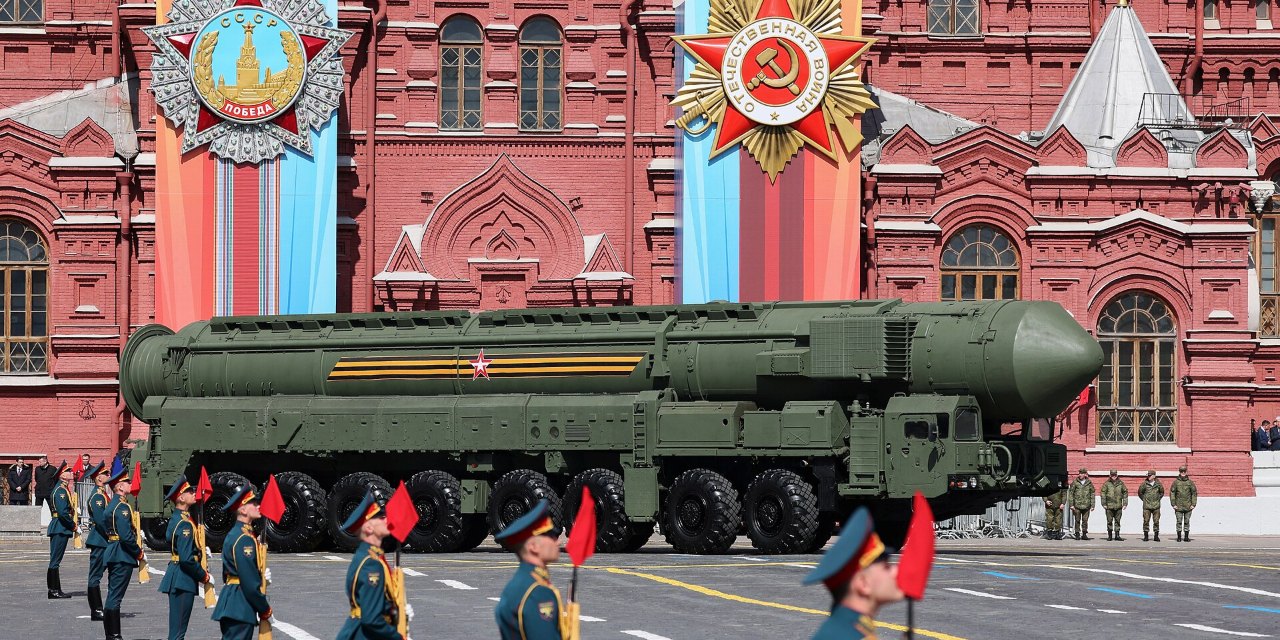
Russia has the world’s second-ranked military in 2026, with about 1.1 million active personnel, the largest nuclear arsenal of any country and military spending of about $190 billion a year. It is also a force that has taken an estimated 1.4 million casualties in Ukraine and lost more than 24,000 pieces of equipment that analysts have confirmed from photos and video.
Both things are true at once, and any honest answer to how strong Russia’s military is has to hold them together. This guide sets out the numbers that matter in October 2026: troops, money, tanks, aircraft, ships and warheads, and the weak points behind them.
How strong is Russia’s military in 2026?
The Global Firepower index for 2026 places Russia second among 145 countries, behind the United States and ahead of China. The index weighs more than 60 factors and rewards mass, which is where Russia scores well: manpower, tanks, artillery, missiles and nuclear weapons.
The war in Ukraine gives a harder test. Russia has kept roughly 700,000 troops in the field for years, raised missile and drone output far above pre-war levels and adapted to sanctions. It has also failed to defeat a smaller neighbor in more than four and a half years of fighting. A military can be large, dangerous and resilient without being efficient, and that is the fairest description of Russia’s forces today.
How many troops does Russia have?
A decree signed by Vladimir Putin in September 2024 set the authorized strength of the armed forces at 1.5 million servicemen, or about 2.39 million people including civilian staff. On paper that makes Russia’s military the second largest in the world after China’s.
Actual strength is lower. The International Institute for Strategic Studies (IISS) has put active personnel at about 1.1 million in recent editions of The Military Balance. Ukraine’s commander-in-chief, Oleksandr Syrskyi, said in June 2026 that about 721,000 Russian troops were deployed in and around Ukraine.
| Category | Number | Source |
|---|---|---|
| Authorized servicemen | 1.5 million | Presidential decree, September 2024 |
| Active personnel | About 1.1 million | IISS estimate |
| Deployed against Ukraine | About 721,000 | Ukrainian military, June 2026 |
| Reserve | About 1.5 million | IISS estimate |
| Conscript service | 12 months, ages 18 to 30 | Russian law |
Most soldiers fighting in Ukraine are contract volunteers drawn by large signing bonuses, not conscripts. Syrskyi said contract recruitment fell by about a third in spring 2026 compared with a year earlier, a Ukrainian claim that cannot be checked independently.
How much does Russia spend on defense?
The Stockholm International Peace Research Institute (SIPRI) estimates that Russia spent about $190 billion on its military in 2025, up 5.9 percent in real terms and equal to 7.5 percent of GDP. Only the United States and China spent more.
The 2026 budget was the first since the invasion to plan a cut. SIPRI’s analysis of the budget law puts total military spending at about 14.9 trillion rubles, or 6.3 percent of GDP, down from 16 trillion rubles in 2025. Spending during the year has run ahead of that plan. The German Institute for International and Security Affairs estimated outlays of 10.7 trillion rubles in the first half of 2026 alone, close to 44 percent of all federal spending.
What weapons does Russia have?
Russia’s inventory is the largest in Europe in almost every category. The table gives the headline figures and where they come from.
| Category | Number | Source |
|---|---|---|
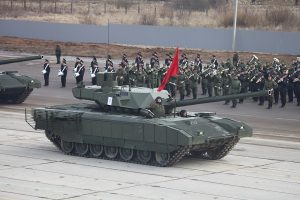
| Main battle tanks in active units | About 3,460 | IISS Military Balance 2026 |
| Tanks left in storage | About 2,100 | Satellite imagery counts, June 2026 |
| Combat aircraft | About 1,200 | IISS Military Balance 2026 |
| Heavy bombers (Tu-160, Tu-95MS) | About 60 | FAS, 2026 |
| Intercontinental ballistic missiles | About 324 | FAS, 2026 |
| Ballistic missile submarines | 13 | FAS, 2026 |
| Submarines of all types | About 67 | Open-source fleet lists, includes boats in refit |
| Long-range missile output | More than 200 a month | Ukrainian military intelligence, August 2026 |
The systems behind these numbers are covered in our guides to the Iskander ballistic missile, the S-400 air defense system and the world’s leading main battle tanks. For how Russia’s newest fighter compares with its American rival, see F-35 vs Su-57.
How many nuclear weapons does Russia have?
Russia holds about 5,420 nuclear warheads, according to the Federation of American Scientists’ 2026 assessment. About 1,020 of those are retired and awaiting dismantlement, which leaves a military stockpile of roughly 4,400. An estimated 1,796 strategic warheads are deployed on missiles and at bomber bases.
The New START treaty, the last agreement limiting US and Russian strategic forces, expired in February 2026. There are now no legal caps and no inspections. Modernization is uneven: the Yars missile and Borei submarines are in service in numbers, while the heavy Sarmat missile is still not deployed after years of delays, despite a successful test in May 2026.
What are the Russian military’s weaknesses?
Losses are the first. The open-source project Oryx has documented more than 24,000 Russian vehicles and heavy weapons destroyed, damaged, abandoned or captured since 2022, including more than 4,000 tanks. The Center for Strategic and International Studies estimated in July 2026 that Russia had suffered about 1.4 million casualties, with 400,000 to 450,000 killed.
Reserves are the second. Analysts who count vehicles in satellite images found that Russia’s storage bases held about 2,100 tanks in June 2026, down from more than 7,300 before the war, and that fewer than 900 of those could realistically be restored. New T-90M production is estimated at about 250 a year.
The navy is the third. Ukraine’s defense ministry says about 30 percent of the Black Sea Fleet’s combat ships have been destroyed or badly damaged, and Russia’s only aircraft carrier, Admiral Kuznetsov, has not sailed since 2017.
Frequently asked questions
Is Russia the second strongest military in the world?
Global Firepower ranks Russia second in 2026, behind the United States and ahead of China. The ranking measures size and resources, not battlefield performance.
How many soldiers does Russia have?
The authorized strength is 1.5 million servicemen. Independent estimates put active personnel at about 1.1 million.
How many tanks does Russia have?
About 3,460 in active units according to the IISS Military Balance 2026, with roughly 2,100 older tanks left in storage.
How many nuclear weapons does Russia have?
About 5,420 warheads in total, of which roughly 4,400 are in the military stockpile, according to the Federation of American Scientists.
How big is Russia’s defense budget?
SIPRI estimates Russia spent about $190 billion in 2025, or 7.5 percent of GDP. The 2026 plan is about 14.9 trillion rubles.
Is Russia’s military stronger than NATO’s?
No. NATO’s 32 members together spend roughly eight times as much as Russia and have about 3.4 million active personnel. Russia’s advantages are nuclear weapons, proximity and a war economy already at full output.
- IISS – The Military Balance 2026: iiss.org
- SIPRI – Russia’s military budget for 2026, Julian Cooper (March 2026): sipri.org
- SIPRI – Trends in World Military Expenditure, 2025 (April 2026): sipri.org
- Bulletin of the Atomic Scientists – Russian nuclear weapons, 2026 (Kristensen, Korda, Johns, Knight-Boyle): thebulletin.org
- Oryx – Documenting Russian equipment losses during the invasion of Ukraine: oryxspioenkop.com
- CSIS casualty estimate, as reported by The Defense Post (July 2026): thedefensepost.com
- Global Firepower – 2026 Military Strength Ranking: globalfirepower.com