US Strategic Bombers: B-52, B-1B, B-2 and B-21 Raider
The United States Air Force flies about 140 strategic bombers of three types: roughly 75 B-52H Stratofortresses, about 44 B-1B Lancers and 19 B-2A Spirits. A fourth, the B-21 Raider, is in flight testing and due to reach its first base in 2027.
No other country keeps a bomber force of this size. This guide explains what each aircraft does, how far it flies, what it carries and which of them will still be flying in the 2040s.
What bombers does the US have?
The three bombers were built for different jobs. The B-52 carries the most varied load the furthest and launches cruise missiles from outside enemy defenses. The B-1B is the fast, heavy conventional bomber. The B-2 is the stealth aircraft that can fly over a defended target. All answer to Air Force Global Strike Command.
| Aircraft | In service | Entered service | Range without refuelling | Payload | Nuclear role | Main bases |
|---|---|---|---|---|---|---|
| B-52H Stratofortress | About 75 | 1961 | About 14,000 km | About 31 tonnes | Yes, 46 aircraft | Barksdale, Minot |
| B-1B Lancer | About 44 | 1986 | About 9,400 km | About 34 tonnes | No | Dyess, Ellsworth |
| B-2A Spirit | 19 | 1997 | About 11,000 km | About 18 tonnes | Yes | Whiteman |
| B-21 Raider | In flight test | Due 2027 | Not disclosed | Not disclosed | Yes | Ellsworth first |
B-52: the 1950s design that will outlast its successors
Every B-52 in service was built between 1960 and 1962. The aircraft has survived because it is a simple, roomy airframe that can carry almost any weapon, and because it no longer needs to fly over the target. Its main arms today are cruise missiles, the nuclear AGM-86B and the conventional JASSM, described in our guide to US cruise missiles.
The Air Force intends to keep 76 of them flying into the 2050s as the B-52J. The upgrade replaces the eight original engines with Rolls-Royce F130s and fits a modern radar. Both parts are late and over budget, and service entry has slipped to about 2032. Air Force leaders have told Congress that if the upgrade goes badly they will need more B-21s instead.
B-1B Lancer: fast, heavy and worn out
The swing-wing B-1B carries the largest internal load of any American bomber, about 34 tonnes, and can exceed the speed of sound. It lost its nuclear role in the 1990s under arms control agreements. Two decades of flying close air support over Iraq and Afghanistan, a job it was never designed for, used up much of its airframe life.
Of 100 built, about 44 remain. They carry up to 24 JASSM cruise missiles each, or the LRASM anti-ship missile, which makes them useful in the Pacific. The fleet will be retired as B-21s arrive. Ellsworth’s B-1s have already moved temporarily to Grand Forks in North Dakota while their home base is rebuilt for the new bomber.
B-2 Spirit: 19 stealth bombers
The B-2 is a flying wing built to slip past air defenses and strike the best-protected targets. Only 21 were made, at a cost of about $2 billion each once development is included, and 19 are left, all at Whiteman Air Force Base in Missouri.
It is the only aircraft cleared to drop the 13.6-tonne GBU-57 Massive Ordnance Penetrator. On 22 June 2025 seven B-2s flew from Missouri and dropped 14 of those bombs on Iran’s nuclear sites at Fordow and Natanz in Operation Midnight Hammer, the type’s most important mission. All three bombers were used again in the 2026 war, as we reported in the bomber surge at RAF Fairford.
B-21 Raider: what replaces them
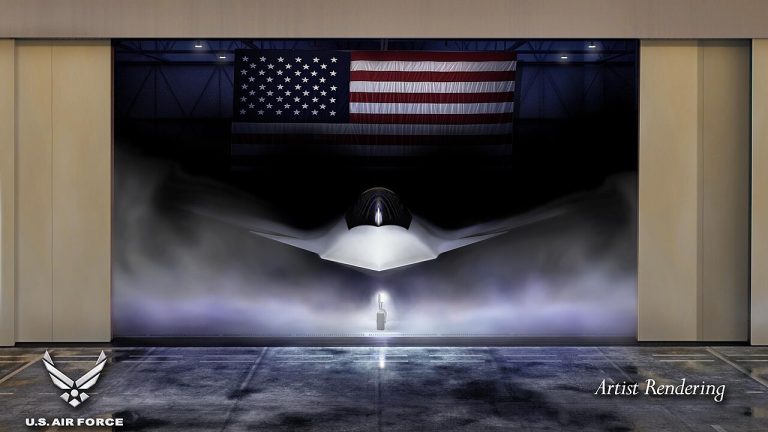
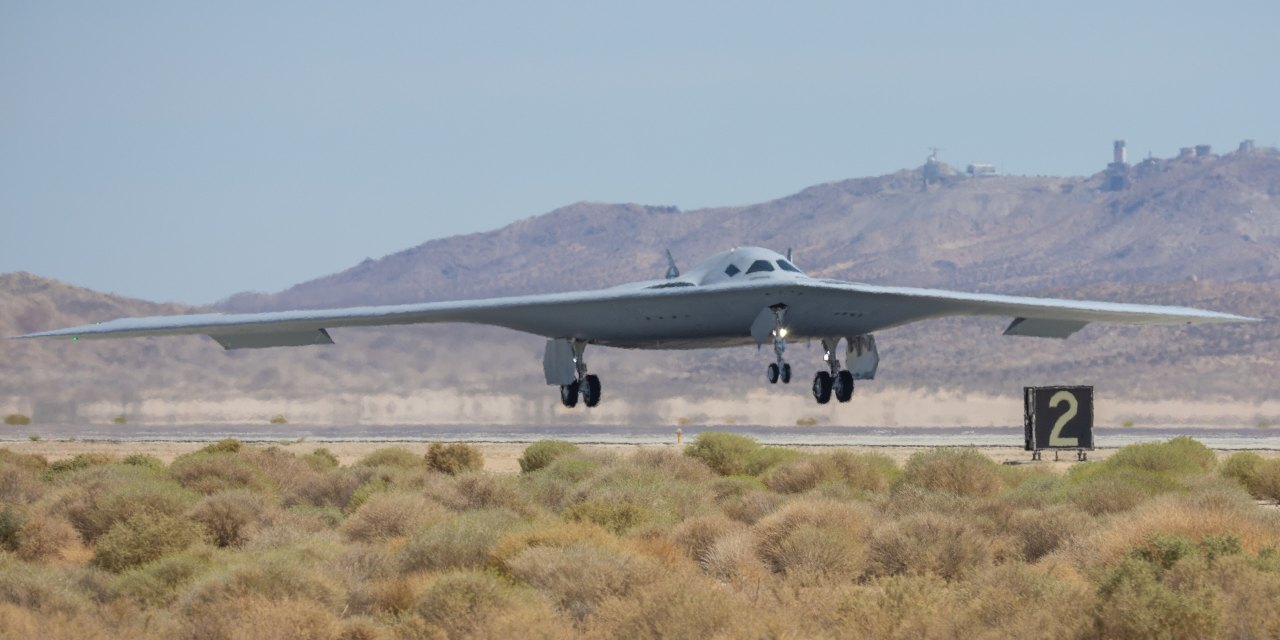
The B-21 looks like a smaller B-2 and is meant to do the same job at a price that allows a real fleet. Northrop Grumman flew the first aircraft in November 2023 and a second joined the test programme in September 2025. The Air Force has 100 on order. Officials have said the total could rise to 145.
In February 2026 the Air Force and Northrop agreed to raise annual production capacity by a quarter, using $4.5 billion that Congress had already provided. Gen. Dale White, who oversees the programme, said in July that the first aircraft will be “on the ramp” at Ellsworth in South Dakota in 2027. Whiteman and Dyess in Texas follow. The fiscal 2027 budget asks for $6.1 billion. The Federation of American Scientists puts the unit price at more than $800 million in today’s money.
Bombers and the nuclear triad
Bombers are the air leg of the nuclear triad. Forty-six B-52Hs and all 19 B-2s are equipped for nuclear weapons, and about 300 warheads are kept at their bases. The B-52 delivers cruise missiles and the B-2 delivers gravity bombs. The B-21 will do both, including the new Long-Range Standoff missile. The numbers are in how many nuclear weapons the US has.
Russia and China are the only other countries with long-range bombers. Russia keeps about 60 nuclear-capable Tu-95MS and Tu-160 aircraft. China’s H-6 fleet is larger but shorter-ranged, as our article on the H-6N explains.
Frequently asked questions
How many bombers does the US have?
About 140: roughly 75 B-52Hs, about 44 B-1Bs and 19 B-2As.
How many B-2 bombers are left?
Nineteen. Twenty-one were built; one crashed in 2008 and one was retired after a fire in 2022.
When will the B-21 Raider enter service?
The first operational aircraft is due at Ellsworth Air Force Base in 2027.
Why is the B-52 still flying?
It is cheap to operate for its size, carries a huge load of stand-off missiles and does not need to enter defended airspace. New engines are meant to keep it in service into the 2050s.
Which US bombers can carry nuclear weapons?
The B-52H and the B-2A. The B-1B is conventional only. The B-21 will carry both nuclear and conventional weapons.
- Military Times – B-21 Raiders set to be on the ramp at Ellsworth Air Force Base in 2027 (July 2026): militarytimes.com
- The Aviationist – B-21 Raider’s production to accelerate, first delivery in 2027 (February 2026): theaviationist.com
- Air Data News – US Air Force considers more B-21s if B-52J upgrade fails: airdatanews.com
- Bulletin of the Atomic Scientists – United States nuclear weapons, 2026: thebulletin.org
- Wikipedia – Northrop Grumman B-21 Raider: en.wikipedia.org