
SAIC Company Profile, Products, Employees and Revenue
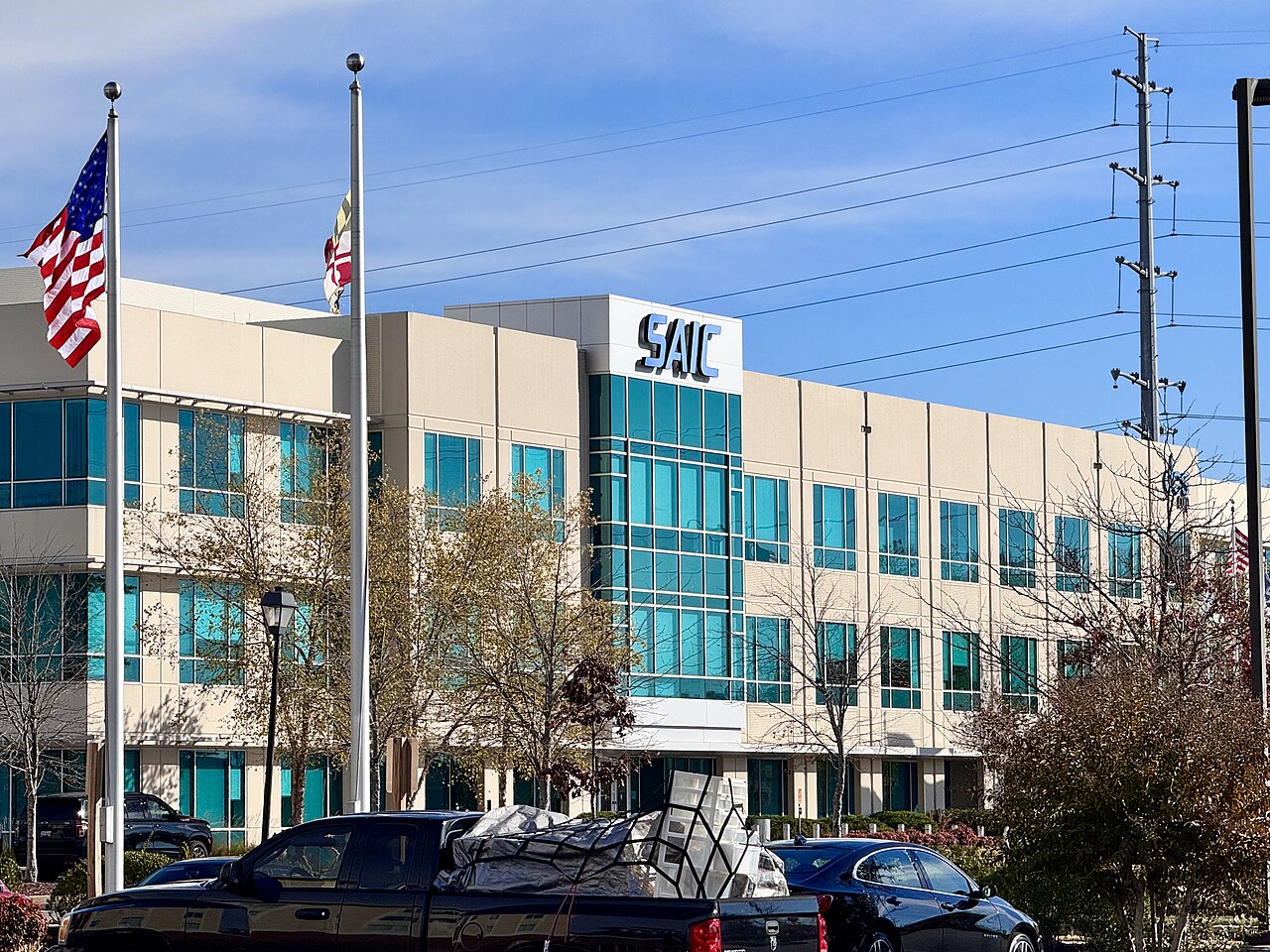
SAIC is one of the largest pure-play technology integrators serving the US government, a Reston, Virginia company with roughly $7.5 billion in annual revenue and about 24,000 employees, nearly all of it earned from federal contracts. It builds no missiles and no aircraft; its product is the digital plumbing of American defense, from cloud migrations to training simulators to space-system ground software.
What does SAIC do
| Item | Detail |
|---|---|
| Full name | Science Applications International Corporation |
| Headquarters | Reston, Virginia, USA |
| Founded | 1969, San Diego, California; current company formed in 2013 spin-off |
| Employees | About 24,000 |
| Revenue | Roughly $7.5 billion, fiscal year 2025 |
| Listing | NYSE, ticker SAIC |
| CEO | Toni Townes-Whitley, since October 2023 |
| Segments | Defense and Intelligence; Civilian |
SAIC’s work falls into a handful of buckets, enterprise IT modernization and cloud migration for defense agencies, systems integration for space and intelligence programs, engineering services for platforms and networks, and training and simulation. The common thread is that SAIC operates and modernizes systems the government owns rather than selling proprietary hardware.
SAIC history, from Beyster to the split
Physicist J. Robert Beyster founded Science Applications Incorporated in San Diego in 1969 and built it into an employee-owned research powerhouse, a culture that made SAIC famous in the contracting world long before its 2006 IPO. By the 2010s the company had grown so large that organizational-conflict-of-interest rules were costing it work, bidding on contracts to oversee systems another SAIC division had built.
The answer was corporate surgery. In 2013 the company split in two, the larger solutions business became Leidos, while the services business kept the SAIC name. The new SAIC then bulked back up through acquisition, buying Scitor in 2015 for classified-space work, Engility in 2019 for roughly $2.5 billion, and Unisys Federal in 2020 for about $1.2 billion.
SAIC revenue and financials
SAIC reported revenue of roughly $7.5 billion for fiscal 2025, with margins typical of the services sector, operating margin in the high single digits, and a backlog measured in the tens of billions. Growth has been modest in a competitive market, and management has leaned on portfolio reshaping, divesting the logistics and supply-chain business in 2023, and on share repurchases to drive per-share results. Nearly all revenue comes from US government customers, split between defense-intelligence and civilian agencies.
SAIC defense and space programs
| Area | What SAIC does |
|---|---|
| Enterprise IT and cloud | Large defense IT contracts, cloud migration and managed services for military networks |
| Space | Ground systems, mission software and integration support for Space Force and intelligence space programs |
| Training and simulation | Synthetic training environments and range support for US forces |
| Systems engineering | Integration and sustainment for command-and-control and sensor systems |
| Civilian agencies | IT modernization for agencies from the State Department to the FAA |
The growth bets sit in space and digital engineering. SAIC has positioned itself as an integrator for the Pentagon’s proliferating satellite architectures and for AI-enabled analytics, competing for the same digital-modernization budgets as GDIT and Booz Allen, while newer software rivals like Palantir pull some of that spending toward productized platforms.
Space work deserves particular mention. Through the Scitor acquisition and subsequent wins, SAIC embedded itself in classified space programs and in the ground segment of the Pentagon’s proliferated constellations, the software that flies satellites, processes their data and knits them into weapons networks. Ground systems rarely make headlines, but they recur, follow-on contracts run for decades, and they are the stickiest revenue in the federal market.
SAIC competitors and outlook
SAIC’s market is crowded with near-twins, Leidos, Booz Allen Hamilton, CACI, GDIT and Peraton all chase overlapping contracts, and recompetes are decided on price as often as capability. The structural risk is commoditization of IT services and government insourcing pressure; the structural opportunity is that every new weapon, satellite and headquarters the Pentagon buys arrives needing integration, software and sustainment that someone must supply for decades.
SAIC frequently asked questions
What does SAIC stand for?
Science Applications International Corporation, founded in San Diego in 1969 as Science Applications Incorporated.
Is SAIC the same company as Leidos?
They share a parent. The original SAIC split in 2013; the solutions arm became Leidos and the services arm kept the SAIC name.
How big is SAIC?
Roughly $7.5 billion in annual revenue and about 24,000 employees, making it one of the largest US government technology integrators.
Who is the CEO of SAIC?
Toni Townes-Whitley, a former Microsoft US president, who took over in October 2023.
What does SAIC build?
It does not manufacture weapons; it integrates, modernizes and operates government IT, space ground systems, training environments and mission software.
- SAIC annual report and investor filings (fiscal 2025 figures)
- Wikipedia – Science Applications International Corporation (accessed October 2026)
- Trade-press reporting on the 2013 split and subsequent acquisitions
- Defence & Tech reporting on the US government services market