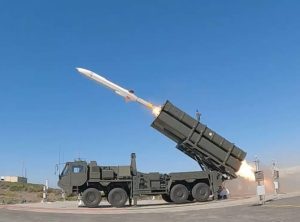

What is the Khaibar Missile? The Advanced Iranian Ballistic System U.S. Media Claims Struck American Bases


 React
React
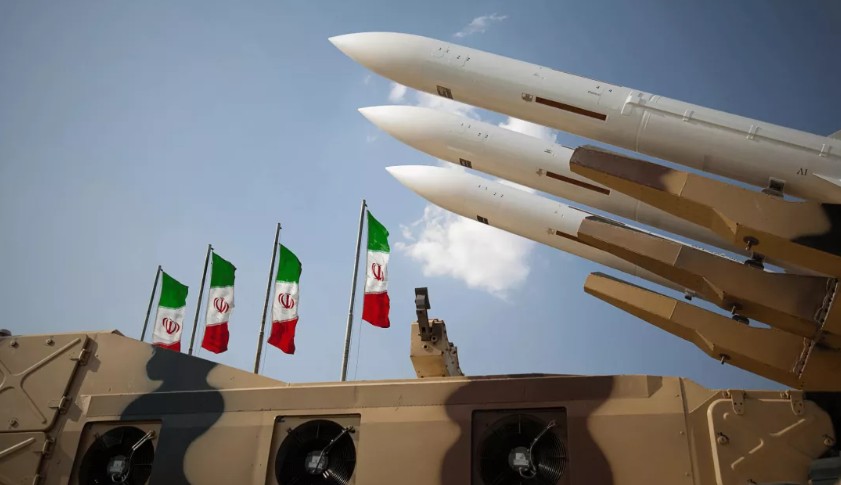
U.S. media reports indicate that Iran deployed its advanced “Khaibar” ballistic missile during recent attacks on U.S. military bases. With its sophisticated maneuverability and dynamic speed-altering capabilities, this missile system is reportedly shifting the strategic balance of power in the region. But what exactly is the Khaibar missile, and why is it causing such concern for air defense planners?
As tensions in the Middle East reach unprecedented levels, attention has turned to the specific weaponry utilized in high-profile military engagements. According to recent reports in the U.S. press, Tehran selected one of its most lethal ballistic assets—the Khaibar—to target heavily fortified American military installations in the region.
The report highlights that the weapon’s deployment marks a tactical turning point, primarily due to its capacity to bypass conventional interception networks.
What is the Khaibar Missile?
The Khaibar—also designated as the Khorramshahr-4—is the latest iteration of Iran’s Khorramshahr family of medium-range ballistic missiles (MRBMs). Named after a historic battle, the liquid-fueled missile is designed for rapid deployment, high-payload delivery, and long-range precision strikes.
-
Operational Range: Approximately 2,000 kilometers (1,240 miles), bringing numerous regional strategic targets and military installations within its footprint.
-
Payload Capacity: Capable of carrying a massive warhead weighing up to 1,500 kilograms, making it one of the heaviest warhead carriers in Iran’s arsenal.
-
Fueling System: Equipped with advanced hypergolic liquid propellant engines that allow the missile to remain fueled for extended periods, significantly reducing launch preparation times in field conditions.
Advanced Maneuverability and Speed-Changing Features
The primary factor driving headlines in the U.S. press is the missile’s unique behavior during flight. Unlike traditional ballistic missiles that follow a predictable parabolic arc, the Khaibar features mid-course and atmospheric reentry maneuverability.
The missile incorporates guidance and control thrusters that allow it to alter its trajectory mid-flight. Furthermore, it possesses speed-altering mechanisms, enabling it to adjust its velocity outside and inside the atmosphere. This unpredictability severely degrades the tracking and interception capabilities of integrated air and missile defense (IAMD) systems, making it exceptionally difficult for radar algorithms to lock onto a steady intercept point.
Shifting Regional Balances
According to U.S. media analysis, the operational employment of speed-changing, maneuverable warheads changes the math for regional deterrence. By demonstrating that its missiles can penetrate multi-layered defense umbrellas surrounding foreign military bases, Tehran aims to establish a heightened level of strategic deterrence.
As defense analysts closely examine the fallout of these strikes, the Khaibar stands out not just as a ballistic projectile, but as a clear indicator of how modern missile engineering is continuously challenging established air defense architectures.
React