Raytheon Says SM-6 Production Sprint Beat Its Navy Target
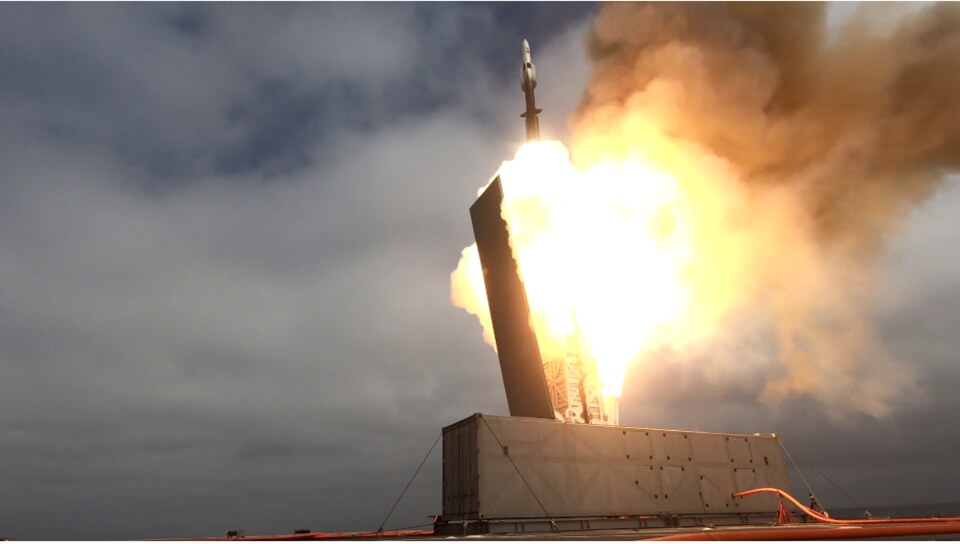
Raytheon says a 90-day, Navy-backed manufacturing sprint exceeded its SM-6 production target and is now shaping plans to build hundreds of the missiles a year within the next several years. The RTX business described the effort on October 28. It did not disclose the target or the number of missiles built.
The US Navy asked Raytheon to build as many SM-6 missiles as possible, as quickly as possible. The work was centred on the missile integration site in Huntsville, Alabama.
Raytheon’s 90-Day SM-6 Sprint Beat Its Target
| Item | Detail |
|---|---|
| Company | Raytheon (RTX) |
| Customer | US Navy |
| Duration | 90 days |
| Site | Missile integration site, Huntsville, Alabama |
| Shifts | Three a day, including weekends |
| Testing | Full SM-6 acceptance testing kept in place |
| Result | Target reached on the final day, plus one more missile |
| Not disclosed | The target and the total number produced |
“This wasn’t a normal hurry-up. It was ‘The country needs hardware,'” said Paul Borboa, then a senior director for Naval Standard Missile Systems at Raytheon. The team picked the highest of several production benchmarks it had considered and tracked progress down to individual parts.
The factory finished a run of missiles in the first month and raised output in the second, Raytheon said. Production and hardware leaders reviewed a colour-coded board every morning showing which work was on track, at risk or blocked.
How the Huntsville Line Sped Up
Operations, engineering, supply chain and quality staff first assessed the hardware on hand, suppliers’ readiness to deliver more and the factory’s spare capacity. Short-term measures then brought in more components than usual, so production could accelerate as complete kits arrived.
“You need all the parts, every single one, or you cannot build a missile,” Borboa said. “When everything showed up at once, we finally saw what the line could actually do.” Suppliers and other Raytheon sites joined daily calls, and quality and test teams added staff and extended shifts without dropping any of the acceptance testing.
Raytheon said it is strengthening the flow of components, reviewing manufacturing processes and helping suppliers become more resilient. “The urgency didn’t end,” said Abel Ghanooni, executive director of Naval Standard Missile Systems.
SM-6 and SM-2 Compared
The SM-6 is an offensive and defensive munition that Raytheon says can be launched from land, from ships and from the F/A-18E/F Super Hornet. Public references describe it as an extended-range member of the Standard Missile family.
| Feature | SM-2MR | SM-6 |
|---|---|---|
| Range | 40 to 92 nmi (74 to 170 km) | 130 nmi (240 km) published; estimates up to 250 nmi |
| Speed | Mach 3.5 | Mach 3.5 |
| Guidance | Not covered here | Inertial, with terminal active and semi-active radar homing |
| Roles | Anti-air | Anti-air, terminal ballistic missile defence, anti-ship |
| Unit cost | Not covered here | About $4.87 million per public references |
Part of a Wider RTX Missile Push
The SM-6 is one of several munitions Raytheon is producing at accelerated rates under contracts with the Department of War. The parent company set out the scale of that effort earlier this month in our report on RTX’s plan to raise missile output two to four times.
European buyers face the same bottleneck, as we covered in Can Europe Produce Enough Air Defence Missiles? The sprint shows that the limit is often the supply of complete part kits rather than factory floor space. That is analysis, not a company claim.
RTX Company Profile
| Item | Detail |
|---|---|
| Headquarters | Arlington, Virginia |
| Formed | April 2020 (United Technologies and Raytheon merger) |
| Employees | About 180,000 (2025) |
| Revenue | About $88.6 billion (2025) |
| CEO | Christopher Calio |
| Businesses | Collins Aerospace, Pratt & Whitney, Raytheon |
| Known programmes | SM-6, Patriot, Tomahawk, AMRAAM, F135 engine |
SM-6 Production FAQ
What did Raytheon announce?
A 90-day Navy-backed sprint exceeded its SM-6 production target, and the company is using the result to plan higher annual output through 2030.
How many missiles were built?
Raytheon has not said. It also did not disclose the target.
Where is the SM-6 integrated?
At Raytheon’s missile integration site in Huntsville, Alabama, which ran three shifts a day during the sprint.
Was testing skipped to go faster?
No. Raytheon said quality assurance and test teams added staff and extended shifts while keeping the full acceptance testing regime.
What can the SM-6 do?
It is an offensive and defensive missile that Raytheon says can launch from land, ships and the F/A-18E/F Super Hornet.
- Defence Industry Europe – “Raytheon ramps up SM-6 production to reach hundreds of missiles a year” (October 28, 2026, reporting Raytheon): defence-industry.eu
- Wikipedia – RIM-174 Standard ERAM; RIM-66 Standard (technical data)
- Wikipedia – RTX Corporation (company data)