How Many Submarines Does the US Have? Virginia, Ohio, Columbia
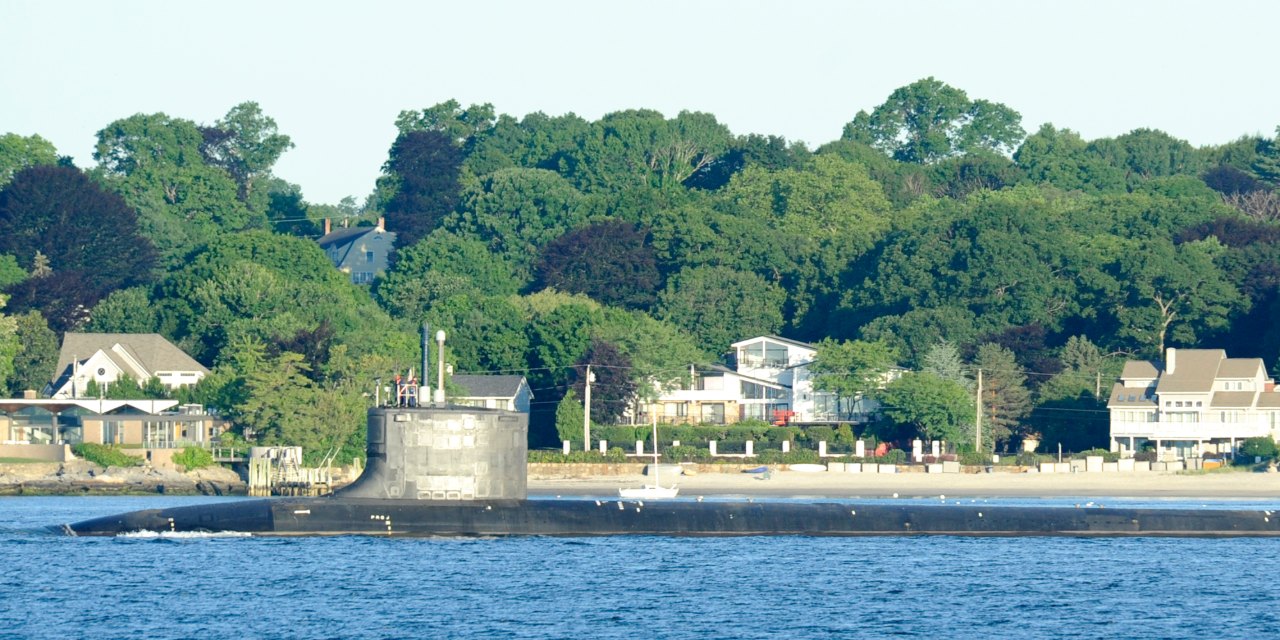
The US Navy has about 65 submarines, every one nuclear-powered: 14 Ohio-class ballistic missile submarines, three Ohio-class cruise missile submarines and about 48 attack submarines of the Virginia, Los Angeles and Seawolf classes. It is the most capable undersea force in the world and, for now, a shrinking one.
This guide explains what each class does, how many are in service in 2026, and why American shipyards cannot yet build submarines as fast as the Navy retires them.
How many submarines does the US have?
American submarines come in three types. Ballistic missile submarines, known as SSBNs, carry nuclear weapons and do nothing else. Guided-missile submarines, SSGNs, carry conventional cruise missiles and special forces. Attack submarines, SSNs, hunt ships and other submarines, gather intelligence and fire Tomahawks. The United States has built no diesel-electric boats since the 1950s, a choice explained in nuclear submarine propulsion.
| Class | Type | In service | Submerged displacement | Main weapons |
|---|---|---|---|---|
| Ohio | Ballistic missile (SSBN) | 14 | About 18,750 tonnes | 20 Trident II D5 missiles |
| Ohio | Guided missile (SSGN) | 3, after USS Georgia began retirement in July 2026 | About 18,750 tonnes | Up to 154 Tomahawks |
| Virginia | Attack (SSN) | 26 | About 7,900 tonnes; 10,200 for Block V | Torpedoes; 12 to 40 Tomahawks |
| Los Angeles | Attack (SSN) | About 19 | About 6,900 tonnes | Torpedoes; 12 Tomahawks in later boats |
| Seawolf | Attack (SSN) | 3 | About 9,100 tonnes | Torpedoes and Tomahawks, up to 50 weapons |
Ohio class: the nuclear deterrent at sea
The 14 Ohio-class SSBNs carry about 970 of the 1,770 nuclear warheads the United States keeps deployed. Eight are based at Bangor in Washington state and six at Kings Bay in Georgia. Each has two crews, Blue and Gold, that take turns so the boat can spend most of its life on patrol. The arithmetic of the arsenal is in how many nuclear weapons the US has.
Four older Ohio boats were converted in the 2000s to carry 154 Tomahawks each in place of ballistic missiles. They are the heaviest conventional strike platforms in the Navy and they are going: USS Georgia began inactivation in July 2026, and Ohio, Florida and Michigan follow one a year to 2029. Together they account for 616 missile cells that no ship in service can replace, a point made in our guide to US cruise missiles.
Virginia class: the attack submarine in production
The Virginia class has been in production since 1998 and will be the backbone of the attack force until mid-century. It is quieter than the Los Angeles boats it replaces and built for work close to shore as well as in deep water. The newest Block V boats are 25 metres longer to fit the Virginia Payload Module, four large tubes that raise the Tomahawk load from 12 to 40. A comparison with the best Russian boat is in Virginia class vs Yasen-M.
The problem is the build rate. The Navy pays for two a year and the two yards, General Dynamics Electric Boat and Newport News Shipbuilding, have delivered about 1.1 to 1.2 a year since 2022. Deliveries are running two to three years late. The Navy says it needs 2.33 a year to meet its own needs and supply boats to Australia under AUKUS.
Los Angeles and Seawolf classes
Sixty-two Los Angeles-class boats were built between 1972 and 1996, the largest class of nuclear submarines ever. About 19 remain, and they are retiring faster than Virginias arrive. That is why the attack force is at about 48 against a stated requirement of 66, and is expected to dip further before it recovers in the 2030s.
The three Seawolf boats were the Cold War’s last and most expensive design, fast, deep-diving and very quiet. Only three were built before the programme was cut in the 1990s. One, USS Jimmy Carter, was lengthened for seabed and intelligence missions that the Navy does not discuss. All three rank high in our top 10 attack submarines.
Columbia class: the Navy’s top priority
Twelve Columbia-class submarines are to replace the 14 Ohio SSBNs from the early 2030s. Each will displace nearly 21,000 tonnes, carry 16 Trident missiles and have a reactor that never needs refuelling in a 42-year life. The programme is estimated at about $130 billion.
The lead boat, District of Columbia, is running about 17 months late. The Federation of American Scientists says delivery could slip to 2029, which puts the first patrol, planned for 2031, at risk. There is no slack: the Ohio boats are already beyond their original design life.
Can the US build submarines fast enough?
In mid-2026 the Navy placed one of its largest submarine orders: $76.6 billion for five Columbia-class and nine Virginia-class boats plus investment in the yards and their suppliers, reported in our coverage of the contracts. The money is not the constraint. Skilled welders, castings and specialised parts are, and those take years to build up.
The stakes go beyond the US fleet. Under AUKUS, Australia is to buy three to five Virginia-class submarines from 2032. American law allows the transfer only if it does not weaken the US Navy, which is hard to argue while the fleet is below its target. Australia is spending heavily on its own side of the deal, as shown in the Henderson naval precinct.
Frequently asked questions
How many submarines does the US have?
About 65: 14 ballistic missile submarines, three guided-missile submarines and about 48 attack submarines.
Are all US submarines nuclear-powered?
Yes. The Navy has operated only nuclear-powered submarines since 1990, when its last diesel-electric attack boats left service.
How many Virginia-class submarines are there?
Twenty-six were in service in mid-2026, with 23 more on order or under construction, according to the Navy.
How many nuclear missiles does an Ohio-class submarine carry?
Up to 20 Trident II D5 missiles, each able to carry several warheads.
What will replace the Ohio class?
The Columbia class. Twelve boats are planned, with the first patrol scheduled for 2031.
- 19FortyFive – The Navy is retiring its Ohio-class guided-missile submarines (July 2026): 19fortyfive.com
- Congressional Research Service – Navy Columbia (SSBN-826) Class Ballistic Missile Submarine Program (December 2025): everycrsreport.com
- Congressional Research Service – Navy Virginia-Class Submarine Program and AUKUS Submarine Proposal: congress.gov
- Bulletin of the Atomic Scientists – United States nuclear weapons, 2026: thebulletin.org
- Wikipedia – List of current ships of the United States Navy: en.wikipedia.org