Military LEO Constellations and the PWSA Explained
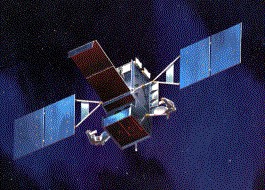
The Proliferated Warfighter Space Architecture is the Pentagon’s plan to replace a handful of exquisite satellites with hundreds of cheap ones in low earth orbit, and the Space Development Agency has already put its first tranches of Transport and Tracking Layer satellites into space. Add SpaceX’s Starshield and the military internet is quietly moving 500 kilometers overhead.
Why the military is moving to low earth orbit
For decades US military space ran on a few dozen large satellites in high orbits, each costing billions and each an irresistible target: kill five satellites and you blind a superpower. Proliferation inverts that math. If the constellation is hundreds of satellites, each costing a small fraction as much and replaced on a rolling basis, no realistic anti-satellite campaign can keep up. Low orbit also cuts communications latency and puts sensors close enough to track dim, maneuvering targets like the gliders in our hypersonic missiles explainer. Commercial launch, above all reusable Falcon 9s, made the economics work.
What is the PWSA
| Element | Job | Status |
|---|---|---|
| Transport Layer | Data relay mesh with optical crosslinks, Link 16 to tactical users | Tranche 0 on orbit; Tranche 1 launching; Tranche 2 under contract |
| Tracking Layer | Wide-field infrared missile warning and tracking, including hypersonics | Tranche 0 proven; Tranche 1 in progress |
| Ground segment | Operations centers and gateways tying layers to users | Building out alongside launches |
| Future layers | Navigation, custody and battle management concepts studied | Planned in later tranches |
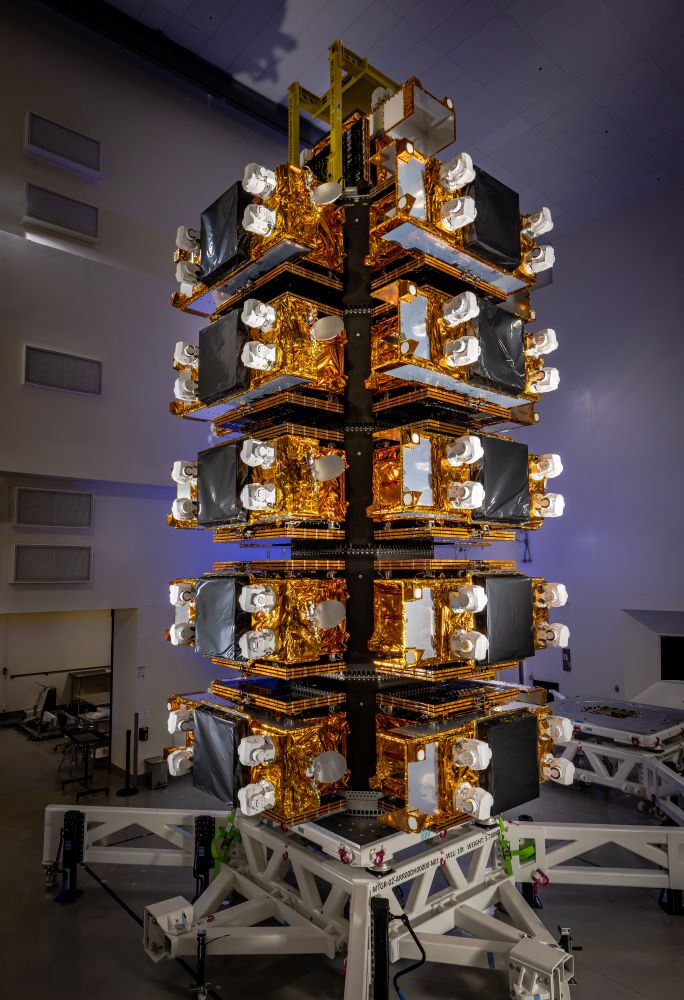
The Space Development Agency, founded in 2019 and folded into the Space Force, buys in two-year “tranches” from competing vendors, York Space Systems, Lockheed Martin and Northrop Grumman on transport, with L3Harris and others on tracking, so no single supplier owns the constellation. Tranche 0’s 27 satellites launched in 2023 and demonstrated the essentials, and deliveries for Tranche 1, the first operational generation of more than 150 spacecraft, are well underway, as Northrop Grumman’s 21-satellite delivery showed. Tranche 2 contracts add hundreds more.
Transport Layer and Tracking Layer explained
The Transport Layer is a mesh network: satellites linked by laser crosslinks pass data around the globe without touching the ground, then deliver it straight into tactical networks, including Link 16, the radio standard fighters and ships already speak. A sensor in the Pacific can, in principle, cue a shooter in Europe in seconds. The Tracking Layer points infrared eyes downward, complementing the geostationary missile warning belt by keeping custody of threats those satellites can only glimpse, dim upper stages and maneuvering glide vehicles, and handing tracks to interceptors. The two layers together are the skeleton of what the Pentagon calls joint all-domain command and control, and commercial radar imagery from firms like ICEYE shows how much sensing now rides on small satellites generally.
What is Starshield
Starshield is SpaceX’s government line, Starlink’s technology hardened and adapted for military users. It spans three publicly acknowledged strands: secure communications services sold to the Space Force, hosted payloads on SpaceX buses, and, per extensive 2024 reporting, a large reconnaissance constellation built with the National Reconnaissance Office, with well over a hundred satellites already launched on classified missions; the details remain officially unconfirmed. Starshield’s significance is industrial as much as technical, because SpaceX can manufacture satellites at a rate traditional primes cannot match, and Ukraine’s dependence on Starlink showed both the value and the governance risks of leaning on one company’s constellation.
The problems nobody has solved yet
Proliferation buys resilience, not invulnerability. Electronic warfare scales cheaply against any constellation, ground stations remain concentrated targets, and five-year satellite lifetimes mean the architecture must be refreshed forever, a budget treadmill Congress has already questioned, along with schedule slips in early tranches. Debris and traffic management get harder with every launch, and China is answering with proliferated constellations of its own. The bet is not that LEO satellites survive attack; it is that they are too many and too cheap to be worth attacking one by one.
Military LEO constellations frequently asked questions
What does PWSA stand for?
Proliferated Warfighter Space Architecture, the Space Development Agency’s multi-layer constellation in low earth orbit.
What is the difference between the Transport and Tracking Layers?
Transport moves data through a laser-linked relay mesh down to tactical radios; Tracking watches for missile launches and keeps custody of maneuvering threats.
How many PWSA satellites are there?
Tranche 0’s 27 demonstration satellites launched in 2023, Tranche 1 adds more than 150 operational spacecraft, and Tranche 2 contracts cover hundreds more.
Is Starshield the same as Starlink?
No. Starshield is SpaceX’s government product line, using Starlink technology for secure communications, hosted payloads and reported reconnaissance constellations.
Can these satellites be shot down?
Individually yes, but the architecture assumes it: numbers, low cost and constant replenishment are the defense, rather than hardening a few large satellites.
- Space Development Agency public briefings and tranche announcements
- Public reporting on Starshield and the NRO proliferated constellation (officially unconfirmed details noted)
- Wikipedia – Proliferated Warfighter Space Architecture and Starshield (accessed October 2026)
- Defence & Tech reporting on military space procurement