BMP-3 Infantry Fighting Vehicle Specs, Armament and Operators
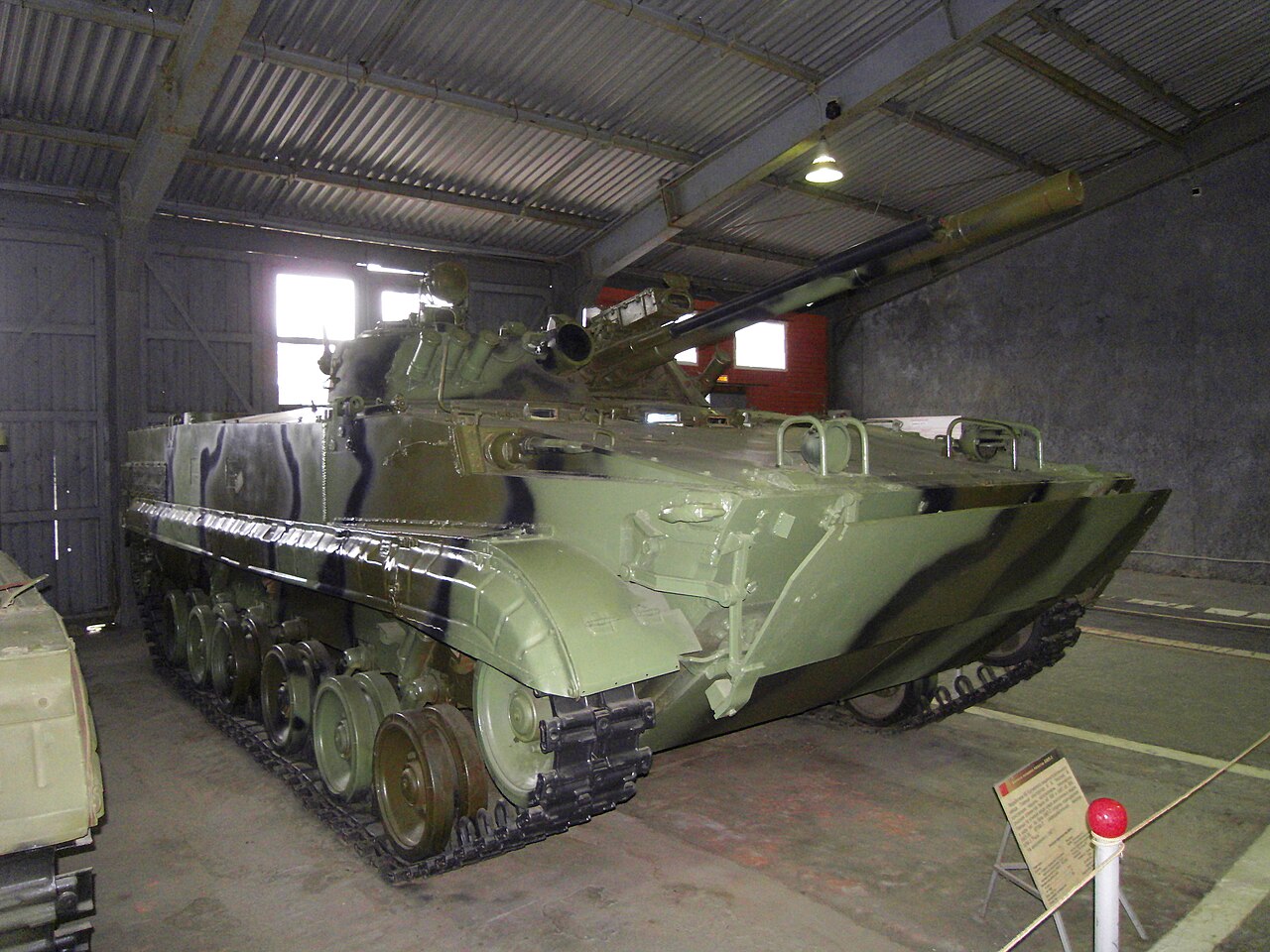
The BMP-3 is a Russian infantry fighting vehicle of about 18.7 tonnes that packs a 100 mm gun, a 30 mm cannon and a coaxial machine gun into one turret, a heavier punch than most Western rivals of its generation. Designed in the late Soviet era, it has been exported to a dozen or more countries, and the war in Ukraine has exposed both its firepower and its vulnerability.
What is the BMP-3
BMP stands for Boyevaya Mashina Pekhoty, or infantry fighting vehicle. The BMP-3 was developed at the Kurgan Machine-Building Plant in the 1980s to succeed the BMP-1 and BMP-2, and it entered Soviet service in 1987. Its designers wanted a carrier that could fight its way through opposition rather than just deliver soldiers, so they gave it a heavy, layered weapon package that can defeat armor, structures and infantry.
The vehicle keeps the classic Soviet layout of a low silhouette and a rear troop compartment, but it breaks with earlier designs by moving the engine to the rear. That change allowed a larger fighting compartment and front-mounted driver position with two bow machine-gun positions. The vehicle is still produced in modernized form, including the BMP-3M with a stronger engine and better protection.
BMP-3 specifications
| Specification | Value |
|---|---|
| Crew and troops | 3 crew plus 7 infantry |
| Combat weight | About 18.7 tonnes (later variants up to around 19 to 20 tonnes) |
| Main gun | 100 mm 2A70 gun-launcher, fires HE shells and 9M117 Bastion missiles |
| Autocannon | 30 mm 2A72, coaxial |
| Machine guns | One 7.62 mm coaxial and two bow-mounted |
| Engine | UTD-29 10-cylinder diesel, about 500 hp (BMP-3M around 660 hp) |
| Road speed | About 70 km/h, manufacturer claims |
| Amphibious | Swims at roughly 10 km/h with water jets |
| Range | About 600 km, manufacturer claims |
BMP-3 armament and design quirks
The 2A70 is a short-barrel gun-launcher. It can fire a 100 mm high-explosive round for bunker busting and also launch the laser-guided 9M117 Bastion anti-tank missile through the barrel. According to Russian state media and manufacturer data, Bastion range is around 5,500 meters, a manufacturer claim. Alongside it sits the 30 mm 2A72 autocannon for lighter targets, plus a coaxial rifle-caliber machine gun.
That arsenal is unusual. Western IFVs such as the Bradley and CV90 rely on a single autocannon and missiles in external launchers. The BMP-3 concentrates all three weapon types in one mount, but the price is complexity: separate ammunition types, a crowded turret and stowage that places propellant and rounds close to the crew. Ukrainian and independent analysts have pointed to the ammunition layout as a reason for catastrophic explosions when vehicles are hit.
| Feature | BMP-2 | BMP-3 |
|---|---|---|
| Main armament | 30 mm cannon | 100 mm gun plus 30 mm cannon |
| Engine location | Front-middle | Rear |
| Troops carried | Up to 7 | Up to 7, plus 2 bow gunners in some versions |
| Missile | 9M113 Konkurs on rail | 9M117 through the gun barrel |
| Combat weight | About 14 tonnes | About 18.7 tonnes |
Who uses the BMP-3
The BMP-3 is used by Russia and a number of export customers. The United Arab Emirates was the first major foreign buyer and used the vehicle in Yemen, where Houthi forces reported destroying several. Other operators include Kuwait, Saudi Arabia, Cyprus, Indonesia, Azerbaijan, Algeria, Venezuela, Turkmenistan and Brunei, though some fleets are small. Indonesia’s marine infantry uses an amphibious variant. The vehicle has often been sold to countries that want a potent gun at relatively low cost.
BMP-3 in Ukraine
Russian forces have used BMP-3s extensively since the full-scale invasion in 2022, and the vehicle has suffered heavy documented losses. Open-source trackers such as Oryx have recorded hundreds of destroyed or captured examples, although these counts are operator-reported and visual-confirmation-based, so they can differ from official numbers. Ukrainian forces have also displayed captured BMP-3s and, by Ukrainian statements, put some back into service.
The lessons match broader trends in armored combat. Thin roof armor and exposed ammunition are vulnerable to drones, top-attack munitions and mines, which also affects Russia’s newer vehicles such as the T-90M. Russia has responded with add-on cages, electronic jammers and upgraded BMP-3M vehicles, but the basic layout limits how much survivability can be added.
BMP-3 frequently asked questions
What guns does the BMP-3 have?
A 100 mm 2A70 gun-launcher, a coaxial 30 mm 2A72 autocannon and a 7.62 mm machine gun, plus two bow machine guns.
Can the BMP-3 swim?
Yes, it is amphibious and uses water jets to move at about 10 km/h, according to manufacturer claims.
Who makes the BMP-3?
Kurganmashzavod in Russia, part of the Tractor Plants group.
How many BMP-3s has Russia lost in Ukraine?
Open-source trackers record hundreds of losses, but counts are operator-reported and based on visual evidence, so exact totals are uncertain.
Is the BMP-3 better than the Bradley?
It has heavier armament on paper, but the Bradley offers better crew protection and sensors; survivability in combat favors the Western design.
- Manufacturer and Russian MoD publicity material (manufacturer claims)
- Open-source loss records including Oryx (operator-reported, visually confirmed)
- Wikipedia – BMP-3 (accessed October 2026)
- Defence & Tech reporting