CV90 Specs, Variants, Operators and Combat Record
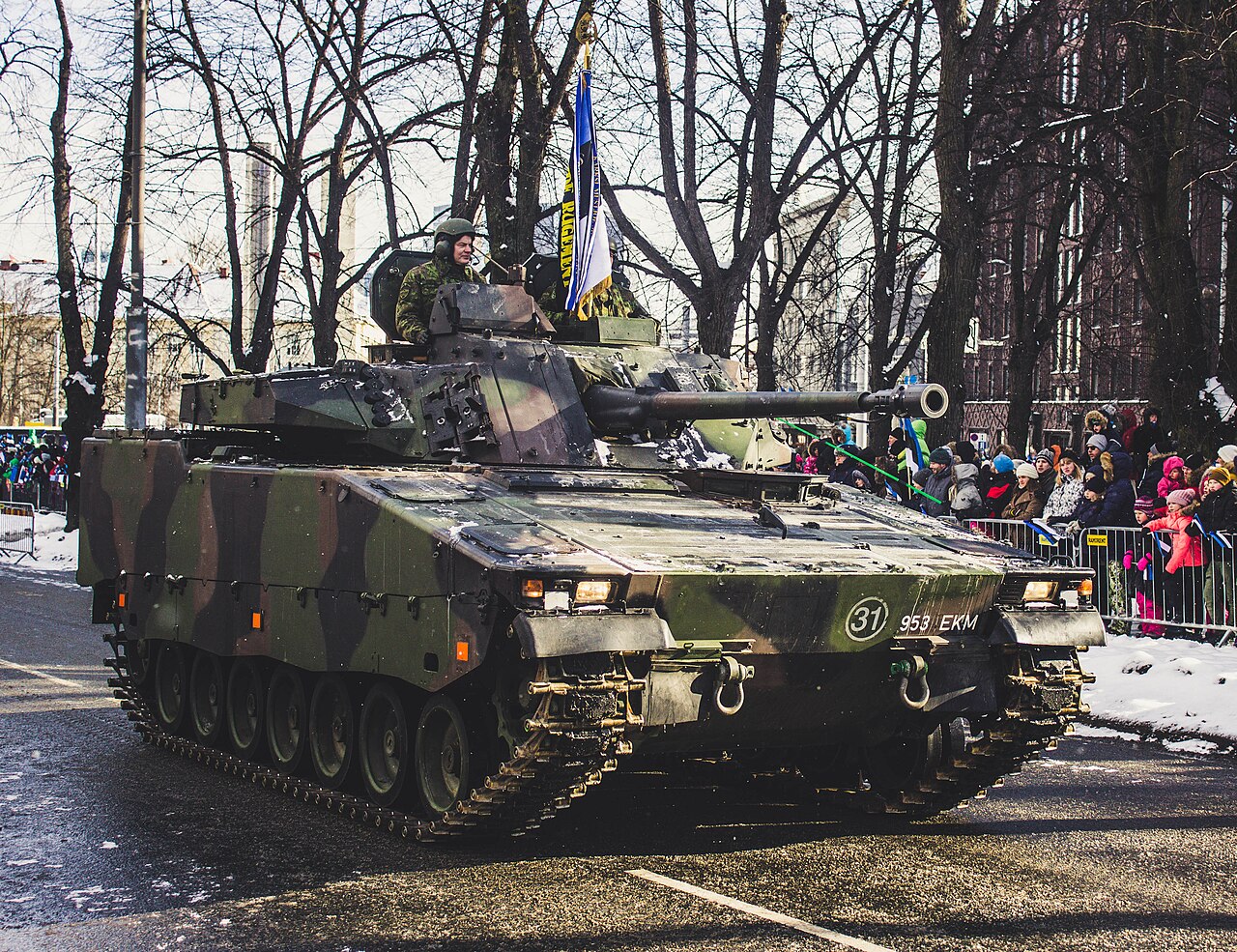
The CV90 is Europe’s most successful modern infantry fighting vehicle, a Swedish design with roughly 1,700 vehicles ordered or delivered across ten nations since the early 1990s. Built by BAE Systems Hägglunds in Örnsköldsvik, it has evolved from a Cold War 40mm gun carrier for Nordic terrain into the digital MkIV now entering Czech and Slovak service, and it is fighting in Ukraine.
What is the CV90
The Combat Vehicle 90 emerged from a 1980s Swedish requirement for an IFV that could swim through snow, hide in forests and kill Soviet armor and helicopters on NATO’s northern flank. Hägglunds, now part of BAE Systems, paired a compact hull with Bofors’ 40mm autocannon, prioritizing low ground pressure and low signatures. Sweden fielded it from 1994, and exports followed to Norway, Finland, Denmark, the Netherlands and Switzerland through the 2000s, each with its own gun and equipment fit.
CV90 specifications
| Item | Figure |
|---|---|
| Crew and dismounts | 3 crew + up to 8 infantry, configuration dependent |
| Combat weight | Roughly 35–37 tonnes, growth margin to 38+ |
| Main armament | 30mm, 35mm or 40mm autocannon depending on customer; MkIV offers the D-series turret with 30/35mm Bushmaster |
| Secondary | 7.62mm coaxial MG; anti-tank missile option (Akeron MP on Slovak vehicles) |
| Engine | Scania diesel, roughly 1,000 hp in MkIV |
| Speed | About 70 km/h on road, manufacturer figure |
| Protection | Modular ballistic and mine protection, signature management; active protection system integration offered |
| Electronics | MkIV introduces a digital backbone, iFighting crew software and fourth-generation sights |
CV90 variants from Mk0 to MkIV
Swedish Mk0 vehicles carry the 40mm gun and analog systems. MkI and MkII export versions for Norway, Finland and Switzerland brought 30mm Bushmaster guns and better protection. MkIII, sold to the Netherlands, Denmark and Estonia, added a 35mm option and digital architecture. The current MkIV combines a more powerful engine, higher payload and the fully digital D-turret. Beyond the IFV, the family spans forward observer, command, engineering, recovery, mortar carrier and anti-air variants, Sweden’s 40mm-armed air defense version has seen renewed interest in the drone era. A 120mm turreted mortar version, Mjölner, serves Sweden. The spread matters commercially as much as tactically, because a customer can standardize training, spares and workshops across an entire mechanized brigade on one hull family, which is the same logic that kept the M113 in service for sixty years.
Which countries operate the CV90
| Country | Fleet |
|---|---|
| Sweden | About 500 across variants, being modernized; additional MkIV orders placed |
| Norway | Around 140–160, upgraded MkIII standard |
| Finland | About 100, upgrade program under way |
| Denmark | About 44 MkIII, expansion planned |
| Netherlands | About 190, midlife-upgraded with new turrets |
| Switzerland | 186 MkII |
| Estonia | 44 second-hand MkIII from the Netherlands, plus support variants |
| Czech Republic | 246 MkIV ordered, local production share, deliveries under way |
| Slovakia | 152 MkIV ordered with 35mm guns and Akeron MP missiles |
| Ukraine | Swedish-donated CV9040s in combat use; follow-on procurement discussed |
The Czech and Slovak MkIV orders, together nearly 400 vehicles with heavy local industrial participation, secured the production line into the 2030s and made the CV90 the default European IFV answer alongside newer rivals, a market fight we cover across the segment including the wheeled Stryker.
CV90 combat record in Ukraine
Sweden donated CV9040s beginning in 2023, and Ukrainian mechanized units have used them in some of the war’s hardest sectors. Operator-reported feedback has been strikingly positive, crews have praised the 40mm gun’s effect against infantry and light armor and the vehicle’s survivability, with crew members surviving mine strikes and repeated hits. Those accounts are operator-reported rather than independently verified, but they visibly influenced the Czech and Slovak decisions and pushed discussions of Ukrainian licensed production. Earlier, Dutch, Norwegian and Danish CV90s served in Afghanistan, where mine protection lessons drove the later marks’ upgrades.
CV90 frequently asked questions
Who makes the CV90?
BAE Systems Hägglunds in Örnsköldsvik, Sweden, with significant local production in customer countries such as the Czech Republic.
How many countries use the CV90?
Ten, Sweden, Norway, Finland, Denmark, the Netherlands, Switzerland, Estonia, the Czech Republic, Slovakia and Ukraine.
What gun does the CV90 carry?
Depends on the customer, Sweden’s 40mm Bofors, 30mm or 35mm Bushmaster cannons elsewhere; the MkIV’s D-turret offers 30 or 35mm.
How has the CV90 performed in Ukraine?
Ukrainian crews have praised its firepower and survivability in operator-reported accounts, including crews surviving mine strikes; formal assessments remain unpublished.
What is the newest CV90 version?
The MkIV, with a 1,000 hp engine, digital D-series turret and iFighting software, ordered by the Czech Republic, Slovakia and Nordic users.
- BAE Systems Hägglunds product literature (manufacturer figures)
- Wikipedia – Combat Vehicle 90 (accessed October 2026)
- Czech and Slovak procurement announcements
- Ukrainian operator accounts as publicly reported (operator-reported)
- Defence & Tech reporting on European IFV programs