The 155mm Shell Production Race, Who Is Winning in 2026
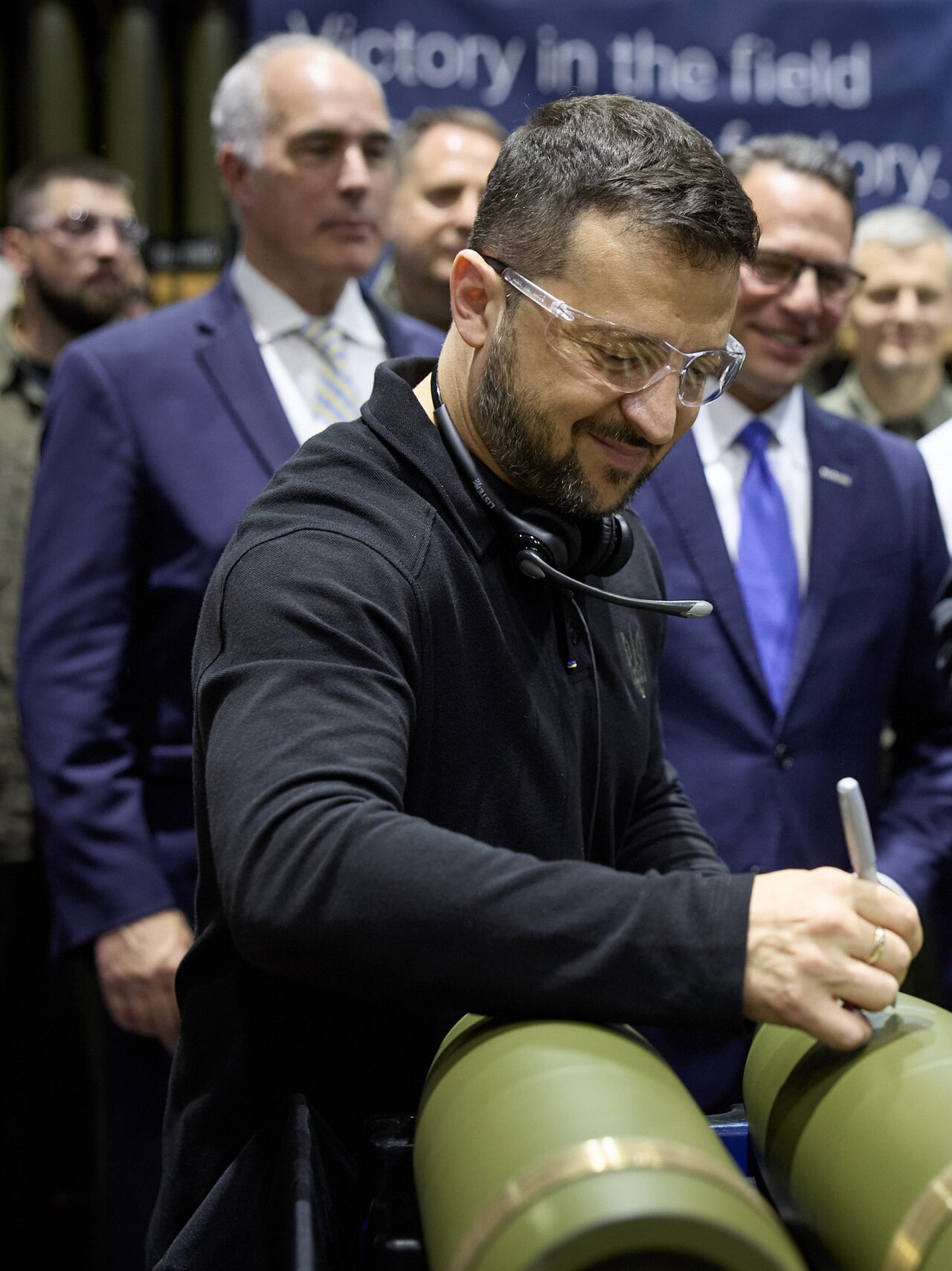
The 155mm artillery shell has become the single most fought-over industrial product in the Western world, with the United States driving toward a 100,000-round monthly target and Russian output estimated at roughly 3 million rounds a year. Three years of full-scale war in Ukraine turned a sleepy ammunition market into a production race that will shape deterrence for a decade.
Why 155mm shells became the bottleneck
Artillery fires the overwhelming majority of rounds in the Ukraine war, and a single corps-level offensive can consume shells faster than the entire pre-war West produced them. Operator-reported figures from Ukraine have put peak Russian expenditure above 10,000 rounds a day, with Ukrainian usage constrained mainly by supply. A 155mm shell looks simple, forged steel, TNT or IMX fill, a fuze and propellant charges, but each element runs through separate plants, and the slowest line sets the pace. Explosive fill and propellant, not steel bodies, have proven the hardest constraints on both sides of the Atlantic.
How many 155mm shells does the US make
Before February 2022 the US Army produced around 14,000 155mm rounds a month, enough for training and modest stockpile rotation. The Army then set successive goals of 60,000, 80,000 and ultimately 100,000 rounds a month, backed by billions in plant modernization. New metal-parts lines in Mesquite, Texas run by General Dynamics joined the century-old forge at Scranton, Pennsylvania, while new load-assemble-pack capacity spreads the explosive-fill work beyond Iowa. Progress has been real but slower than announced, monthly output passed roughly 40,000 rounds during 2025, and the 100,000 target has slipped right in public testimony more than once.
European 155mm production capacity
| Producer | Reported direction |
|---|---|
| Rheinmetall | Company states capacity rising toward 1.1–1.5 million rounds a year by 2027 across Germany, Spain, Hungary and new lines, manufacturer figures |
| Nexter / KNDS | France tripled shell output and cut production lead times; state-pushed ‘war economy’ program |
| Nammo | Norwegian-Finnish maker expanding both shell and propellant capacity with state support |
| Hanwha | South Korea holds large shell stocks and surge capacity; supplied the US and, indirectly, Europe |
| General Dynamics / US Army plants | New Texas metal-parts lines plus Scranton modernization toward the 100,000-per-month goal |
The European Union pledged to reach a combined capacity above 2 million rounds a year, a number EU officials say was reached on paper in 2025, though capacity and funded orders are different things. The sharpest European constraint sits upstream in energetics, TNT, RDX and propellant, where a handful of plants in Poland, Sweden, Finland and the Balkans supply many fillers, and where most new investment announcements now concentrate.
How many shells can Russia make
Western intelligence estimates, including figures cited by NATO and Estonian defense intelligence, put Russian production of 152mm and 155mm-class shells at roughly 3 million rounds a year, a mix of newly built and refurbished stock, running plants on multiple shifts. Those are estimates, not audited figures, and quality reportedly varies. North Korea has added millions of rounds of variable condition, by South Korean and Ukrainian operator-reported assessments, which has mattered as much as Russia’s own lines. The honest summary: Russia out-produces the combined West in tube artillery ammunition today, and the West’s expansion narrows rather than closes the gap before the late 2020s.
| Producer bloc | Estimated position |
|---|---|
| United States | Annualized output in the 500,000–700,000 range at 2025 rates; 1.2 million per year implied by the 100,000-monthly goal |
| EU plus Norway | Stated combined capacity above 2 million rounds a year; actual funded output lower and unevenly reported |
| Russia | Roughly 3 million rounds a year per Western intelligence estimates, mixing new production and refurbished stock |
| South Korea | Large stocks and surge capacity; output figures not published |
Can supply ever match wartime demand
Probably not at Ukraine-war intensity, and planners increasingly say so. A million-shell year sounds enormous until a front consumes 5,000 rounds a day, which is 1.8 million a year at a tempo both sides have exceeded. That reality pushes armies in two directions at once, buying shells and precision alternatives together, guided rockets, loitering munitions and glide bombs that substitute accuracy for volume, and locking in long-term contracts so producers keep lines warm. Barrel wear adds a second, quieter race: howitzers like the K9 Thunder consume barrels along with shells, and barrel forging capacity is scarcer than shell steel.
155mm production frequently asked questions
How many 155mm shells does the US produce per month?
Output passed roughly 40,000 rounds a month during 2025, against a stated target of 100,000 a month, a goal whose date has slipped repeatedly.
How many shells does Russia produce a year?
Western intelligence estimates cite roughly 3 million 152/155-class rounds annually, combining new production and refurbished stock. These are estimates, not verified figures.
Why is 155mm the standard caliber?
It is the NATO-standard heavy howitzer caliber, balancing range, payload and handling, and decades of joint standards mean one shell fits guns from dozens of countries.
What limits shell production the most?
Energetics, the explosive fill and propellant. Steel shell bodies scale relatively quickly; TNT, RDX and modular charge capacity take years and heavy regulation to build.
How much does a 155mm shell cost?
Reported Western unit costs have run from roughly $3,000 to above $8,000 depending on type and contract year, with prices rising sharply since 2022.
- US Army and congressional testimony on 155mm production goals
- EU and national announcements on ammunition capacity (2023–2026)
- NATO and Estonian intelligence estimates of Russian output, as publicly cited
- Company statements from Rheinmetall, KNDS, Nammo and Hanwha (manufacturer claims noted)
- Defence & Tech reporting on the ammunition industrial base