Early Warning Satellites Explained, From SBIRS to Next-Gen OPIR
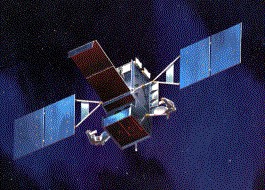
Early warning satellites are the infrared sentinels that spot a ballistic missile within seconds of ignition, and the United States has kept an unbroken watch from orbit since the first Defense Support Program satellite reached space in 1970. Today that watch rests on SBIRS, is passing to Next-Generation OPIR, and faces rivals as Russia rebuilds its constellation and China assembles one of its own.
How do early warning satellites work
A rocket plume burns at thousands of degrees, and against the cool background of the earth it shines like a flare in the shortwave and midwave infrared bands. Early warning satellites stare at the planet with infrared telescopes, detect that bloom, and report a launch point, heading and predicted impact area within tens of seconds. From geostationary orbit a single satellite watches nearly a third of the globe continuously, which is why the classic architecture pairs a few GEO satellites with payloads in highly elliptical orbits that cover the polar approaches. The data feeds missile defense batteries, national command centers and the warning floor under Cheyenne Mountain, whose systems are run under a $572 million NORAD support contract.
What is SBIRS
| System | Era | Key elements |
|---|---|---|
| DSP | 1970-2000s | Roughly two dozen satellites over five decades, spinning IR telescope design |
| SBIRS | 2011-present | Six GEO satellites plus hosted payloads on classified HEO missions; scanning and staring sensors |
| Next-Gen OPIR | Late 2020s | Planned 3 GEO (Lockheed Martin) and 2 polar (Northrop Grumman) satellites, hardened against attack |
| PWSA Tracking Layer | 2023 onward | Proliferated LEO infrared satellites adding missile tracking, not just warning |
The Space Based Infrared System, built by Lockheed Martin with sensors from what is now RTX, combines a scanner that sweeps the whole visible disc with a staring sensor that can be tasked against hotspots, a step change over DSP’s spinning telescopes. The sixth and final GEO satellite launched in August 2022. SBIRS data has done more than nuclear warning: it cued Patriot batteries during Iraqi Scud and Iranian ballistic missile attacks, including the January 2020 strike on Al Asad air base, where advance warning helped keep US casualties to zero fatalities.
Next-Gen OPIR explained
Next-Generation Overhead Persistent Infrared is SBIRS’s successor, conceived after war games showed how tempting a handful of exquisite warning satellites would be as targets. The program buys three geostationary satellites from Lockheed Martin and two polar-orbit satellites from Northrop Grumman, with more sensitive sensors and, reportedly, better protection against jamming and anti-satellite weapons. The first GEO launch has slipped toward the late 2020s, which is typical for the class: these are among the most complex and expensive satellites the US builds, reported at well over a billion dollars apiece.
Russian and Chinese early warning satellites
The Soviet Union fielded the Oko system, infamous for the 1983 false alarm in which officer Stanislav Petrov correctly judged a reported US launch to be sunlight glinting off clouds. Its modern replacement is EKS, also called Kupol, with Tundra satellites in highly elliptical orbits; Russian officials state the constellation reached its planned initial strength around 2020 and describe global coverage, claims that cannot be independently verified. China operates a growing set of satellites that Western analysts assess as early warning platforms, including members of the TJS series in geostationary orbit, and US officials have said China is building a missile early warning capability with earlier Russian assistance; Beijing itself discloses almost nothing. Both countries’ stated detection performance should be read as government claims rather than verified fact.
Why missile warning is moving to low orbit
Hypersonic glide vehicles changed the requirement. A glider dims after boost and maneuvers below the horizon of a GEO stare, so tracking it takes many eyes closer to the earth. That is the logic of the Space Development Agency’s Tracking Layer, dozens of wide-field infrared satellites in low orbit that keep custody of a target from launch to impact, complementing rather than replacing the GEO belt; satellite deliveries for the linked Transport Layer are already running at scale. It is a direct response to the weapons profiled in our hypersonic missiles explainer, and it spreads the warning mission across so many satellites that no single kill can blind it.
Early warning satellites frequently asked questions
How fast can a satellite detect a missile launch?
Public accounts describe detection and initial reporting within tens of seconds of a large booster igniting.
How many SBIRS satellites are there?
Six dedicated GEO satellites launched from 2011 to 2022, plus hosted infrared payloads on classified highly elliptical orbit missions.
What will replace SBIRS?
Next-Generation OPIR, three geostationary and two polar satellites, working alongside the proliferated LEO Tracking Layer.
Does Russia have early warning satellites?
Yes, the EKS or Kupol constellation of Tundra satellites, which Russian officials say restored coverage lost after the Soviet Oko system decayed.
Can early warning satellites track hypersonic weapons?
GEO satellites see the boost phase well, but tracking a maneuvering glider through midcourse is the job of new low-orbit infrared constellations.
- US Space Force and Space Systems Command public fact sheets on DSP, SBIRS and Next-Gen OPIR
- Wikipedia – Space-Based Infrared System and EKS (satellite system) (accessed October 2026)
- Public statements by Russian officials on EKS (government claims noted)
- Defence & Tech reporting on missile warning and the SDA Tracking Layer