
The Great Atlantic Retreat: Is the U.S. Preparing to Abandon Europe?

The Great Atlantic Retreat: Is the U.S. Preparing to Abandon Europe?
React
Summary not found.

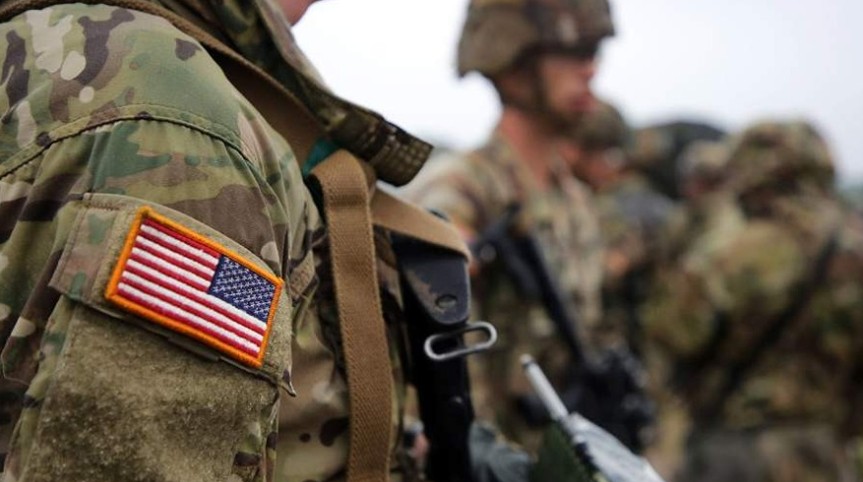
WASHINGTON D.C. – In what is being described as a “geopolitical earthquake,” reports emerging from Washington suggest that the United States is preparing to withdraw over 100,000 troops from European soil. This move, closely associated with statements from high-ranking officials including Marco Rubio, signals a potential end to the security architecture that has defined the Western world since the end of World War II.

The proposal doesn’t stop at troop levels. Internal memos suggest a radical halt to long-term defense expenditures in the European theater, aimed at saving “trillions of dollars” over the next decade—capital that the administration intends to pivot toward the Indo-Pacific and domestic economic revitalization.

The “Rubio Doctrine”: Burden Sharing or Abandonment?

Marco Rubio, a central figure in the administration’s foreign policy, has recently echoed the sentiment that Europe must finally “stand on its own feet.” According to defense news insiders, Rubio has been briefing NATO allies on a phased withdrawal plan. The rationale is clear: Washington is no longer willing to subsidize the security of wealthy European nations while the primary existential threat to U.S. interests—China—grows in the East.

“We cannot be the primary shield for a continent that refuses to arm itself,” a source close to Rubio’s office stated. This “tough love” approach is being viewed by Brussels and Berlin as a de facto abandonment of the NATO alliance.

US military transport planes leaving an airbase in Germany, symbolizing the large-scale withdrawal from Europe.
The Great Pivot: The proposed withdrawal of 100,000 troops marks the most significant shift in US foreign policy since 1945.

100,000 Troops: The Void of Power

Currently, the U.S. maintains approximately 100,000 personnel in Europe, spread across critical hubs like Ramstein Air Base in Germany and various deployments in Poland and the Baltics. A total withdrawal would create a massive “power vacuum” that Russia would be eager to fill.

  • Impact on the East: Poland and the Baltic states, who view the U.S. presence as their only credible deterrent against Moscow, are reportedly in “emergency consultations.”

  • The Financial Fallout: The plan to cut “trillions” refers to the long-term maintenance, infrastructure, and rotational costs of maintaining a permanent footprint in Europe. Proponents of the move argue that this is the only way to balance the U.S. national debt.

Strategic Intelligence: The “Managed Chaos” Era

From a strategic intelligence perspective, this move represents the ultimate transition from “Global Policeman” to “Fortress America.” As I often emphasize in my analyses, a ceasefire or a withdrawal is never just about peace; it is a reconfiguration of force structures.

If the U.S. leaves Europe, the “Transatlantic Link” is severed. This would force the European Union to either:

  1. Form a European Army: A project that has faced decades of bureaucratic stagnation.

  2. Negotiate with Moscow: A move that would fundamentally shift the Eurasian power balance.

Conclusion: The End of an Era

For the global defense news community, the message is loud and clear: The umbrella is closing. Whether this is a tactical negotiation ploy to force Europeans to spend more, or a genuine strategic exit, the result is the same—uncertainty.

As Washington prepares to bring its sons and daughters home, the world must prepare for a Europe that, for the first time in 80 years, must defend itself. The “managed freeze” of the Atlantic is thawing, and a storm is coming.


Editor’s Note: This report is based on leaked policy drafts and recent televised statements by administration officials. Defense & Tech is monitoring the reaction from NATO Headquarters in Brussels for an official response.

React
Author Profile
Abdullah Ağar Author All Posts

ABDULLAH AĞAR: THE VANGUARD OF STRATEGIC WARFARE AND COUNTER-TERRORISM SENIOR CONTRIBUTOR & ELITE SPECIAL FORCES VETERAN (RET.) — Abdullah Ağar is a globally recognized security and terrorism expert whose analytical depth is forged in the crucible of elite special operations and refined through decades of deep-field observation. A 1989 graduate of the Turkish Military Academy, Ağar’s career is defined by his transition from a highly decorated Special Forces officer to one of the most influential strategic voices in the Eurasian and Middle Eastern defense sectors. The Frontline Legacy: From Commando to Combat Veteran Ağar’s military tenure began in the most volatile mountainous regions of Southeastern Türkiye and Northern Iraq. Serving within the elite Maroon Berets (Special Forces) and the prestigious 1st and 2nd Commando Brigades, his life as a soldier began and ended on the peaks of active conflict zones. His six years of continuous high-intensity operations resulted in multiple combat injuries, earning him the status of a Decorated Combat Veteran (Gazi). Beyond his personal sacrifice, Ağar’s leadership was tested in the harshest conditions, commanding units that faced significant losses and triumphs alike. For his exceptional service, he was awarded the "Medal of Superior Courage and Self-Sacrifice" and the "Operation Steel Medals," alongside strategic missions in the Balkans and the Caucasus. The Iraq Odyssey: Deconstructing Asymmetric Threats In 2010, Ağar returned to Iraq under the auspices of the Ministry of Foreign Affairs, embarking on a four-year mission that covered every corner of the country—from the heart of Baghdad and the religious centers of Najaf and Karbala to the turbulent regions of Mosul, Kirkuk, and Erbil. Living among the local populations in villages and hamlets, he conducted peerless research into the mechanisms of: ISIS/DAESH and Hashd al-Shaabi: Analyzing the rise of radical non-state actors. Proxy Warfare: Mapping the intricate web of sectarian, tribal, and paramilitary organizations. The Sociology of Conflict: Understanding the human element behind the occupation and civil war in Iraq. A Prolific Voice in Global Defense Upon his return, Ağar synthesized his findings into seminal works, including "ISIS and Iraq," widely regarded as the most comprehensive field-study on the organization’s structure. His subsequent research took him back to the "zero points" of the Syrian conflict—Rai, Al-Bab, and Dabiq—leading to the publication of "Özgür Şehit." With thousands of analyses published across global media outlets in the USA, Europe, Russia, and China, Ağar is a sought-after speaker and consultant. His literary portfolio spans over a dozen volumes, including the monumental 5-volume "Karabağ Destanı" (The Karabakh Epic), cementing his role as a chronicler of modern military history. At Defense and Tech For Defense and Tech, Abdullah Ağar serves as a Senior Contributor, providing our readers with "ground-truth" intelligence and strategic foresight. He bridges the gap between tactical reality and geopolitical theory, ensuring our community receives analysis that is as authentic as it is intellectually rigorous. Selected Bibliography IŞİD ve IRAK: (A definitive study on the rise of ISIS). Karabağ Destanı: (A 5-volume comprehensive analysis of the Karabakh conflict). Özgür Şehit: (Deep insights from the Euphrates Shield operations). 5. Tim "Güneş Doğsun İsteriz": (Personal accounts from the Special Forces frontline).

No social media or contact information is available for the user.

3 Post

Leave a Comment

Your email address will not be published. Required fields are marked *

Related Posts