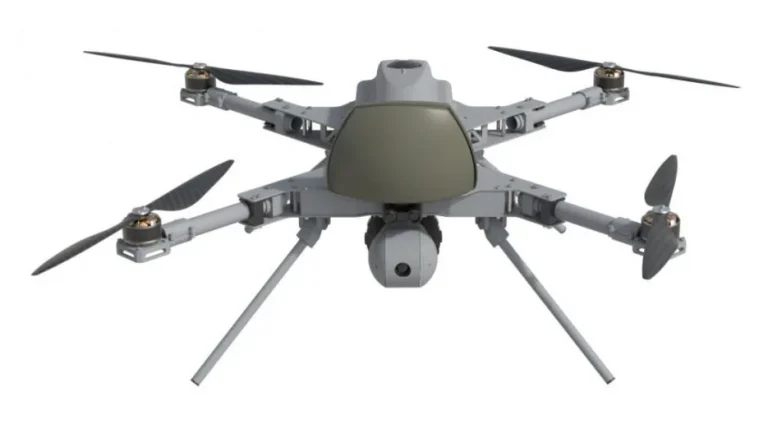
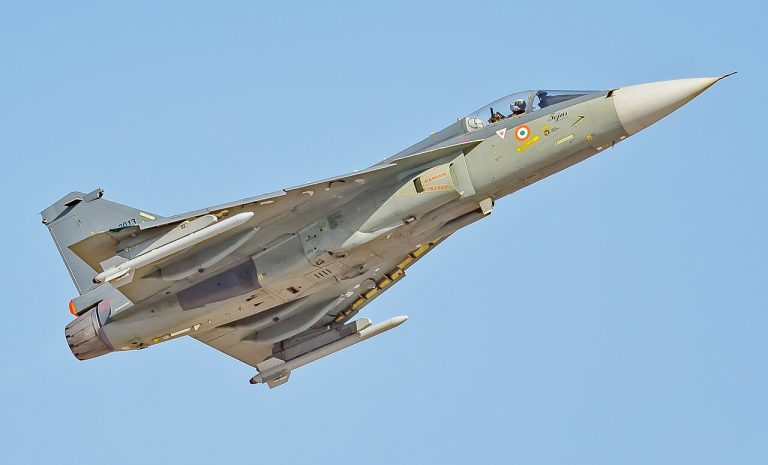
US Military Drones: MQ-9 Reaper, Global Hawk, MQ-25 and CCA
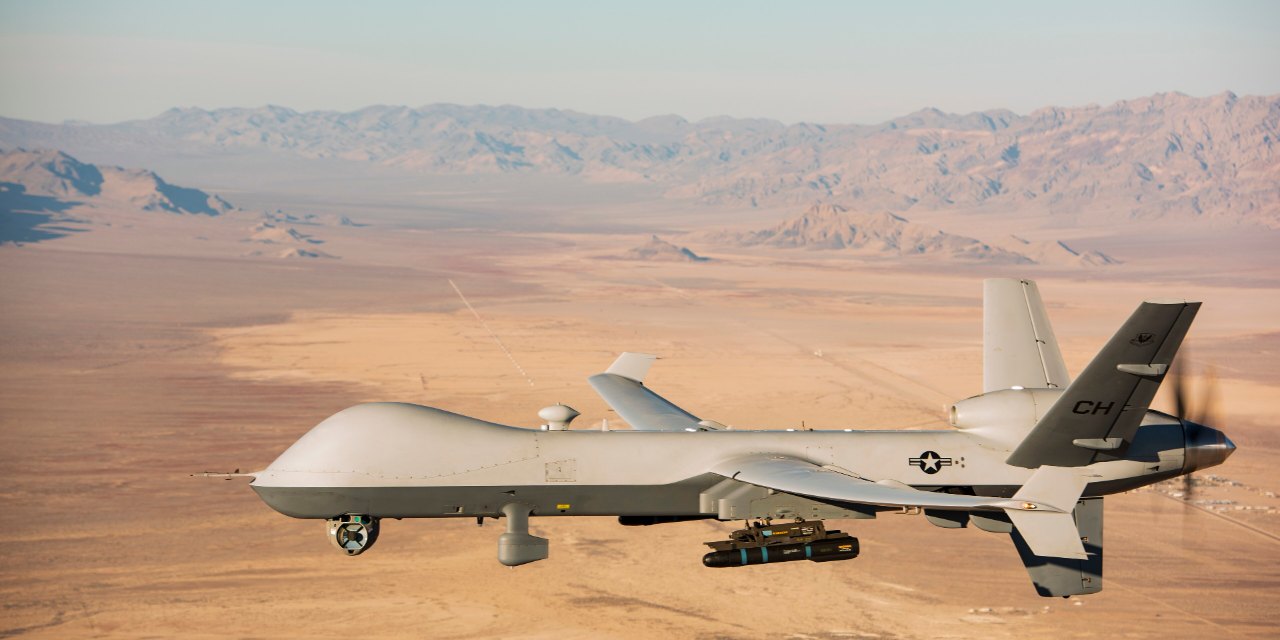
The best-known American military drone is the MQ-9 Reaper, an armed surveillance aircraft that has flown over every US conflict since 2007. It now shares the sky with high-altitude spy drones, a carrier-based tanker, jet-powered wingmen for fighters and, since 2026, cheap one-way attack drones copied from an Iranian design.
The United States invented the armed drone and then fell behind in the small, expendable kind that dominates the war in Ukraine. This guide covers what it flies today and how it is trying to catch up.
What military drones does the US have?
American drones fall into three generations. The first, from the 2000s, are large, slow aircraft built to watch and strike where no enemy can shoot back. The second, arriving now, are jets designed to survive in a war against China. The third are small and cheap enough to be used like ammunition. The leading types worldwide are ranked in our top 10 combat drones.
| Drone | Service | Role | Status |
|---|---|---|---|
| MQ-9A Reaper | Air Force, Marine Corps | Armed surveillance and strike | In service; replacement planned from 2029 |
| RQ-4B Global Hawk | Air Force | High-altitude surveillance | Nine left; retirement planned for 2027 |
| MQ-4C Triton | Navy | Maritime surveillance | About 20 delivered of 27 planned |
| MQ-1C Gray Eagle | Army | Armed reconnaissance | In service; new purchases halted |
| RQ-170 Sentinel | Air Force | Stealth reconnaissance | In service; details classified |
| MQ-25A Stingray | Navy | Carrier-based tanker | Low-rate production; 76 planned |
| FQ-42 and FQ-44 | Air Force | Uncrewed fighter wingman | In production since June 2026 |
| LUCAS | Central Command task force | One-way attack | First used in combat in February 2026 |
| Switchblade 300 and 600 | Army, Marine Corps | Loitering munition | In service |
MQ-9 Reaper: the drone that defined the type
The MQ-9 Reaper, built by General Atomics, is a propeller-driven aircraft with a 20-metre wingspan. It can stay airborne for 27 hours, carries cameras and radar, and is armed with Hellfire missiles and guided bombs. Crews fly it by satellite link from bases in the United States.
It was built for skies where nothing shoots back, and it has suffered where something does. Houthi forces in Yemen shot down more than a dozen between 2023 and 2025 with old Soviet-designed missiles. The Air Force has stopped buying Reapers and in September 2026 set out a plan for a successor: 500 cheaper “massed modular aircraft” by 2032, at about $10 million each. How the Reaper compares with Turkey’s largest drone is covered in Akinci vs MQ-9 Reaper.
Global Hawk, Triton and the stealth drones
The RQ-4 Global Hawk is a jet the size of an airliner that cruises at 18,000 metres for more than 30 hours, photographing and listening across whole countries. Only nine remain and the Air Force intends to retire them in 2027, relying on satellites and classified aircraft. The Navy’s version, the MQ-4C Triton, patrols oceans from bases that include Guam and Sicily.
The classified aircraft are the reason. The bat-winged RQ-170 Sentinel has been in service since about 2007, and a larger stealth drone, usually called the RQ-180, has been reported but never officially described. Both can go where a Global Hawk would be shot down, as one was by Iran in 2019.
Collaborative Combat Aircraft: wingmen without pilots
The Air Force’s most important drone programme is the Collaborative Combat Aircraft. These are jets about half the size of a fighter that fly in formation with crewed aircraft, carry missiles and sensors, and take the risks a pilot should not. In June 2026 the Air Force ordered two designs into production: the General Atomics FQ-42 and the Anduril FQ-44, whose contract we covered in Anduril wins production contract for the FQ-44 Fury.
Air Force Secretary Troy Meink said in September that he wants at least 500 in service by 2032. The fiscal 2027 budget asks for $1.4 billion to develop them. A second round, open to new designs, is under way. The background is in our guide to the drone wingman race, and the fighters they will fly with are listed in what fighter jets the US has.
MQ-25 Stingray: the Navy’s first carrier drone
The MQ-25 is an uncrewed tanker. Its job is to refuel carrier fighters in the air, which today is done by Super Hornets that could otherwise be carrying weapons, and so to push the air wing’s reach out by hundreds of kilometres. Boeing received a $562 million order for the first production lot in September 2026, reported in our article on the contract. The Navy plans to buy 76. Where it fits on the flight deck is explained in how many aircraft carriers the US has.
LUCAS, Switchblade and the turn to cheap attack drones
On 28 February 2026, the first night of the war with Iran, Central Command launched a new weapon: the LUCAS, a one-way attack drone reverse-engineered from Iran’s own Shahed-136. It is made by SpektreWorks of Arizona, flies about 800 km with an 18 kg warhead and costs about $35,000, roughly one-sixtieth of a Tomahawk. A unit called Task Force Scorpion Strike had been formed only two months earlier to use it. The original is described in Bayraktar TB2 vs Shahed-136.
The Army and Marine Corps already use the smaller AeroVironment Switchblade, a loitering munition launched from a tube. What they have lacked is quantity. Ukraine and Russia each build millions of small drones a year. In December 2025 the Pentagon began a programme called Drone Dominance that asks industry for 340,000 small attack drones within two years, and the Army has said it wants to buy a million. The current leaders in the field are listed in our top 10 loitering munitions, and the tactics in drone swarms explained.
Frequently asked questions
What is the main US military drone?
The MQ-9 Reaper, used by the Air Force and Marine Corps for surveillance and strikes.
How much does an MQ-9 Reaper cost?
About $30 million for the aircraft, and more with ground stations and sensors.
Does the US have kamikaze drones?
Yes. The Switchblade has been in service for more than a decade, and the larger LUCAS one-way attack drone was first used in combat against Iran in February 2026.
What is a Collaborative Combat Aircraft?
An uncrewed jet that flies alongside crewed fighters as a wingman. The Air Force ordered the FQ-42 and FQ-44 into production in June 2026.
Is the Global Hawk being retired?
Yes. The Air Force plans to retire its last nine RQ-4s in 2027. The Navy’s MQ-4C Triton, a related design, stays in service.
- Defense News – US confirms first combat use of LUCAS one-way attack drone in Iran strikes (February 2026): defensenews.com
- The War Zone – Fleet of at least 500 Collaborative Combat Aircraft by 2032 (September 2026): twz.com
- US Army – War Department asks industry to make more than 300K drones, quickly, cheaply: army.mil
- Stars and Stripes – Air Force fighter fleet and CCA funding, CRS report (September 2026): stripes.com
- Wikipedia – List of active United States military aircraft: en.wikipedia.org