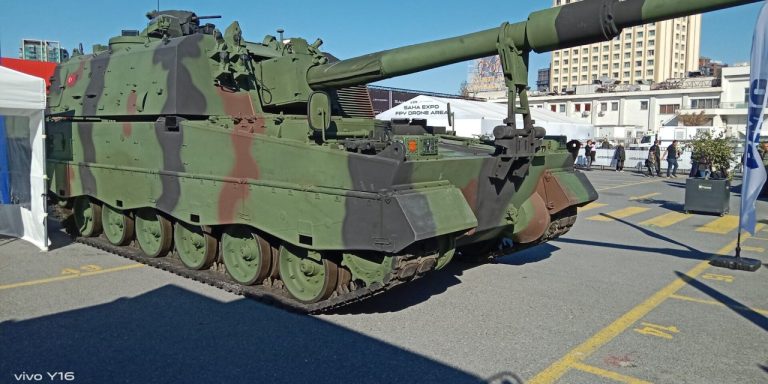
US Artillery: M777, Paladin, HIMARS and MLRS
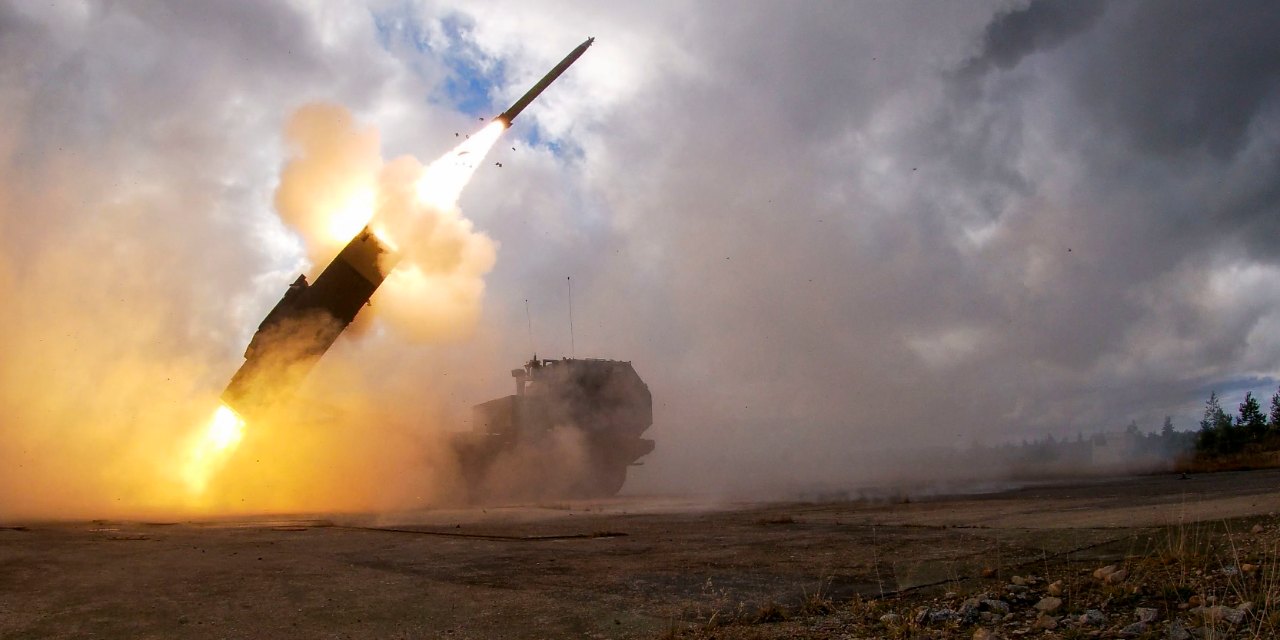
American artillery comes in five main systems: the towed M119 and M777 howitzers, the self-propelled M109 Paladin, and the HIMARS and M270 rocket launchers. The guns are old designs with ranges of 20 to 40 km. The rocket launchers are where the United States has put its money, and they now fire missiles that reach beyond 500 km.
This guide covers what each system does, how far it shoots, how many there are, and how the Army is rebuilding its artillery after watching the war in Ukraine.
What artillery does the US have?
The US Army organises its artillery by weight. Light infantry brigades have towed guns that a helicopter can lift. Armored brigades have tracked, armored howitzers that keep up with tanks. Rocket launchers belong to separate brigades that support a whole division or corps. The Marine Corps uses the M777 and HIMARS. How these compare with foreign systems is shown in our top 10 artillery systems.
| System | Type | Calibre or load | Maximum range | Approximate number |
|---|---|---|---|---|
| M119A3 | Towed howitzer | 105 mm | About 17 km; 19.5 km rocket-assisted | About 800 |
| M777A2 | Towed howitzer | 155 mm | 24 km; about 40 km with Excalibur | Under 1,000 in the Army and Marine Corps |
| M109A6 and A7 Paladin | Self-propelled howitzer | 155 mm | 24 km; 30 km rocket-assisted; about 40 km with Excalibur | About 1,000 active; 689 A7s planned |
| M142 HIMARS | Wheeled rocket launcher | 6 rockets, 1 ATACMS or 2 PrSM | 70 km with GMLRS; more than 500 km with PrSM | About 540 in the Army, plus Marine units |
| M270A2 MLRS | Tracked rocket launcher | 12 rockets, 2 ATACMS or 4 PrSM | Same munitions as HIMARS | About 225 in Army units |
Towed howitzers: M777 and M119
The M777 is a 155 mm gun built largely of titanium, light enough at about 4.2 tonnes to be slung under a Chinook. It became famous in Ukraine, which received more than 200 from the United States and its allies, and it also showed its weakness there. A towed gun takes minutes to pack up and move, and drones and counter-battery radar now find a firing position in less time than that.
The 105 mm M119 is lighter still and equips airborne and light infantry units. The Army’s Transformation Initiative of 2025 plans to cut back towed artillery in favour of launchers and guns that can fire and drive away at once.
M109 Paladin and the search for a replacement
The M109 has been the Army’s armored howitzer since 1963. The current M109A7 has a new chassis, engine and electrics shared with the Bradley, but keeps a short 39-calibre barrel that limits it to about 30 km with ordinary assisted rounds. European and South Korean guns with longer barrels reach 40 km and more, as shown in Archer vs Caesar vs PzH 2000.
The Army has tried three times to build a successor and cancelled each one. The latest, a 58-calibre gun called ERCA that hit a target at 70 km in tests, was dropped in April 2024 because the barrel wore out too quickly. Its place has been taken by the Self-Propelled Howitzer Modernization programme, which will buy an existing design. Five companies demonstrated guns for it: Rheinmetall, BAE Systems Bofors, Hanwha, General Dynamics and Elbit. Candidates include the RCH 155 and the K9 Thunder. The Army’s schedule calls for a choice in fiscal 2027 and first deliveries around 2030.
HIMARS and M270: the rocket launchers
The M142 HIMARS is a 16-tonne truck carrying one pod of six guided rockets. It can fire and drive off within a couple of minutes, and it fits inside a C-130 transport. Ukraine’s use of it against Russian depots and headquarters in 2022 made it the most sought-after artillery system in the world. The older tracked M270 carries two pods and is being rebuilt to the A2 standard. A comparison with the Russian equivalent is in HIMARS vs Tornado-S.
The launcher matters less than what goes in it. The standard GMLRS rocket is accurate to within a few metres at more than 70 km, and an extended-range version doubles that to 150 km. The ATACMS missile reaches 300 km.
PrSM and the long-range missiles
The Precision Strike Missile replaces ATACMS, flies beyond 500 km and fits two to a pod. It was fired in combat for the first time against Iran in 2026, and the stock was nearly used up. The 2027 budget asks for 1,134 more. A version with a seeker for hitting ships is in testing, and on 30 September 2026 the Army chose five companies to compete for Increment 4, a missile with a range of at least 1,000 km, as reported in our article on the competition.
Above that sit two systems that also belong to the artillery branch: Typhon, which fires Tomahawk and SM-6 missiles, and the Dark Eagle hypersonic weapon. They are covered in what missiles the US has and US hypersonic missiles.
Shells: the production problem
Guns are useless without ammunition, and the war in Ukraine showed how little the West could make. The United States produced about 14,000 155 mm shells a month in early 2022. New plants in Texas and elsewhere raised that to roughly 40,000 a month by 2025, with a goal of 100,000 that has been reached more slowly than planned. Russia makes several times as many. The numbers are set out in the 155 mm shell production race.
Frequently asked questions
What is the main US artillery system?
In armored units it is the 155 mm M109 Paladin self-propelled howitzer. For long-range fire it is the M142 HIMARS rocket launcher.
What is the range of HIMARS?
More than 70 km with standard GMLRS rockets, 150 km with the extended-range version, 300 km with ATACMS and more than 500 km with the Precision Strike Missile.
How many HIMARS does the US have?
About 540 in the Army, with more in the Marine Corps.
What is the range of the M777 howitzer?
About 24 km with standard shells, 30 km with rocket-assisted rounds and about 40 km with the Excalibur guided shell.
Is the US replacing the Paladin?
It plans to. The Army is evaluating existing self-propelled howitzers from five companies and expects to choose one in fiscal 2027.
- Congressional Research Service – The Army’s Self-Propelled Howitzer Modernization (SPH-M) Program (February 2026): everycrsreport.com
- CSIS – Last Rounds? Status of Key Munitions at the Iran War Ceasefire (April 2026): csis.org
- IISS – The Military Balance: iiss.org
- Wikipedia – List of equipment of the United States Army: en.wikipedia.org
- European Security & Defence – The US Army’s search for new self-propelled artillery (October 2025): euro-sd.com