China, Pakistan Hold First-Ever Joint Army Drill in Xinjiang
Lead
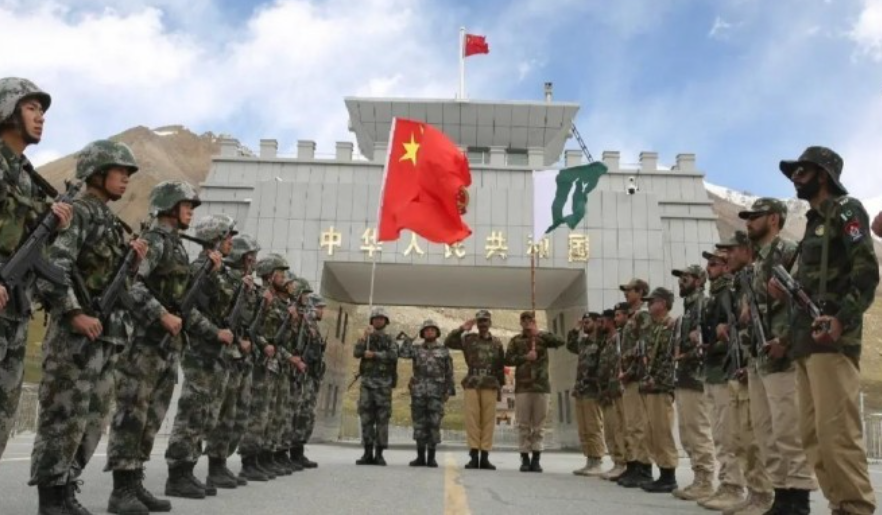
China and Pakistan opened their first-ever joint army exercise on October 14, 2026, at a training base near Korla in China’s Xinjiang Uygur Autonomous Region. Named Karakoram 2026, the drill brings together ground forces from both countries for high-altitude counter-terrorism training using equipment supplied entirely by the Chinese military, according to state broadcaster CCTV. The exercise matters because it extends a defense relationship that, until now, had been confined to annual air force and navy drills, into direct army-to-army cooperation for the first time, at a moment when China is Pakistan’s dominant arms supplier and Islamabad is rebuilding its force posture after last year’s conflict with India.
What Happened
China’s Ministry of National Defense announced the exercise on October 10, 2026, when spokesperson Senior Colonel Chen Xi told reporters in Beijing that Chinese and Pakistani army units would train together in Korla from mid- to late October. The opening ceremony took place on October 14 at a training base in the city, according to multiple outlets including the Associated Press affiliate Anadolu Agency, Pakistan’s state-run Associated Press of Pakistan (APP), and China’s CGTN. Several reports describe it as a nine-day program, which would place the closing phase around October 22, though neither government has published an exact end date.
Chen said the training is designed to help both armies deepen cooperation and strengthen their joint ability to respond to terrorist threats in high-altitude terrain. Planned activities include unmanned aerial vehicle operation, on-the-move target search and engagement, long-range sniping, joint command post exercises, and live-force drills, according to the ministry’s announcement and Chinese state media coverage of the opening.
The Product/System
State broadcaster CCTV reported that all weapons and equipment used in the exercise were supplied by the Chinese army, a detail Global Times described as an “all-Chinese equipment lineup.” Outlets citing the CCTV footage named Type 191 assault rifles, Type 201 squad machine guns, Type 11 wheeled armored assault vehicles, and Type 08 wheeled infantry fighting vehicles — the ZBL-08 family built by state manufacturer Norinco, in service with the People’s Liberation Army since 2008 and typically armed with a 30mm autocannon, a coaxial machine gun, and anti-tank missile rails. Reporting also mentions unspecified artillery pieces and both unmanned aerial systems and counter-drone equipment deployed for the drill.
Chinese military commentator Wang Yunfei, quoted by Global Times, said the wheeled platforms were chosen because they handle high-altitude plateau terrain better than tracked vehicles, offering faster road mobility and easier maintenance. He characterized the all-Chinese lineup as evidence that Beijing has already transferred relevant weapons technology to Pakistan and suggested Islamabad could eventually purchase the same systems, framing the exercise partly as a familiarization opportunity ahead of possible future sales.
Who Uses It
The equipment showcased at Karakoram 2026 is fielded operationally by the People’s Liberation Army Ground Force; Pakistani personnel are training alongside Chinese troops with it during the exercise, but no source reviewed confirms that the Pakistan Army currently owns or operates the Type 08 IFVs, Type 11 vehicles, or Type 191/201 small arms used in the drill. Reports frame the equipment as Chinese-provided for the training itself, with any transfer of ownership to Pakistan remaining speculative at this stage.
Export/Procurement History
China is already Pakistan’s principal defense supplier, providing more than 80 percent of the weapons used across the Pakistani army, navy and air force, according to Global Times reporting on the exercise. That relationship includes co-production of the JF-17 Thunder fighter jet and the China-Pakistan-built Hangor-class diesel-electric submarines, the first of which Pakistan’s navy chief has said is expected to enter service in 2026. Karakoram 2026 is the first exercise to extend this pattern into ground-forces training, following a long-running series of bilateral air force exercises known as Shaheen and naval exercises known as Sea Guardians.
Chinese commentators linked the drill to the aftermath of the May 2025 conflict between India and Pakistan, during which Beijing confirmed it had provided technical support to Islamabad, and to a string of attacks on Chinese nationals and infrastructure projects inside Pakistan. Zhang Jueshe, another military affairs expert cited by Global Times, suggested cooperation could expand further into intelligence sharing, technology transfers and Chinese-supplied drones for surveillance and early warning, while also noting that Pakistan’s experience with border security could inform China’s own approach to security challenges in its western regions.
Global Competitors
No other major power currently conducts comparable joint army-to-army training with Pakistan at this scale; Islamabad’s other defense partners, including Turkey and, more narrowly, the United States, maintain training and procurement ties but not an annual tri-service exercise architecture comparable to the China relationship. For China, the drill also stands apart from its security cooperation elsewhere in the region, such as counter-terrorism dialogues with Central Asian states, by directly fielding front-line PLA ground equipment alongside a partner nation’s troops.
Why It Matters
Karakoram 2026 formalizes a deeper layer of China-Pakistan military interoperability than previously existed, moving beyond the air and naval domains into land warfare. Indian defense commentary, including an analysis published by The Week, has noted that the People’s Liberation Army’s extensive experience operating in Himalayan and high-altitude border terrain near India gives the drill’s location and focus added strategic weight for New Delhi, even though neither government has stated any connection to the India-China border standoff. The exercise also gives Beijing a showcase for exporting ground-combat systems to a market it already dominates, reinforcing a pattern in which joint training doubles as a sales platform for Chinese arms manufacturers such as Norinco.
What Happens Next
Based on the nine-day timeline reported by several outlets, Karakoram 2026 is expected to conclude around October 22, 2026, though an official closing date has not been announced by either government. Analysts quoted in Chinese state media have raised the possibility that Pakistan could move toward purchasing the Type 08 and Type 11 vehicle families after the exercise, though this remains speculative pending any formal procurement announcement from Islamabad.
FAQ
What is Karakoram 2026?
Karakoram 2026 is the first joint army training exercise between China and Pakistan, held October 14-22, 2026, at a training base near Korla in China’s Xinjiang Uygur Autonomous Region, focused on high-altitude counter-terrorism skills.
Why is this exercise considered a first?
China and Pakistan have held annual air force exercises (Shaheen) and naval exercises (Sea Guardians) for years, but Karakoram 2026 is the first exercise specifically between their armies, according to China’s Ministry of National Defense.
What equipment is being used in the exercise?
Chinese state broadcaster CCTV reported that all equipment was supplied by the Chinese military, including Type 191 rifles, Type 201 machine guns, Type 11 armored assault vehicles, Type 08 wheeled infantry fighting vehicles, artillery, and unmanned and counter-drone systems.
Has Pakistan agreed to buy this Chinese equipment?
No purchase has been confirmed. Chinese military commentators quoted by state media have suggested the exercise could pave the way for future Pakistani purchases of the showcased vehicle families, but neither government has announced a procurement deal.
Why does this exercise matter for India?
Indian commentary has pointed to the PLA’s extensive experience in high-altitude Himalayan border terrain near India as adding strategic significance to the drill’s timing and location, though neither Beijing nor Islamabad has linked the exercise to India.
Sources
- Chinese Ministry of National Defense, announcement by Senior Colonel Chen Xi, October 10, 2026 — official confirmation of the exercise, dates and planned training content.
- CGTN, “China and Pakistan to Hold Karakoram 2026 Joint Army Training,” October 10, 2026 — state media report on the announcement.
- Associated Press of Pakistan (APP), “China, Pakistan to Conduct Joint Military Exercise in Xinjiang” — Pakistani state news agency account of the announcement, including direct quote on it being the “first joint army training between the two countries.”
- Anadolu Agency, “China, Pakistan Begin First-Ever Joint Army Training Exercise” — confirmation of the October 14 opening date.
- Global Times, “First China-Pakistan Army Joint Training Features an All-Chinese Equipment Lineup, Signaling Deep Interoperability: Expert,” October 2026 — equipment list and expert commentary from Wang Yunfei and Zhang Jueshe.
- The Week, “Why China’s First Joint Army Exercise With Pakistan in High-Altitude Terrain Is Significant for India,” October 16, 2026 — regional security analysis.