Does the F-35 Have a Kill Switch? What the US Can and Cannot Control
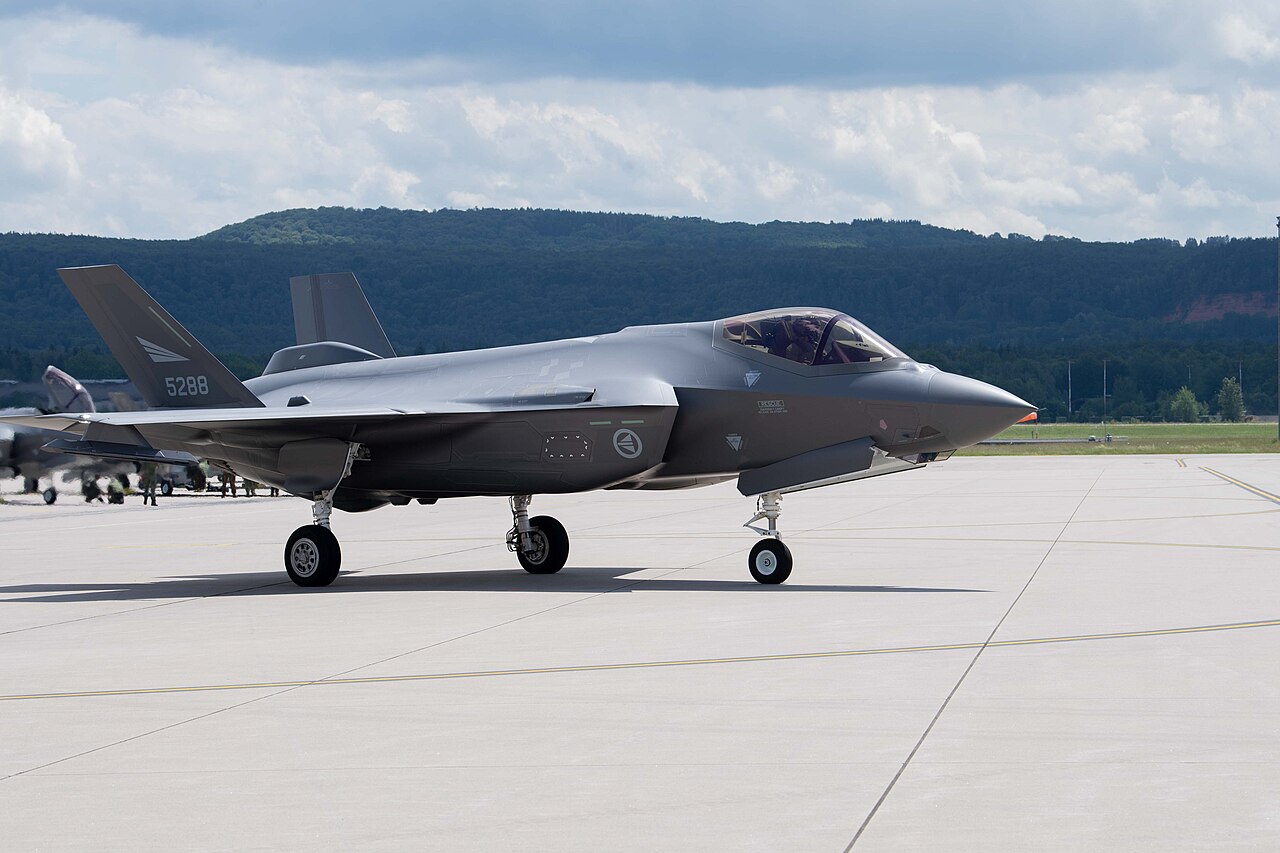
There is no evidence that the F-35 contains a kill switch, a hidden mechanism that would let Washington switch off another country’s jets, and the Pentagon office that runs the programme has flatly denied that one exists. The real issue is less dramatic and more important. Every foreign F-35 fleet depends on American spare parts, software updates and threat data, and without them its combat value would decline over weeks and months.
This article separates the myth from the dependency, and explains why the question has become a serious one for buyers since 2025.
The short answer
No kill switch has ever been demonstrated or documented. The F-35 Joint Program Office said in March 2025: “There is no kill switch.” Defence ministries in Switzerland, Belgium, Germany and elsewhere have said the same about their own aircraft. An F-35 does not need permission from the United States to start its engine, take off or release a weapon.
What the United States does have is control over the things that keep the aircraft effective. That is a slower and less visible form of leverage, but it is real.
Where the fear came from
The idea spread in March 2025, after Washington briefly suspended military aid and intelligence sharing with Ukraine. European commentators asked what would happen to their F-35s if a future American government did the same to them. Politicians in Germany, Denmark, Portugal and Canada raised the question publicly, and Canada began a review of its order.
The dispute over Greenland and tariffs kept the subject alive, and it now features in every European fighter competition. It is one of the arguments used for the Rafale, as we note in our F-35 vs Rafale comparison.
What the US actually controls
| Dependency | What it does | If US support stopped |
|---|---|---|
| Spare parts | Supplied from a global pool managed by the programme | Availability falls within weeks to months |
| ODIN logistics system | Maintenance records, parts ordering, technical data | Jets still fly; upkeep gets steadily harder |
| Mission data files | Tell the sensors how to recognise threats | Jets still fly; the threat library goes out of date |
| Software updates | Fixes, new weapons, new functions | No new capabilities |
| Engine and depot work | Heavy repair and overhaul | Aircraft grounded as components reach their limits |
The spare-parts pool is the most immediate lever. Operators do not hold large national stocks; parts are shipped where the programme decides they are needed. A fleet cut off from that pool would be cannibalising aircraft within months. The readiness problems described in our article on F-35 sustainment show how thin the margin already is.
Mission data files: the quiet dependency
An F-35’s sensors and electronic warfare suite rely on mission data files, large libraries that tell the jet what each radar, missile and aircraft looks like and how to respond. Without current files the aircraft still flies, but it is less able to identify and avoid threats, which undermines the point of a stealth fighter.
Those files are built in laboratories on US soil. Australia, Canada and the United Kingdom share one at Eglin Air Force Base in Florida with a staff of about 90, and other partners use similar arrangements. None has access to the aircraft’s source code.
The Israeli exception
Israel is the only operator with real independence. Its F-35I Adir carries Israeli-made command, control and electronic warfare systems on top of the standard software, and Israel does its own heavy maintenance. It was a concession no other customer obtained. The United Kingdom, as the only top-tier partner, has more insight than most but not the same freedom.
Could a country jailbreak its F-35s?
In February 2026 the Dutch state secretary for defence, Gijs Tuinman, said the F-35’s software could be opened up “just like an iPhone” if the United States ever withheld updates. Specialists were sceptical. Breaking into the software is one problem; rebuilding the laboratories, test data and engineering staff needed to keep it current is a much larger one, and it would do nothing about spare parts.
The United States has also shown that it will remove a country from the programme for political reasons. Turkey was expelled in 2019 after buying Russian S-400 missiles, and its completed jets were never delivered.
The bottom line
The F-35 cannot be switched off from Washington. It can, over time, be starved. For most of the 20 countries that fly or have ordered it, that is an acceptable price for the capability, because they expect to fight alongside the United States, not against its wishes. For governments that are less sure of that, it has become a reason to hesitate.
Frequently asked questions
Does the F-35 have a kill switch?
No. The F-35 Joint Program Office has stated that there is no kill switch, several operating countries have said the same, and no evidence of one has been produced.
Can the US disable another country’s F-35s?
Not remotely or instantly. It could stop supplying spare parts, software updates and mission data, which would steadily reduce the fleet’s availability and effectiveness.
How long could F-35s fly without US support?
There is no official figure. Analysts expect availability to fall within weeks to months as spare parts run short, and combat effectiveness to decline as threat data ages.
What are F-35 mission data files?
They are libraries of threat information that tell the aircraft’s sensors and electronic warfare systems how to identify and respond to radars, missiles and aircraft. They are produced in US-based laboratories.
Which country can operate the F-35 independently?
Only Israel has its own software additions and independent heavy maintenance. All other operators rely on the US-led support system.
Did the US block Turkey from using F-35s?
The US removed Turkey from the programme in 2019 and never delivered its aircraft. That was a refusal to deliver, not a remote shutdown.
- The Aviationist – The F-35 Kill Switch: Separating Myth from Reality: theaviationist.com
- The War Zone – You Don’t Need a Kill Switch to Hobble Exported F-35s: twz.com
- The War Zone – F-35 Software Could Be Jailbreaked Like an iPhone: Dutch Defense Secretary: twz.com
- The Defense Post – Pentagon: no kill switch on the F-35: thedefensepost.com