
UK Firms to Train AI Drone Swarms on Ukraine Battlefield Data


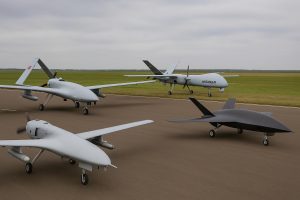
London — Up to 12 British companies will be allowed to train artificial intelligence models for autonomous drone swarms on real combat data gathered by Ukraine’s forces, the UK Ministry of Defence announced on September 25, 2026, making Britain the first foreign partner to gain access to Kyiv’s battlefield AI dataset.
The initiative, run by the MOD’s Taskforce RAID (Rapid AI Delivery), opens Ukraine’s Avengers AI Labs environment to selected UK firms through the first competition held under the UK-Ukraine AI Partnership. The ministry said companies would be selected “in a matter of weeks,” with work on the data beginning shortly afterwards.
What the Data Contains
Avengers AI Labs is a Ukrainian government platform that holds imagery and video of ground and aerial targets collected during the war. According to the MOD, the database includes sensor information from more than six million object detections, covering tanks, artillery, air defense systems, infantry, and airborne threats such as Shahed-type one-way attack drones and reconnaissance unmanned aircraft.
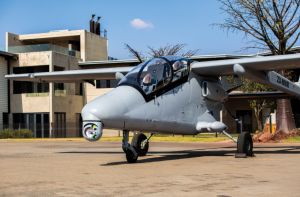
The material was captured by uncrewed aerial systems operating in Ukraine and includes both daylight and thermal imagery, the kind of labeled, real-world data that AI developers say is essential for building reliable target recognition models but which is extremely hard to reproduce in trials or simulations.
Importantly, companies will not download or take possession of the underlying dataset. Their models will be trained and evaluated inside the secure Avengers Labs environment once Ukraine completes its export-control procedures.
Four Focus Areas
The competition asks industry to work in four areas that together describe how a drone swarm would operate with limited human input:
- Autonomous target recognition — identifying vehicles, weapons and people from sensor feeds;
- Distributed decision-making — allowing drones in a group to share tasks without a central controller;
- Adaptive mission execution — adjusting plans as conditions change;
- Collaborative sensing and information fusion — combining what multiple drones see into a single picture.
Proposals must be relevant to both Ukrainian and British defense requirements. The emphasis on distributed and collaborative functions reflects the operating conditions on the Ukrainian front, where GPS jamming and communications disruption are routine and drones that depend on a constant data link are frequently lost.
Political Backing
Defence Secretary Wes Streeting described the arrangement as “world-first access to real battlefield data,” saying it would help British companies push defense innovation while also strengthening Ukraine. AI Minister Kanishka Narayan framed it as a result of the Prime Minister’s AI Taskforce combining Ukrainian combat experience with British AI expertise.
Why It Matters
Ukraine has become the world’s largest testing ground for drone warfare, and its forces have accumulated a volume of labeled combat imagery that no Western military can match from exercises alone. Access to that data gives UK developers a significant advantage in training computer vision and autonomy models that must perform against real camouflage, weather, battlefield clutter and decoys.
For Kyiv, the arrangement is a way to turn its data into faster capability development with a close partner, on terms that keep the raw material under Ukrainian control. The requirement that solutions meet Ukrainian needs means the output could flow back to the front line.
The move also fits a broader British push to accelerate the adoption of autonomy. The UK’s recent defense planning has placed heavy emphasis on uncrewed systems and software-driven capability, and Taskforce RAID was created specifically to shorten the time between AI prototypes and fielded tools.
The program is likely to draw scrutiny over the level of human control in any system that uses automated target recognition. The MOD has not said how proposals will address rules on human oversight of lethal force, a question that will become more pressing as swarm concepts move from research toward deployment.